Browse independent reporting and analysis across AI models, research, technology, robotics, security, policy, ethics and the business of artificial intelligence.
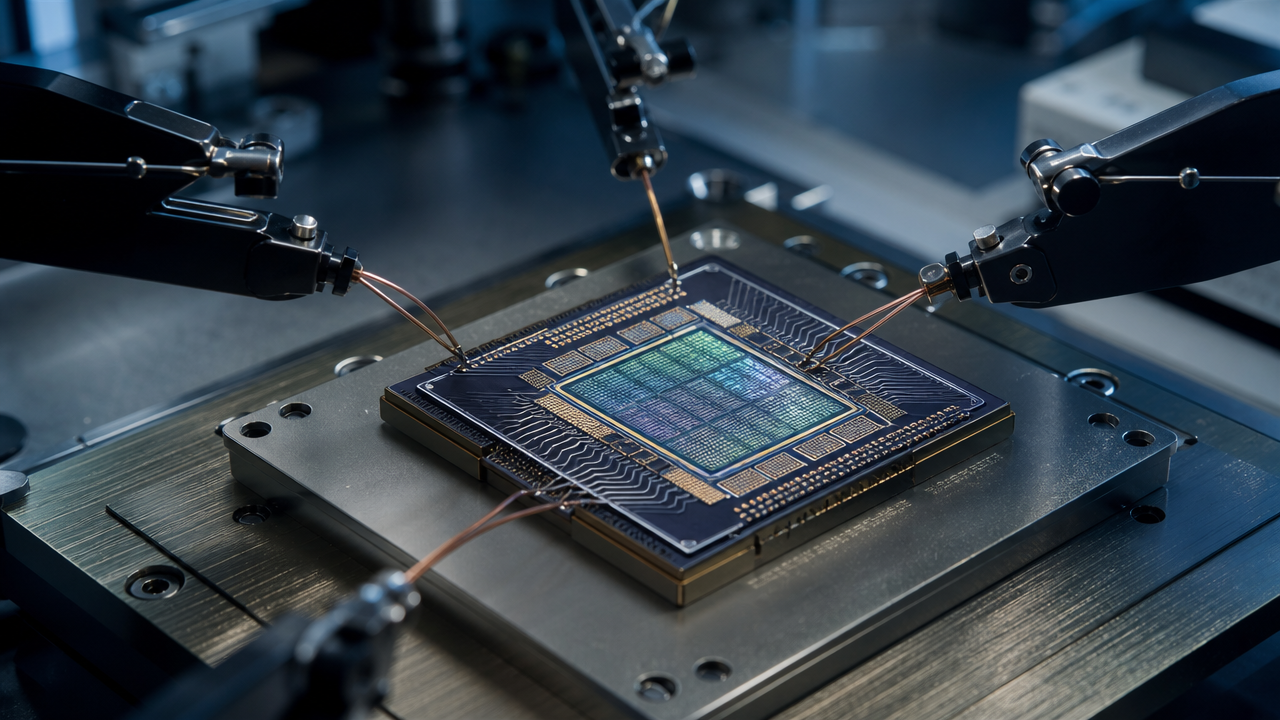
The Jalapeno inference chip partnership with Broadcom is OpenAI's attempt to control the recurring economics of serving powerful models, not just another symbolic move into custom silicon.
Google Cloud's Nexus SDV work with Android Automotive shows how AI-defined vehicles could turn fleet telemetry and in-car controls into a new security and governance challenge for automakers.
Nvidia's new guidance on hardware-friendly language-model design shows that the next AI efficiency fight will be decided as much by model geometry and quantization as by the chips underneath.
OpenAI's new Work product is designed to take on longer tasks across files and connected apps, but its real enterprise test will be whether companies can keep agents useful without giving them too much access.
OpenAI's new account-security requirements for its most cyber-capable models show how frontier AI is moving from a product-access question to an identity and governance question.
As agentic AI moves onto desktop and edge systems, incomplete energy telemetry could make it harder to measure the real cost of multi-step AI workflows.
AI biology tools are becoming more capable at literature synthesis, hypothesis generation and experimental planning, but the hard test remains wet-lab evidence and clinical translation.
As labs accuse rivals of training on model outputs, the AI industry is confronting a permission problem that resembles the web-scraping fight it once forced on publishers.
Agibot's international showcase highlights China's bid to turn humanoid robots from spectacle into deployable equipment backed by domestic manufacturing and AI engineering.
Rising rack density and agentic workloads are forcing AI infrastructure teams to rethink power delivery, thermal stress, grid interconnection, and energy observability.
New research argues U.S. restrictions may have pushed China toward more open and locally adaptable AI ecosystems, complicating the assumption that chokepoint policy only slows competitors.
Meta's reported push toward more in-house AI chip design reflects a broader industry effort to control costs, supply, and infrastructure roadmaps as frontier model spending accelerates.
OpenAI's new GPT-Live voice model pushes ChatGPT closer to a real-time conversational interface, raising the stakes for assistants, agents, accessibility, and workplace adoption.
Model companies are learning that energy contracts, grid queues, backup generation and site selection can matter as much as chips when scaling frontier AI infrastructure.
AI systems are moving deeper into biology and drug discovery, but the practical test is whether computational hypotheses can survive wet-lab validation and clinical development.
As humanoid pilots move from videos to factories, attention is shifting to the suppliers behind joints, sensors, actuators, gearboxes, batteries and service contracts.
Open-weight AI models are attractive for cost and control, but enterprise buyers now need stronger evidence about training origin, modification history, licensing, and supply-chain risk.
As AI data centers spread, cooling choices are becoming political decisions involving water use, power demand, tax incentives, local jobs and public trust.
After months of model-access battles, U.S. AI policy is turning toward disclosure, third-party review, whistleblower protection and liability for high-impact systems.
Security teams are preparing for ransomware that uses AI agents to automate reconnaissance, privilege discovery, data staging, negotiation and adaptation inside enterprise systems.
Meta is moving from AI distribution to AI monetization, testing whether creators, advertisers, and developers will pay for model access tied to its massive consumer platforms.
BSides Bangalore's annual cybersecurity conference is putting artificial intelligence and emerging cyber threats at the center of its July 9 agenda, reflecting how quickly AI security has moved from niche topic to board-level concern.
Anthropic's Claude Science effort is moving beyond research tooling toward ambitions in drug discovery. The plan shows how frontier AI labs are trying to become participants in scientific pipelines, not only software vendors.
Anthropic is reportedly in talks with Samsung about a custom AI chip, adding another frontier lab to the list of model companies trying to gain more control over compute cost, performance, and supply.