Research
Scientific AI Faces A Lab-Validation Test As Biology Workflows Change
AI systems are moving deeper into biology and drug discovery, but the practical test is whether computational hypotheses can survive wet-lab validation and clinical development.
By Michael G ·
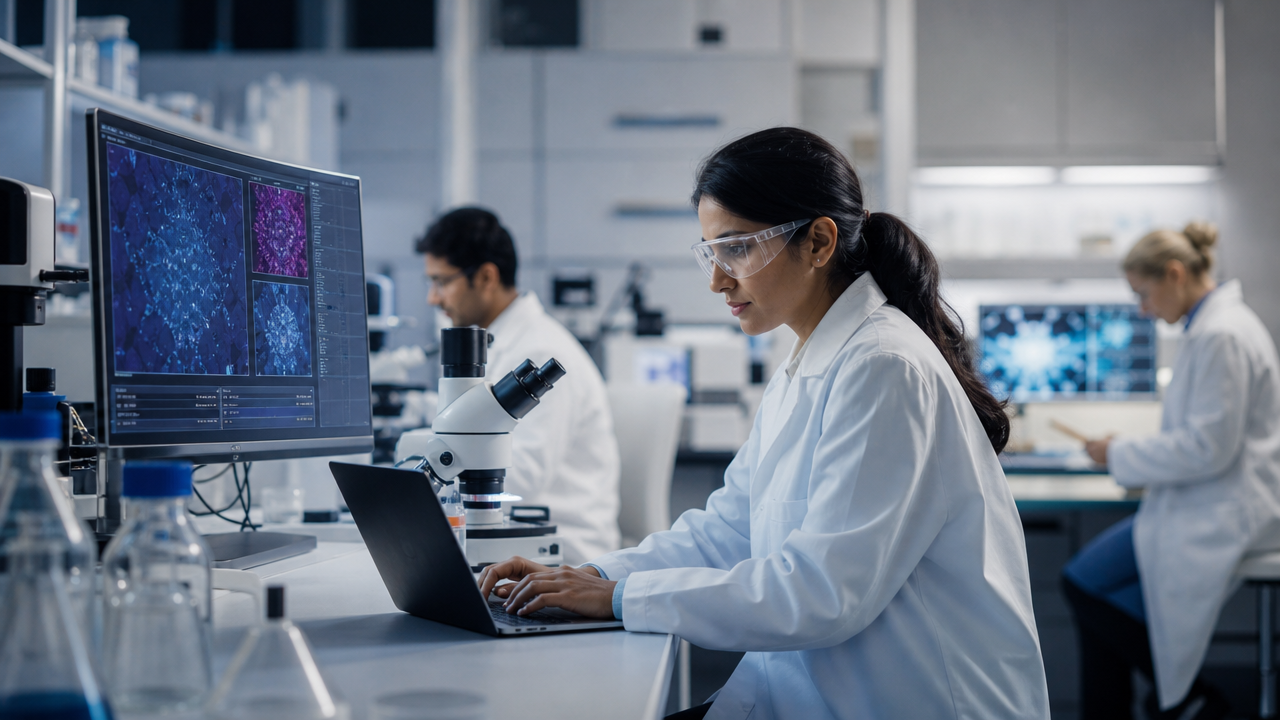
Scientific AI is entering a more demanding phase. The field has already shown that models can summarize literature, predict structures, suggest experiments and search chemical space. The next test is whether those computational outputs can survive contact with the lab.
That distinction is essential. A model can generate a plausible hypothesis in seconds. Biology decides whether it is useful. Molecules fail because they are unstable, toxic, hard to manufacture, poorly absorbed or simply ineffective in systems more complex than the training data captured.
The opportunity remains enormous. Researchers spend huge time moving between papers, datasets, notebooks, experimental plans and failed results. AI can reduce that friction, propose candidates, flag contradictions and help scientists prioritize what to test next.
But the more direct AI becomes in science, the more evidence matters. A lab assistant that helps draft a protocol is one thing. A system that pushes a therapeutic candidate toward development is another. The second requires traceability, reproducibility and human accountability.

The strongest near-term use cases may be hybrid. Models can help scientists reason across literature, design variants, automate analysis and identify negative evidence. Humans still decide which hypotheses deserve scarce lab time and how to interpret messy results.
That hybrid structure is not a weakness. It is how science already works. Better tools do not remove experimental discipline. They change where researchers spend attention.
The risk is overclaiming. Scientific AI companies can sound as if discovery is becoming a software problem. It is not. Software can compress parts of the process, but biology, regulation, manufacturing and clinical evidence still set the pace.

For investors, the question is whether AI creates better pipelines or just better demos. For labs, the question is whether models make scientists more productive without burying them under plausible but low-value suggestions.
The winners in scientific AI will be judged less by how fluent their models sound and more by whether their ideas hold up under pipettes, assays, patients and time.
Topics: scientific AI, biology, drug discovery, lab validation