Research
Anthropic's Drug Discovery Push Moves Claude Science Toward The Lab
Anthropic's Claude Science effort is moving beyond research tooling toward ambitions in drug discovery. The plan shows how frontier AI labs are trying to become participants in scientific pipelines, not only software vendors.
By Michael G ·
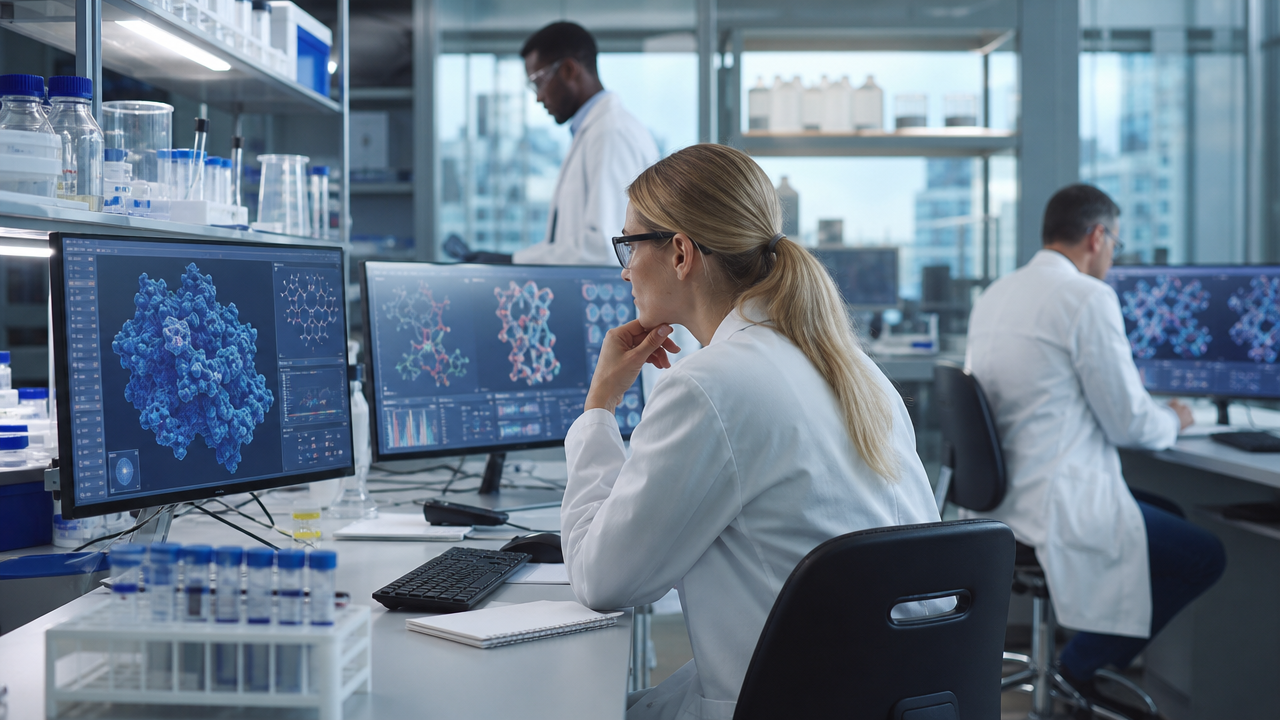
Anthropic's push into science is moving from AI workbench to drug-discovery ambition. The company wants Claude Science to support research workflows, but it is also signaling interest in developing drugs of its own, including for neglected diseases.
The Verge reported that Anthropic is building toward a more direct role in life sciences, hiring biologists and establishing wet-lab capabilities while keeping many details private. The company has not disclosed which diseases it plans to target, how it would handle clinical development, or whether it will partner with pharmaceutical companies.
That uncertainty is important. AI can help researchers search literature, design candidates, analyze data, simulate interactions and prioritize experiments. But a drug is not validated on a screen. It has to survive chemistry, biology, toxicity testing, manufacturing, regulation and clinical trials.
The opportunity is still real. Scientific AI tools can shorten parts of the discovery process, especially when they help researchers reason across papers, experimental data and molecular structures. They can also make neglected-disease work more attractive if they lower early discovery costs.

Anthropic's move follows a broader pattern in frontier AI. Labs that began with general-purpose language models are moving into coding, security, robotics, biology and enterprise workflows. Science is appealing because the stakes are high and the data-rich workflows are well suited to AI assistance.
The challenge is that scientific credibility is harder to earn than product attention. A model can impress users with a fluent answer and still be wrong. In biology, wrong answers cost time, money and sometimes safety. That is why wet-lab validation matters so much.
If Anthropic develops internal drug programs, it will have to decide what kind of company it wants to be. It could remain a tools provider, become a discovery partner, spin up internal therapeutic programs, or license candidates to biotech and pharma partners. Each path has different risk and regulatory exposure.

There is also an ethics angle. Neglected diseases are underfunded because markets often fail to reward work on them. If AI can reduce discovery cost, that could help. But the hard parts of development and access remain: trials, manufacturing, pricing and delivery to patients.
Claude Science may become a powerful research tool even if Anthropic never becomes a drug company in the traditional sense. The deeper question is whether frontier labs can turn model capability into scientific evidence. That is a slower and more demanding test than a product demo.
Topics: Anthropic, Claude Science, drug discovery, AI research