Research
Claude Science Pushes Anthropic Into The AI Research Workbench Race
Anthropic's Claude Science launch signals a deeper contest over scientific AI. The prize is not just better chat for researchers, but a controlled workbench for literature, data, computation, and scientific judgment.
By Michael G ·

Anthropic's Claude Science launch puts the company deeper into the scientific AI race, where the product is less like a chatbot and more like a research workbench. The important question is whether a model can help scientists move across literature, data, code, experiments, and interpretation without flattening uncertainty into confident prose.
Scientific work is an attractive AI market because researchers already live inside complex information environments. They read papers, clean datasets, write scripts, inspect images, test hypotheses, and explain results. A useful AI assistant can reduce friction across all of those steps.
The Workbench Is The Product
The difference between a science assistant and a general assistant is control. Researchers need provenance, reproducible outputs, careful uncertainty, domain-specific tools, and the ability to inspect how a result was produced. A generic answer box is not enough when the next step might influence a drug target or clinical experiment.
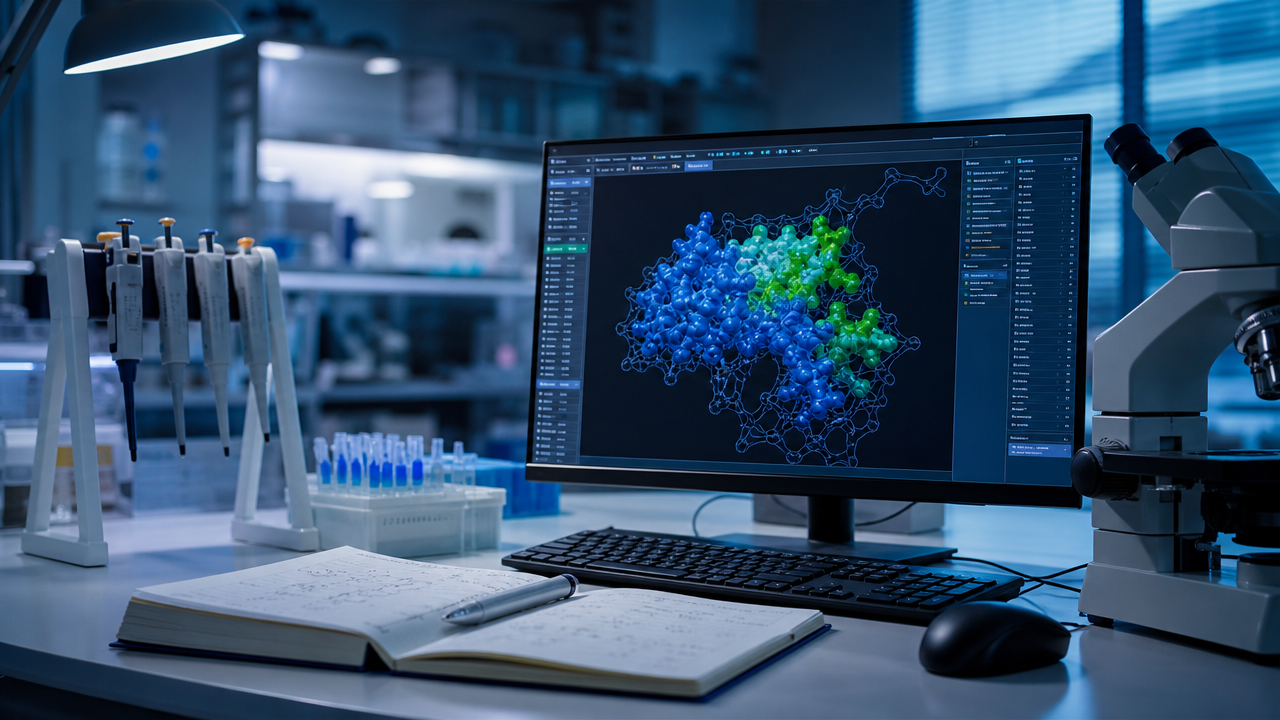
That is why Anthropic's safety positioning could matter commercially. Healthcare, life sciences, and academic institutions are cautious buyers. They need systems that can say what they do not know, protect sensitive data, and support review rather than replacing expert judgment.
AlphaFold Changed The Reference Point
Google DeepMind's AlphaFold changed expectations for scientific AI by showing that models could contribute to hard research problems rather than only administrative work. Claude Science appears to aim at a broader layer: the everyday workbench where scientists reason, search, compute, and collaborate.

The risk is that productivity claims outrun validation. A research workbench must avoid hallucinated citations, brittle code, and overconfident causal claims. The best systems will make uncertainty easier to inspect, not easier to ignore.
Topics: Claude Science, Anthropic, scientific AI, research workbench