Research
CuspAI Funding Puts AI Materials Discovery Into Its Validation Phase
CuspAI's $450 million Series B and AI Materials Foundry show how capital is moving from general AI software into scientific systems that still have to prove themselves in laboratories and factories.
By Michael G ·
CuspAI's new funding round shows that AI for science is moving from research enthusiasm into capital-intensive validation. Reuters reported that the Cambridge, U.K. startup raised $450 million from investors including the U.K. government and Jeff Bezos' investment fund, with Kleiner Perkins and NEA leading the Series B at a $2.6 billion valuation. The company also launched the AI Materials Foundry, a network of more than 45 partners intended to combine data, laboratory capacity, industrial expertise, and computing resources for materials discovery.
The company's own site describes CuspAI as building an AI system for materials discovery and says the AI Materials Foundry includes industrial partners, lab partners, and data partners across semiconductors, energy storage, climate technologies, and advanced manufacturing. That breadth is ambitious. It is also the right kind of ambition for the problem. Materials discovery does not end when a model proposes a molecule or crystal structure. It ends only when a candidate can be synthesized, tested, scaled, and used in a real process.

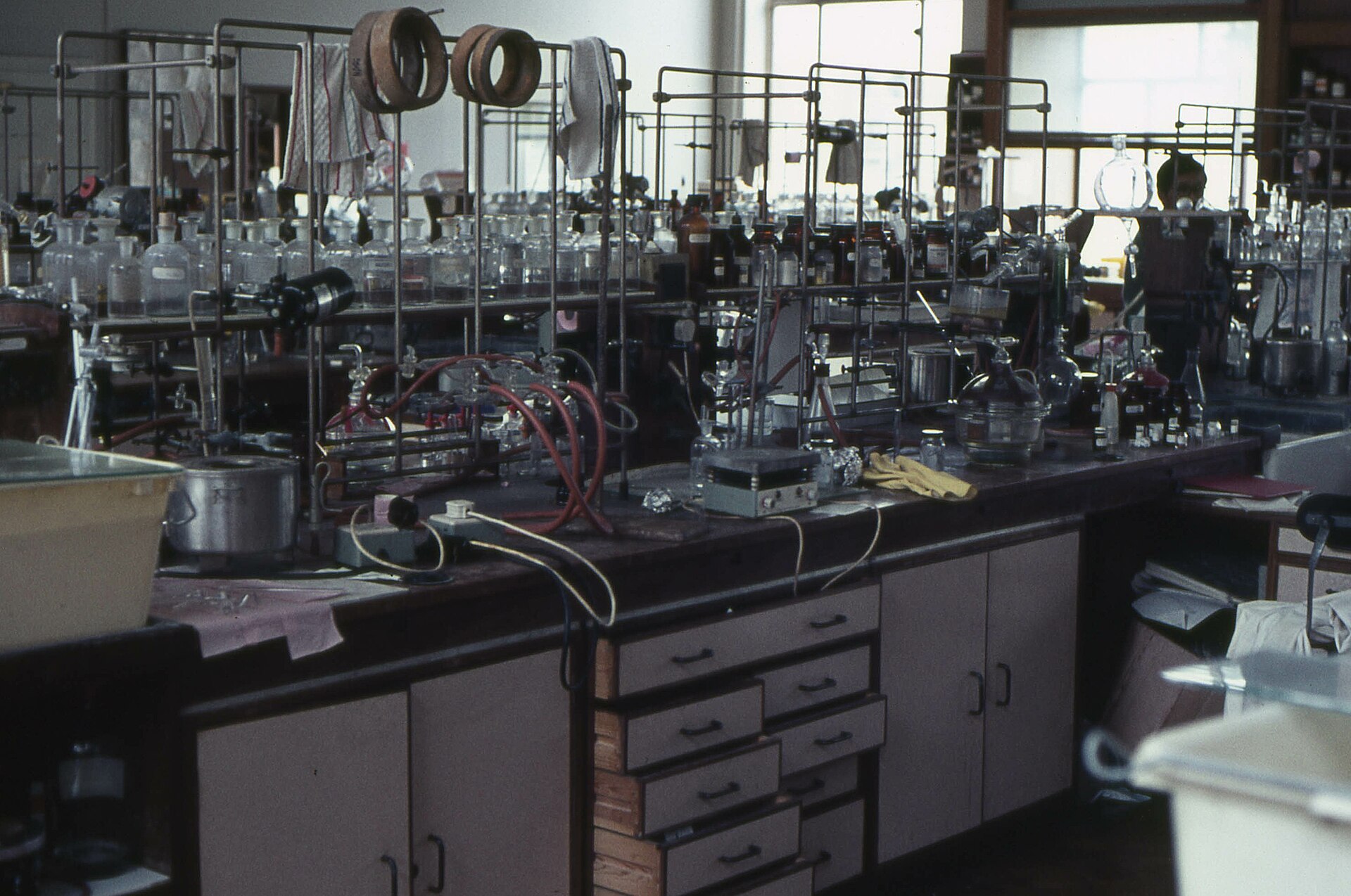
The research constraint is physical. Language models can generate plausible text at scale because the cost of a wrong sentence is often review time. Materials models operate in a harder domain. A promising prediction may fail because the material is unstable, impossible to manufacture economically, dependent on rare inputs, or incompatible with a customer's process window. The lab bench is not a benchmark. It is a filter.
That is why the partner network matters as much as the funding. CuspAI lists partners including Nvidia, Meta, Applied Materials, Hyundai, Fujifilm, Lam Research, Samsung, SoftBank, the University of Cambridge, A*STAR, and data providers. The company is trying to connect model design with the organizations that have measurement equipment, domain datasets, and manufacturing problems worth solving. Without that connection, AI materials discovery risks becoming a stream of candidate lists with no route to adoption.
The investor list also shows why the market is interested. Semiconductors need better materials for manufacturing and packaging. Batteries need safer, cheaper, and higher-density chemistries. Climate technologies need catalysts, sorbents, membranes, coatings, and industrial materials that can survive real operating conditions. If AI can shorten even part of that search process, the commercial value could be large. The word 'if' is doing real work.

The funding round follows a wider shift in scientific AI. Google DeepMind's AlphaFold helped show that machine learning could produce useful scientific predictions, but the path from prediction to product remains uneven. Drug discovery, protein design, weather modeling, nuclear fusion, and materials science all face different validation burdens. The common lesson is that a model is most valuable when it is embedded in an experimental loop that can prove or disprove its suggestions.
CuspAI's valuation will therefore be tested by throughput, not only by scientific elegance. How many candidates can the system generate? How many can partners synthesize? How many pass measurement? How many produce a useful improvement over existing materials? How long does the loop take? Which results are proprietary, and which can be independently validated? Those are the questions that decide whether the company is a discovery platform or a well-funded research promise.
Government participation adds another layer. The U.K. wants sovereign AI capability and scientific companies that can anchor high-value research at home. Backing a materials startup fits that industrial strategy because the outputs could matter for chips, energy, and manufacturing. But public funding also raises expectations around spillovers, jobs, and national benefit. A company that operates globally will have to show how those benefits are shared.
The most useful way to read CuspAI's round is neither as proof that AI can design the next generation of materials on demand nor as another AI funding excess. It is a large wager on a tighter research loop. The company has capital, partners, and a timely problem set. It still has to convert predictions into measured materials and measured materials into products.
That is the validation phase now beginning. The AI industry has become good at producing demos that look complete on a screen. Materials discovery will not be judged on a screen. It will be judged by wafers, batteries, catalysts, coatings, and factory processes that work better because a model helped narrow the search.
Topics: CuspAI, AI materials, scientific AI, Nvidia