Analysis
OpenAI's Broadcom Chip Bet Is Really About The Cost Of Every Answer
The Jalapeno inference chip partnership with Broadcom is OpenAI's attempt to control the recurring economics of serving powerful models, not just another symbolic move into custom silicon.
By Elvin C ·
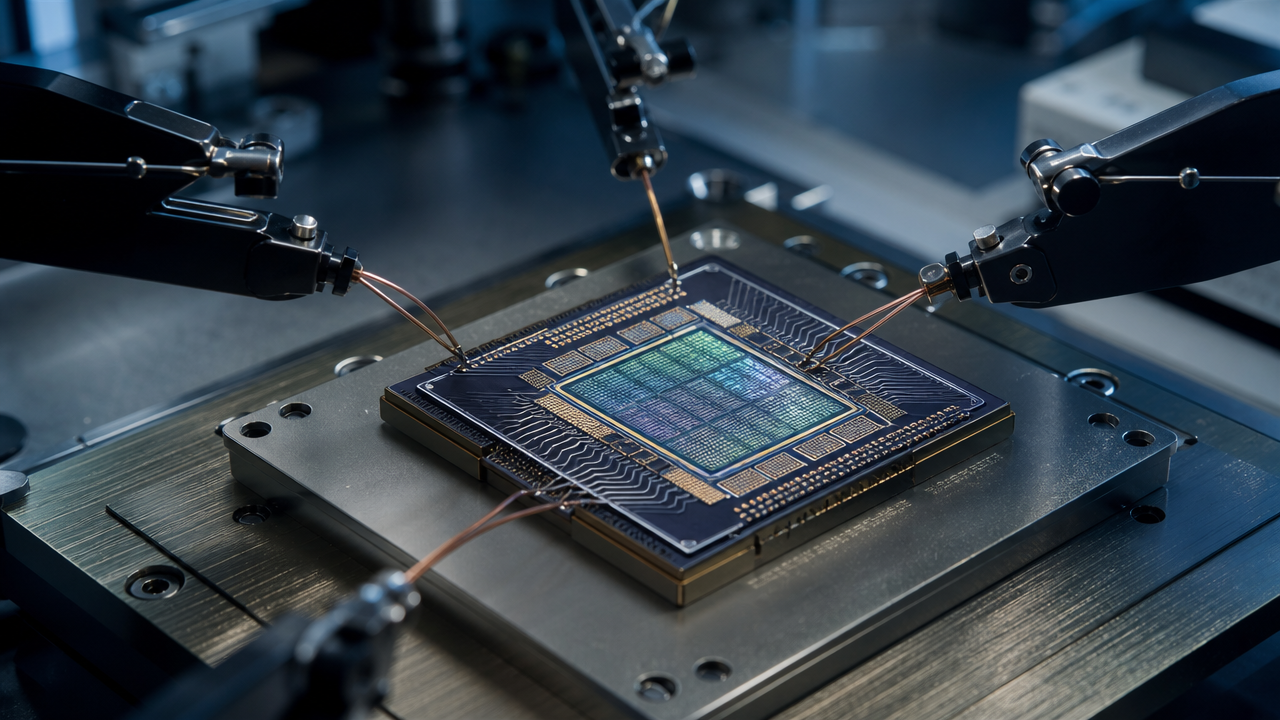
OpenAI's Jalapeno chip partnership with Broadcom is easy to describe as a custom-silicon story. The more useful way to read it is as an attempt to control the cost of every answer a powerful model generates.
Training a frontier model produces a dramatic headline expense. Inference is the quieter, recurring bill that arrives every time a user asks a question, launches an agent, uploads a document or requests a long chain of reasoning. As AI usage grows, that serving cost becomes central to product margins.
OpenAI says the new platform is designed around language-model inference and is intended for an initial deployment by the end of 2026. The strategic appeal is clear. If the company can optimize a chip, board, rack and network around its own models, it may lower power use and improve the predictability of a capacity plan that still depends heavily on outside suppliers.

This does not mean OpenAI is about to abandon the hardware ecosystem that made its scale possible. Frontier companies need flexibility, and mature GPU software stacks remain valuable for research, training and fast-moving experiments. A custom platform is more likely to take on repeatable serving workloads where utilization can be planned and measured.
For Broadcom, the partnership is part of a broader shift in AI spending. The market is moving from buying generic compute capacity toward designing purpose-built systems for the economics of a specific customer. That makes the relationship harder to replicate, but also more strategically important once it works.
The financial test is not whether Jalapeno benchmarks well in a controlled setting. It is whether it improves the full cost stack after memory, networking, power delivery, operations and software maintenance are included. An accelerator that is cheaper in isolation can still disappoint if it adds friction everywhere else.

Investors should also watch what the move says about pricing. A model provider that lowers its cost per generated token has room to cut prices, support more demanding products or protect margins while competitors chase the same customers. Inference efficiency becomes a commercial weapon.
Jalapeno is therefore less about proving OpenAI can make hardware than about proving it can turn infrastructure from an open-ended cost center into a controllable business advantage.
Topics: OpenAI, Broadcom, Jalapeno, AI inference