Analysis
Groq Raises $350 Million At A $3.5 Billion Valuation For Its Inference Cloud
Groq has raised $350 million in a new round led by Disruptive with Nvidia participating, bringing its 2026 funding to $1 billion. The financing backs a neocloud strategy built around inference, while the reported valuation highlights how quickly AI infrastructure economics can reset.
By Elvin C ·
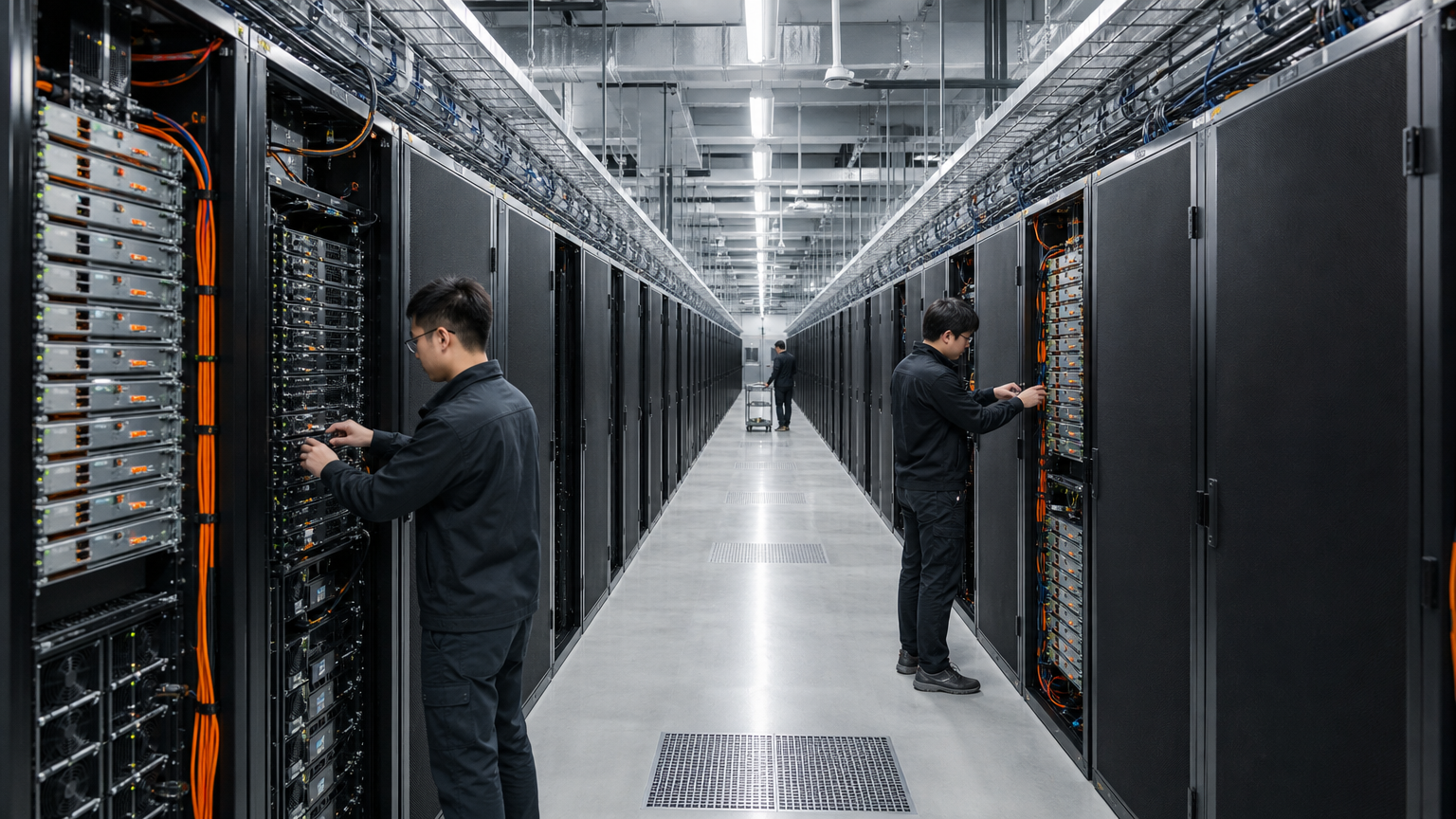
Groq has raised $350 million at a reported $3.5 billion valuation to expand its AI inference cloud, adding a second large financing less than two months after the company secured $650 million. Disruptive led the new round and Nvidia participated, according to Axios, bringing Groq's 2026 capital intake to $1 billion while underscoring how aggressively investors are funding the systems that run models after training.
The valuation is notable because Groq was valued at $6.9 billion in a September 2025 financing and has since reshaped its relationship with Nvidia through a non-exclusive technology license. A lower headline valuation does not by itself reveal the terms of the new round, distributions to earlier investors or the value assigned to different parts of the business. It does show that capital is being priced against a changed company.
Groq now describes itself as a neocloud focused on fast inference. That places it in a market where customers rent specialized capacity to serve models at scale rather than buy chips and operate their own data centers. Demand is real: consumer assistants, coding agents and enterprise workflows generate repeated queries long after a model has finished training.
Inference can also be unforgiving. Customers expect low latency, high availability and falling prices. Providers must pay for accelerators, power, networking and reserved data-center capacity whether utilization is strong or weak. The winner is not necessarily the company with the fastest demonstration. It is the one that can keep expensive systems busy while delivering a price customers will accept.

Inference Has Become Its Own Infrastructure Market
The first years of the generative AI boom emphasized training clusters and frontier-model scale. Production shifts spending toward inference. Every completed task consumes compute, and agentic workflows multiply that consumption through planning, retrieval, tool calls and retries. A model may train once and serve billions of interactions.
That difference creates room for specialized providers. Hyperscalers offer global reach and broad services, but a focused operator can optimize hardware, compilers, batching and networking for a narrower workload. Groq built its identity around predictable, high-speed token generation and is now packaging those capabilities as a cloud service.
The company said in June that it operated 13 data centers, served more than five million developers and processed trillions of tokens each week. It planned to use that round to scale toward 200 megawatts by 2027. Those operating claims provide context for the latest financing, although investors will want utilization and revenue rather than capacity alone.
Nvidia's participation is strategically interesting. Nvidia supplies the dominant general-purpose AI platform while supporting companies that can create more demand for deployed accelerators. Groq's earlier identity centered on its own LPU hardware, but its neocloud can become part of a broader Nvidia ecosystem even as the companies retain different technology. Their earlier non-exclusive licensing agreement established the bridge for that transition.
The partnership reduces one risk and creates another. Access to Nvidia technology and support can make expansion easier and improve customer confidence. Dependence on the leading supplier can compress differentiation if rivals receive the same hardware. Groq must prove that scheduling, software and service quality create value beyond access to chips.
The financing sequence may also indicate the amount of capital required to pivot. Data-center commitments arrive before customer revenue, and global service demands capacity in several regions. Raising twice in two months can be a sign of momentum, but it can also reflect a model that consumes cash rapidly.
Valuation Headlines Hide The Capital Structure
Private-company valuations are often quoted as if every share has the same rights. New investors may receive preferences, downside protection or priority that makes a lower nominal valuation acceptable to existing holders. Groq's licensing arrangements and prior shareholder distributions add further complexity. The $3.5 billion figure is a market signal, not a complete cap-table analysis.
Still, the apparent reset is useful. AI infrastructure companies are not immune to repricing when strategy changes. Investors who paid for a proprietary chip company may evaluate a cloud operator on different revenue multiples, margins and capital needs. A successful pivot can create a larger market while assigning less value to the original asset.
Customers should focus on the operational result. They need transparent pricing, model availability, data controls, geographic coverage and service-level commitments. They also need portability. An inference provider can save money until an application depends on proprietary behavior that makes leaving expensive.
Open interfaces and common model formats can reduce lock-in. They also intensify price competition by making workloads easier to move. Groq therefore needs a service advantage customers notice every day, such as consistently lower latency or better economics under bursty demand, rather than a benchmark that competitors can close.
Developers can compare providers using public measurements, but real applications require their own tests. Token speed does not capture time spent queueing, tool latency, error rates or output quality. The total cost of a completed workflow remains the meaningful unit.
The cloud market also rewards trust. Enterprises will ask how Groq isolates customers, handles prompts and logs, patches infrastructure and responds to incidents. A neocloud selling speed must avoid treating governance as a feature to add after scale.
The Bet Is That Usage Outruns Price Declines
Inference prices have fallen as models and serving software improve. That is good for adoption and challenging for providers. Groq's growth thesis depends on total usage expanding faster than the price per unit falls, while internal efficiency protects gross margin.
Agentic software supports that thesis because one user action can trigger many model calls. The risk is that customers learn to use smaller models, caching and deterministic software for routine steps. A workload that appears compute-intensive during experimentation may become much leaner in production.
Geography can create another advantage. Local capacity helps latency, data residency and resilience. Groq's expansion across North America, Europe, the Middle East and Asia-Pacific can attract regulated customers, but each region adds fixed cost and operational complexity.
The International Energy Agency expects data-center electricity demand to keep rising as AI expands. Providers that secure efficient capacity and operate it well may gain an enduring advantage. Those that overbuild can be left with expensive assets in a market where compute becomes commoditized.
Groq's round finances a clear proposition: inference deserves a specialized cloud and speed can anchor that service. The next evidence must come from revenue quality, utilization and margins. Capital has bought the company another stage of expansion. It has not suspended the arithmetic of running a cloud.
Topics: Groq, Nvidia, inference, neocloud, venture capital