Analysis
Nvidia Invests $3.5 Billion in MediaTek as Custom AI Chips Join NVLink
Nvidia is buying $3.5 billion of MediaTek convertible bonds and bringing the Taiwanese chip designer into NVLink Fusion. The deal lets customers develop custom accelerators while keeping Nvidia's interconnect, memory and rack architecture around them.
By Elvin C ·
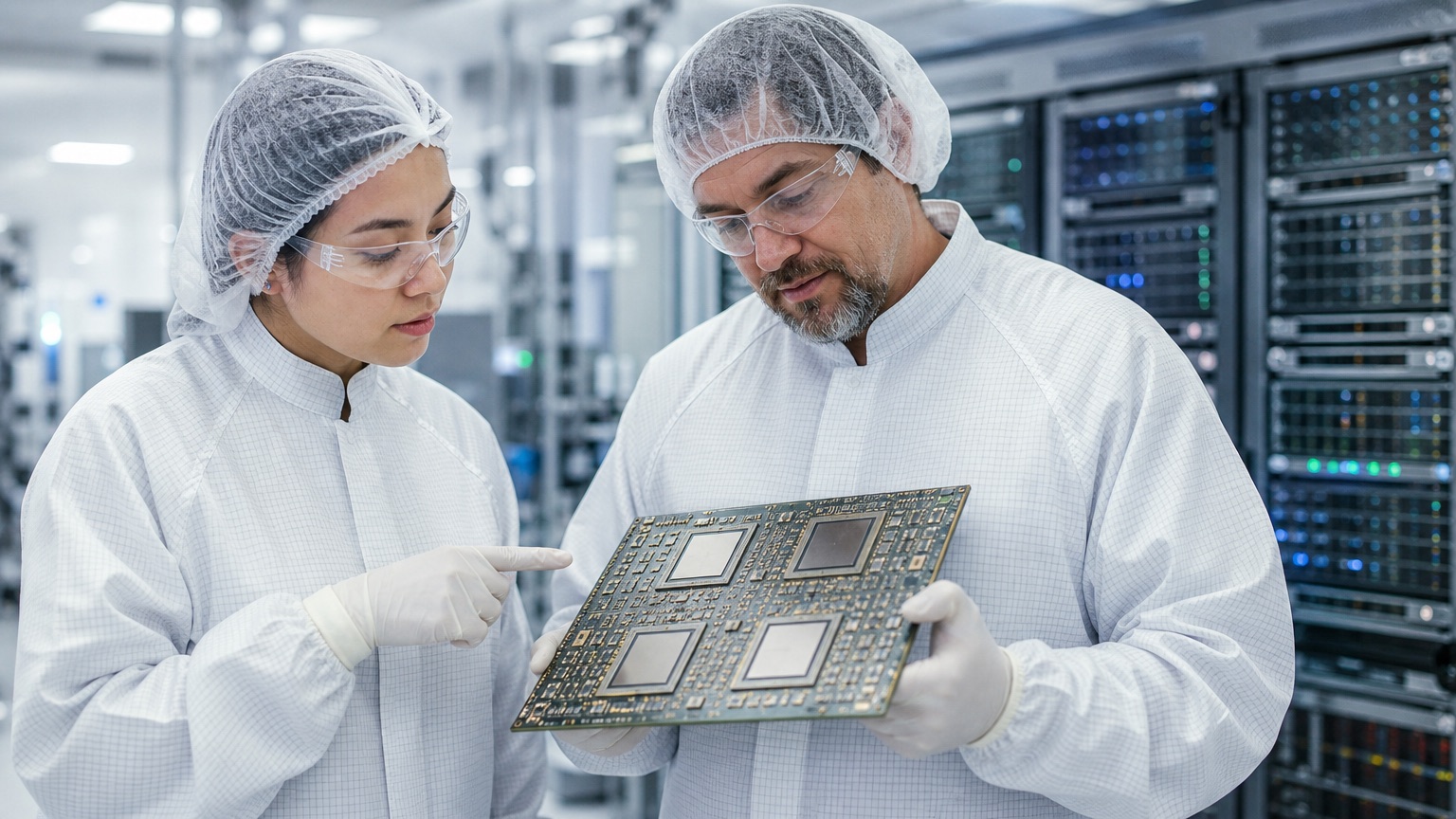
Nvidia has invested $3.5 billion in convertible bonds issued by MediaTek and expanded their partnership across data-center accelerators, AI PCs and automotive computing. The money is large, but the architecture matters more. MediaTek will adopt Nvidia's NVLink Fusion platform, giving cloud providers and frontier-model companies a route to build custom processors that still connect to Nvidia's rack-scale networking, memory and software environment. Nvidia is preparing for a market where some of its largest customers want their own chips, then arranging to remain indispensable around those chips.
The transaction uses convertible bonds rather than a straightforward equity purchase. Public details do not establish the conversion price, maturity, coupon or other terms, so the eventual ownership effect cannot be calculated from the announcement alone. The structure gives MediaTek capital while aligning Nvidia with a design partner that has deep experience in custom silicon, connectivity, system-on-chip development and advanced packaging. It also gives Nvidia an instrument that can participate in MediaTek's equity value if the collaboration expands the Taiwanese company's data-center business.
MediaTek will use NVLink Fusion as a foundation for customers developing custom XPUs, the industry term for accelerators designed around workloads that may not fit a standard GPU. The platform includes an NVLink Fusion chiplet, high-bandwidth chip-to-chip connectivity, customized high-bandwidth memory and access to Nvidia's scale-up fabric. Customers can differentiate the compute die while avoiding the need to engineer every surrounding interface from scratch. That can shorten a multiyear development cycle and lower the risk that a promising accelerator fails during packaging or rack integration.
This is a pragmatic answer to custom silicon. Google, Amazon, Microsoft and other large buyers have strong incentives to design chips around their own models, utilization patterns and cost targets. A proprietary accelerator can reduce dependence on Nvidia and improve efficiency on a narrow workload. Nvidia cannot prevent that engineering from happening. It can make the alternative chip more valuable when connected to NVLink, Nvidia memory technology and Nvidia rack systems, capturing economics in the layers that remain difficult to reproduce.
Nvidia Is Moving Its Moat to the Rack
A modern AI cluster is not a collection of independent processors. Large training and inference jobs move model state, activations and cached data across many devices. Performance depends on whether the fabric can keep those devices synchronized without burning excessive power or leaving expensive compute idle. That shifts purchasing decisions toward complete systems. A faster accelerator can lose its advantage if the network, memory hierarchy or software scheduler cannot feed it consistently.
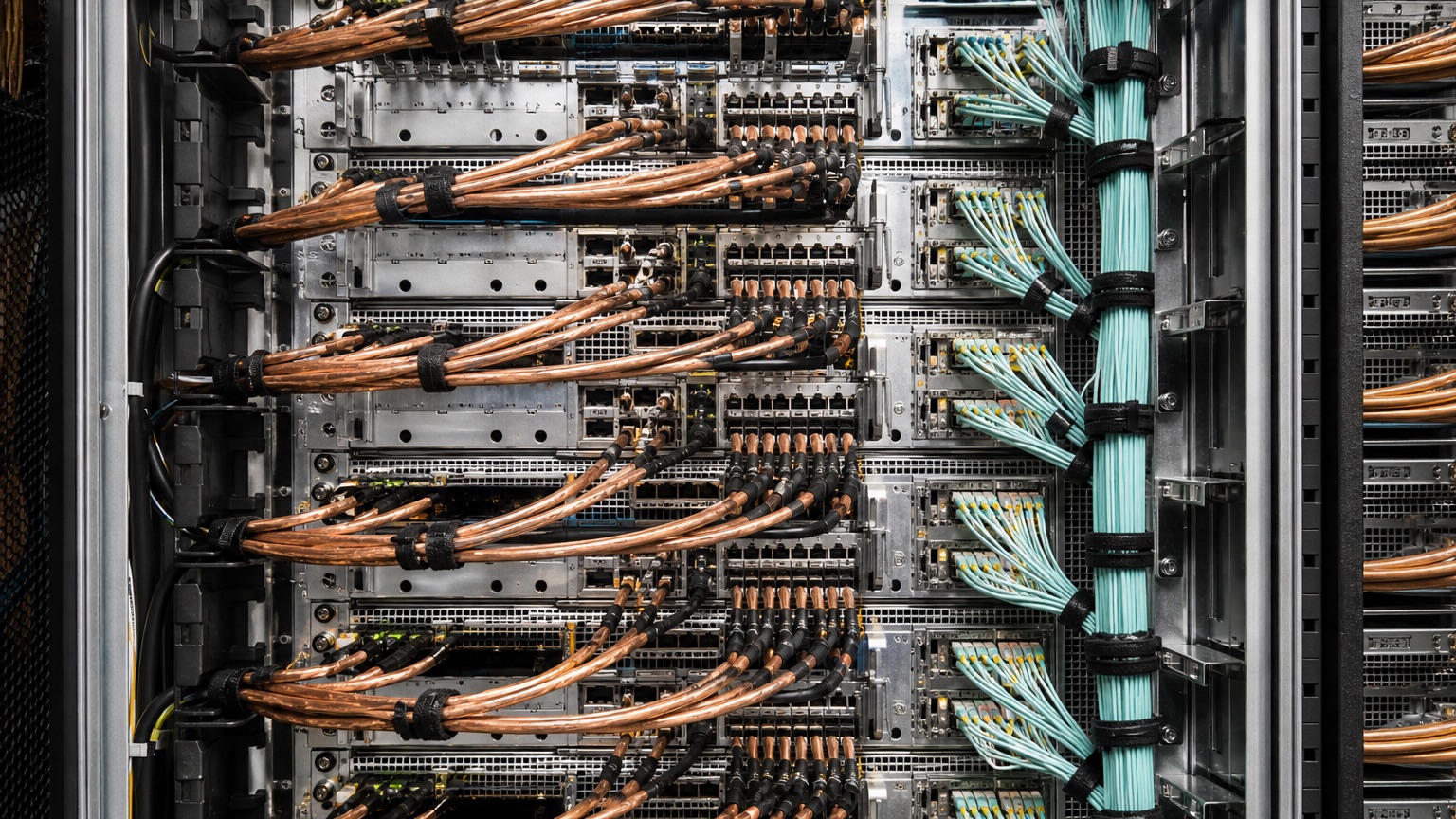
MediaTek's role is to translate the platform into manufacturable designs. Nvidia's announcement emphasizes multi-die architecture, advanced packaging, high-speed SerDes, HBM and input-output engineering. These disciplines are not glamorous, but they decide yield, heat, signal integrity and production timing. A hyperscaler may know exactly what arithmetic it wants to accelerate and still lack the supply-chain organization to turn that idea into thousands of reliable systems. MediaTek can sell that integration expertise while Nvidia supplies the surrounding architecture.
For Nvidia, the approach changes the competitive definition. If the company insisted that every useful rack contain only Nvidia-designed accelerators, a customer's custom chip would represent a lost socket. Under NVLink Fusion, a non-Nvidia XPU can become another participant in an Nvidia-controlled fabric. Revenue may move from the central processor to interconnect chiplets, CPUs, memory architecture, networking, software and validated rack designs. The total share of system value could remain substantial even when the compute die is no longer entirely Nvidia's.
The strategy also raises switching costs. A custom chip connected through a standard interface sounds open, but the broader platform can still bind a customer to Nvidia's roadmap. Engineering teams will optimize around particular fabrics, communication libraries, packaging requirements and management tools. Replacing one accelerator may be possible; replacing the whole system architecture is harder. Buyers will need to distinguish useful interoperability from dependence that has merely moved one layer outward.
MediaTek gains access to customers whose orders can be much larger than consumer-device programs, but the economics are demanding. Data-center chips require long validation cycles, expensive tape-outs and dependable supply. A design win can produce meaningful revenue for years. A delay can strand engineering investment while a customer's workload or Nvidia's own platform changes. The $3.5 billion bond investment gives MediaTek a stronger balance-sheet relationship with its most important partner as it accepts those risks.
The Partnership Runs From Cloud to Car
The companies are also extending their work on local AI. MediaTek collaborated on the GB10 Grace Blackwell Superchip used in DGX Spark, pairing an Nvidia GPU with a CPU through NVLink-C2C. Future RTX Spark products are intended to bring similar integration into consumer PCs and enterprise workstations. That market is different from hyperscale infrastructure, but the design logic is the same: Nvidia provides accelerated computing and software while MediaTek supplies power-efficient system integration.
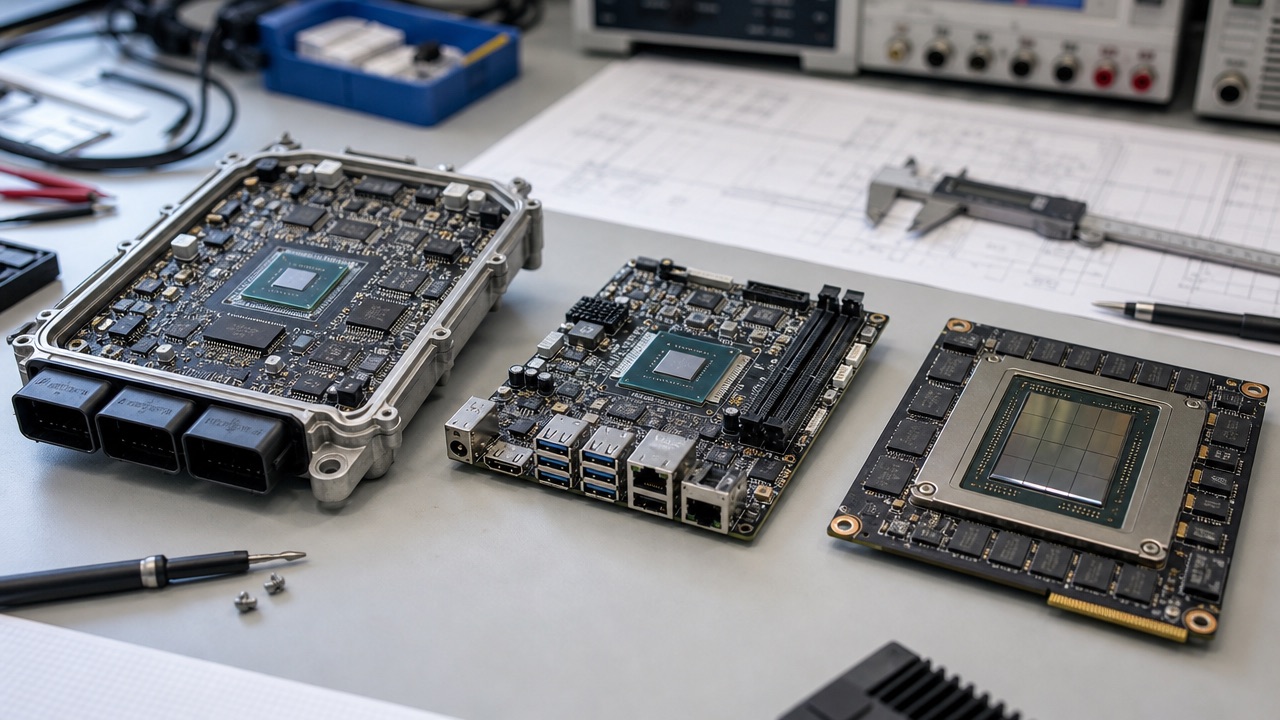
Automotive work adds another long-duration market. MediaTek and Nvidia plan multiple generations of platforms for software-defined vehicles. Car programs have slower qualification cycles and stricter safety requirements than consumer electronics, but they can create stable revenue once a design reaches production. Combining MediaTek connectivity and SoC experience with Nvidia's graphics and autonomous-driving stack allows both companies to spread engineering across infotainment, driver assistance and in-vehicle AI.
The three markets give the bond investment strategic breadth, though they also make performance harder to judge. Investors should look for disclosed design wins, data-center ASIC revenue, conversion terms and evidence that NVLink Fusion customers reach production. Announcing a platform partnership does not guarantee that cloud providers will commit volume. Some will continue building proprietary fabrics to control more of the stack. Others may use Nvidia compatibility as leverage while maintaining alternatives.
Nvidia's risk is that supporting custom accelerators helps customers improve chips that eventually compete more directly with its GPUs. The counterargument is that those projects will happen regardless, and a platform role gives Nvidia visibility, revenue and influence over the resulting systems. The company is betting that the complexity around an accelerator grows faster than the value lost from not owning every transistor. At rack scale, integration can be the product.
MediaTek's risk is concentration. A close Nvidia alliance can open markets, but it can also shape product choices around one partner's standards. The company will have to preserve the ability to serve customers whose accelerators or cloud strategies do not align completely with Nvidia. The convertible bond adds financial alignment before the market has seen how much independent control MediaTek retains over pricing, customer relationships and intellectual property.
Custom Chips Do Not Automatically Break Nvidia's Economics
The deal is a warning against reading hyperscaler ASIC announcements as a simple decline in Nvidia's addressable market. Custom silicon changes who owns the compute die, but a production AI factory still needs CPUs, memory, optical links, switches, software, cooling and orchestration. Nvidia is trying to price itself into as many of those dependencies as possible. MediaTek gives it a credible partner to package that strategy for customers that want differentiation without taking responsibility for every interface.
For customers, the useful question is not whether a processor is custom. It is whether the complete system delivers lower cost, predictable supply and enough portability to avoid a dead end. A chip can be proprietary and still depend heavily on another vendor's platform. It can also be strategically worthwhile if that dependency reduces execution risk. The procurement decision belongs in a multiyear architecture and financing model, not a benchmark slide.
Power efficiency will determine whether the architecture delivers on its promise. A custom XPU may remove circuits that a specific workload does not need, but interconnect and memory can consume much of the saved power if data movement remains inefficient. Customers should demand measurements at the rack and application level, including useful tokens or completed training work per kilowatt. Component thermal-design figures do not capture losses in switches, optics, cooling and underutilized processors.
Supply allocation is another reason to partner. HBM, advanced packaging and leading-edge fabrication remain constrained resources. MediaTek can coordinate design and manufacturing, while Nvidia has influence across a large supplier ecosystem. The collaboration may give customers a more predictable path to volume than an isolated startup ASIC project. It may also concentrate orders around suppliers selected by Nvidia and MediaTek. Buyers should understand which components are dual-sourced and which become single points of schedule risk.
Software portability deserves equal attention. Custom chips often begin with one high-volume model or kernel, then encounter a production workload that changes faster than hardware can be redesigned. Compiler quality, communication libraries and debugging tools decide whether the system can adapt. NVLink compatibility solves communication, not the entire developer experience. MediaTek and Nvidia will need to show that customers can bring existing frameworks to a custom XPU without building a private software organization around every update.
The convertible investment can also influence negotiations with foundries and packaging providers. A deeper financial relationship signals that the collaboration spans multiple generations, which can justify reserved capacity and shared engineering. It can make competitors wary of whether MediaTek will treat their designs with equal priority. Clear separation of customer intellectual property and transparent project governance will be necessary if MediaTek wants to serve multiple hyperscalers whose custom accelerators compete with one another.
Regulators may examine the arrangement if Nvidia's platform becomes the default route for bringing alternative accelerators to market. A standard can lower entry barriers while strengthening the company that controls certification and future compatibility. The competition question will not be whether NVLink Fusion is useful. It will be whether partners can implement the interface on fair terms, whether rival fabrics can interoperate and whether Nvidia can disadvantage a chip that competes too successfully with its own processors.
Nvidia's $3.5 billion check makes its position clear. It does not intend to fight the custom-chip cycle only by shipping a faster GPU. It intends to own the connective tissue that lets many kinds of accelerators behave like one machine. If MediaTek converts that promise into production racks, Nvidia may lose exclusivity over the processor and gain a broader claim on the infrastructure surrounding it.
Topics: Nvidia, MediaTek, NVLink Fusion, custom silicon, AI infrastructure