Analysis
Nvidia Warns Customers of AI-Related Price Increases Across Product Lines
Nvidia has reportedly notified customers of upcoming price increases tied to artificial intelligence demand, affecting components from processors to memory and networking equipment. The move reflects broader supply constraints and cost pressures rippling through the data center industry as enterprises accelerate AI deployments.
By Elvin C ·
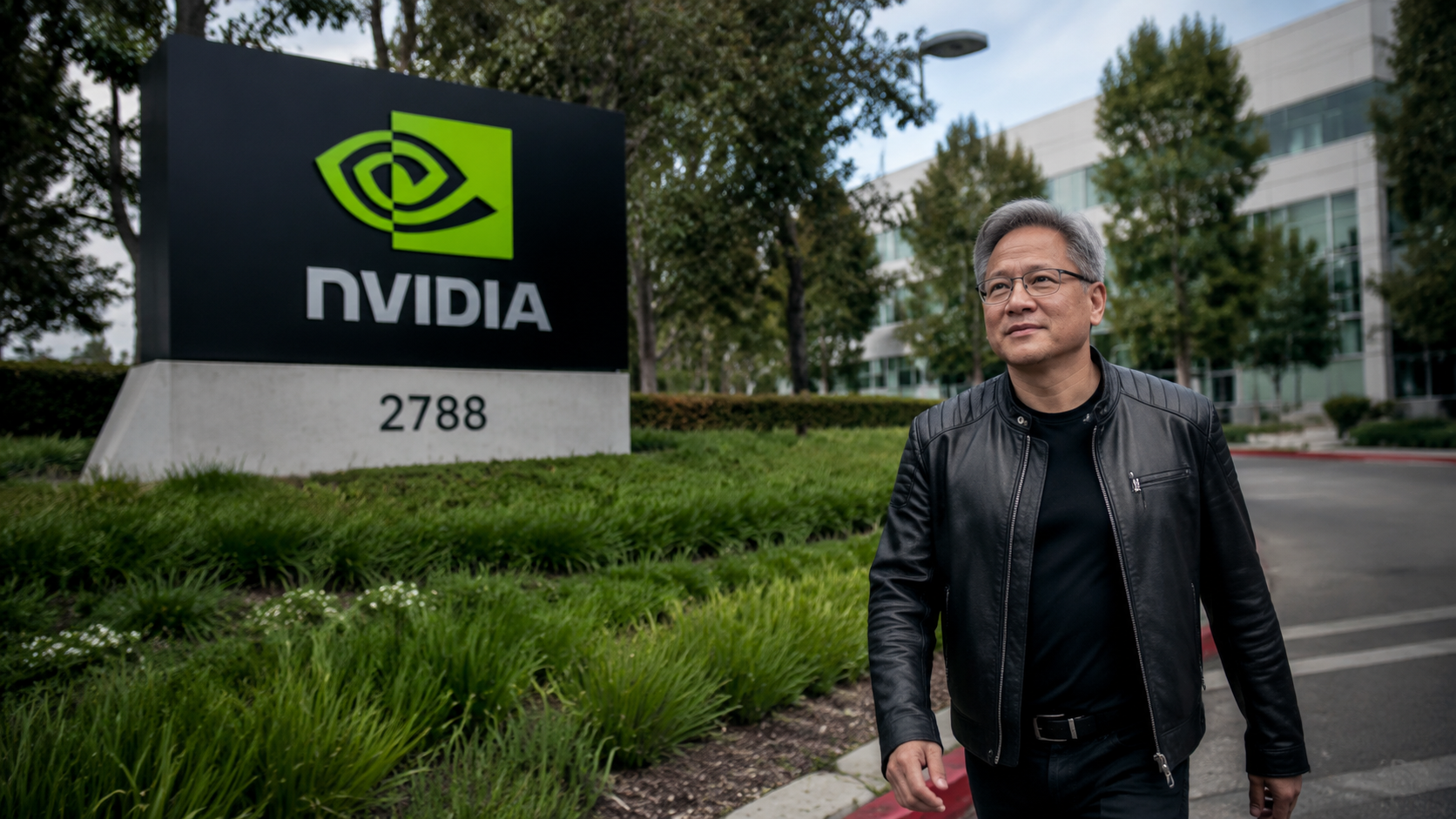
Nvidia has warned customers about forthcoming price increases on its AI-related products, according to reporting by CNBC, signaling how acute supply constraints and manufacturing costs have become across the semiconductor industry's most profitable segment. The warnings, communicated to enterprise buyers and cloud providers, reflect the company's effort to pass through cost pressures while demand for AI infrastructure remains robust enough to absorb higher pricing. The timing matters: as generative AI adoption accelerates across Fortune 500 companies and hyperscale cloud operators, Nvidia faces a rare negotiating position, yet one complicated by competitive dynamics, customer concentration risk and the sheer capital intensity of scaling production.
The specific percentage increases were not disclosed in available reporting, and Nvidia did not immediately elaborate on which product categories would see the steepest adjustments. However, the company's warnings appear to encompass its flagship GPU lines used in data centers, as well as supporting infrastructure components including memory subsystems, networking fabric and power delivery systems. The breadth of the pricing action suggests this is not a discrete product issue but rather a systematic response to cascading cost pressures across Nvidia's entire AI supply chain. Manufacturing constraints, substrate costs and the complexity of packaging advanced silicon all contribute to the picture. For buyers, the distinction between list prices and actual system costs matters enormously: a 10 percent increase in GPU pricing might translate differently depending on whether customers are sourcing bare processors, fully configured servers or managed cloud services where Nvidia's costs are one component of a broader offering. August 22 news index documents the reporting behind this account.
The supplier concentration underlying these negotiations creates unusual leverage for Nvidia. The company controls roughly 80 to 90 percent of the discrete GPU market for AI workloads, meaning customers have few alternatives when facing price increases. Major cloud providers like Amazon Web Services, Microsoft Azure and Google Cloud, along with enterprise AI teams, need Nvidia's hardware to deliver AI services to their own customers. Switching costs are high, competitive options remain immature, and the performance gap between Nvidia's offerings and alternatives widens with each generation. This market structure typically justifies pricing power, yet it also invites scrutiny: concentrated supplier positions in critical infrastructure can trigger regulatory attention, customer resentment and the kind of long-term competitive dynamics that erode dominance.
Supply, Margins and the Memory Question
Behind the pricing warnings lie genuine manufacturing constraints. High-bandwidth memory, a critical component in Nvidia's advanced GPUs, remains in tight supply globally. Production of these specialized memory chips requires capabilities concentrated among a handful of suppliers, creating bottlenecks that filter through to Nvidia's final products. When supply is constrained and demand is inelastic, pricing power follows. Customers need AI infrastructure now, not in six months, and cannot easily defer investments when competitive advantage depends on deploying models faster than rivals. This inelasticity gives Nvidia room to raise prices without losing significant volume, at least in the near term.
The margin implications matter for Nvidia's own investors and for the sustainability of the AI boom itself. If Nvidia raises prices significantly and competitors fail to match innovation, the company's gross margins could expand further, already elevated compared to historical norms. Higher margins attract investment and R&D spending, which can fund the next generation of products. However, higher prices also create incentives for customers to design custom silicon, explore alternative architectures or consolidate purchases to negotiate volume discounts. Large cloud providers in particular have begun developing their own AI processors specifically to reduce dependence on Nvidia and lower their infrastructure costs. Higher Nvidia prices accelerate that timeline. The operational tradeoff is also reflected in high-bandwidth memory.

Networking and power subsystems add another layer to the cost problem. Advanced AI systems require not just processors but integrated cooling, power distribution, interconnect fabrics and data center infrastructure that scales with system count and performance. Nvidia's role extends beyond the GPU into these adjacent markets through partnerships and direct offerings. As customers deploy more complex systems, the total cost per installation rises, multiplying the impact of component-level price increases. A customer planning a thousand-node AI cluster faces significantly higher capital expenditures if every element of the stack increases in price simultaneously.
Cloud Services and the Full Cost Picture
Price increases at the hardware level do not always translate one-for-one into higher end-user costs, particularly in cloud computing environments. Cloud providers can absorb some increases by optimizing utilization, spreading costs across larger customer bases or accepting lower margins temporarily to maintain market share. Enterprise AI workloads accessed through cloud services insulate some customers from direct hardware pricing pressure. However, this buffering has limits. If Nvidia's costs rise faster than cloud providers can recoup through price increases to their customers, margin compression accelerates, and investment in AI infrastructure becomes less attractive. The calculus shifts if returns on AI capital spending deteriorate.

The second-order effects merit close attention. Nvidia's price increases, if sustained and material, create incentives throughout the ecosystem to find alternatives. Custom silicon development accelerates. Open source alternatives gain traction. Competitors like Advanced Micro Devices improve their competitive positioning by offering lower prices or better value at acceptable performance levels. Over time, these pressures can erode Nvidia's market share, even if the company maintains pricing power in the near term. Semiconductor history shows that market leaders often overshoot on pricing precisely when they perceive their moat to be strongest, only to watch it erode as customers vote with their feet. Whether Nvidia navigates this inflection point or repeats that pattern remains uncertain, but the warning signs are visible. cloud computing helps place the issue within its wider policy and engineering context.
Nvidia's warnings to customers also reflect transparency about cost pressures, which can build goodwill or alternatively signal confidence that demand will absorb higher prices without significant volume loss. The company has not disclosed customer response or acceptance rates, so the real test of these price increases remains months ahead. If large cloud providers and enterprise customers push back meaningfully, Nvidia may face pressure to moderate increases or offer volume incentives. If customers accept the higher prices with minimal friction, the company's signals shift to competitors, potentially triggering industry-wide price increases. The AI risk management framework now extends beyond model safety to include economic sustainability of the infrastructure boom underlying AI deployment.
For market observers, the broader lesson is that semiconductor supply chains remain fragile and concentrated even as demand for AI infrastructure reaches record levels. Nvidia's market position is extraordinarily strong, yet not infinite. Price increases signal confidence in demand durability but also begin the process of eroding that confidence among customers who have few alternatives today but strong incentives to develop them tomorrow. The next six months will reveal whether this pricing power proves durable or marks the beginning of a longer, slower erosion of Nvidia's dominance in the AI infrastructure market. The final point can be checked against AI risk management.
Topics: Nvidia, AI pricing, data centers, supply chain, tech markets