Analysis
Lambda Raises $1 Billion in Short-Term Debt to Buy Nvidia GPUs for Microsoft
AI cloud provider Lambda raised $1 billion in short-dated private debt to buy Nvidia GPUs that it plans to lease to Microsoft. The financing shows how the AI infrastructure boom is increasingly transferring utilization and depreciation risk into highly structured credit markets.
By Elvin C ·

Lambda has raised $1 billion in short-dated private debt to buy Nvidia accelerators that the AI cloud provider plans to lease to Microsoft, according to reporting first summarized by TechCrunch. The transaction is another sign that the infrastructure boom is moving beyond venture equity and corporate capital budgets into structured credit. It also concentrates the central wager behind the neocloud model: expensive hardware can be installed quickly, kept busy under contract and monetized before its economics are weakened by depreciation or a newer chip generation.
JPMorgan Chase reportedly arranged the financing. The disclosed outline does not include an interest rate, maturity schedule, collateral package or detailed covenants, so those terms should not be inferred. What is clear is that short-duration debt changes the operating timetable. Lambda needs procurement, construction, networking, software configuration and customer acceptance to move in sequence. A delay at any stage does not merely postpone growth. It compresses the period in which cash-generating capacity can service the loan.
The Microsoft relationship gives the financing a stronger foundation than a speculative data center built without a tenant. Contracted demand can make lenders more comfortable because repayment is tied to an identified customer rather than broad forecasts for AI consumption. Yet a strong counterparty does not remove execution risk. The value sits in delivered, available compute, not purchase orders for chips waiting in a warehouse. Service-level commitments, uptime, power access and the speed of deployment decide when the asset begins earning.
A Capital Stack Built Around Specific Deployments
This is not Lambda's first large credit transaction. In May, the company closed a separate $1 billion secured credit facility. It also announced a $926 million loan to fund Nvidia GB300 systems for a deployment under contract with Nvidia. The pattern suggests that Lambda is matching financing to customers and hardware pools rather than relying on one corporate balance sheet for every expansion. That structure can isolate projects and preserve equity, but it also produces a dense map of obligations whose performance depends on individual deployment schedules.
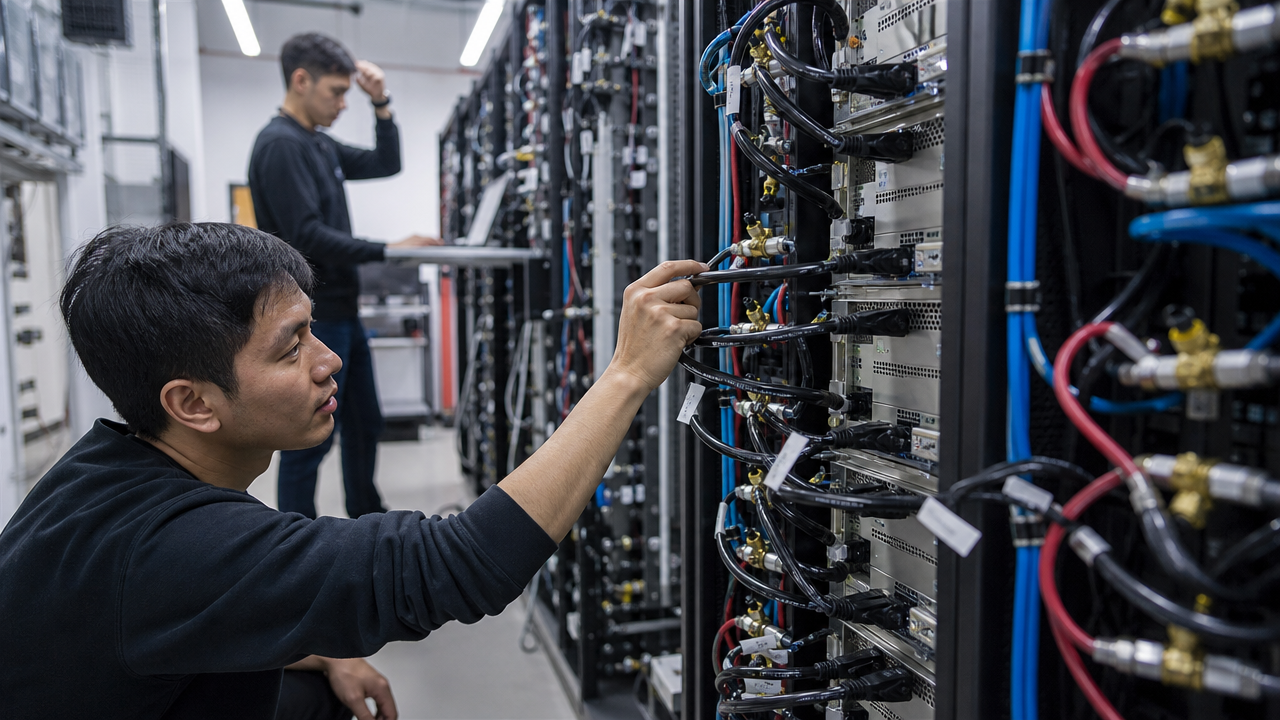
The GB300 financing illustrates why hardware identity matters to credit analysis. Accelerators are valuable while demand is high and compatible software is mature, but they are not timeless infrastructure. A building may remain useful for decades; a premium GPU can lose economic power as faster systems arrive, electricity costs shift or customers change model architectures. Lenders therefore care about how quickly the chips enter service, how transferable the equipment is and whether a contract survives a change in the customer's own infrastructure strategy.
Lambda's advantage is specialization. It can acquire and operate dense GPU clusters for customers that want capacity without owning every layer of the facility. That can be attractive to a hyperscaler seeking additional supply, especially when internal data centers face power or construction delays. The weakness is that a specialist has less room than a diversified cloud company to absorb underutilized assets. If one customer reduces demand, a neocloud must find another workload that fits the hardware, location and network configuration before debt service begins to dominate the economics.
The company is also reportedly discussing a $3 billion pre-IPO equity round. That follows a $1.5 billion raise in November 2025 at a $5.43 billion post-money valuation. Equity and debt serve different purposes in this buildout. Equity can fund teams, software, deposits and corporate expansion without a fixed repayment date. Project debt can lower the equity required for hardware tied to contracted revenue. The blend increases potential returns if utilization is strong, while making missed schedules and margin compression more consequential.
The Revenue Is Contracted, the Margin Is Not
A lease to a large customer can provide revenue visibility, but it does not automatically lock in an attractive margin. Lambda still carries power costs, cooling, networking, maintenance and financing expense. It must manage component failures and reserve enough capacity to satisfy service commitments. If market prices for comparable compute fall faster than expected, a long contract may look valuable, but renewal economics can weaken. If prices remain high, customers will continue looking for custom silicon and other ways to reduce dependence on premium Nvidia capacity.
The scale of the broader credit wave makes this more than a Lambda story. Data cited in the original reporting put AI-related debt raised globally by banks and technology companies above $400 billion in 2026. That capital is financing assets whose value depends on assumptions about model demand, hardware life and power availability. Credit can accelerate a productive expansion when customers pay for the capacity. It can also conceal weak unit economics for longer than equity markets would tolerate because the headline contract value arrives before the full operating costs are visible.

Nvidia benefits from this market in two ways. It sells accelerators, and demand for financing helps customers place larger orders sooner. But GPU-backed credit also creates a feedback loop. High expected rental revenue supports borrowing; borrowing supports hardware purchases; more installed hardware increases supply and eventually tests the rental price assumptions used to justify the loans. The cycle remains healthy only while workloads grow quickly enough to absorb capacity without forcing operators into discounting.
The company's business is built around giving developers and enterprises access to accelerated computing. That proposition is straightforward, but its financial structure is becoming more complex as individual deployments reach billion-dollar scale. Investors evaluating the company ahead of a possible public offering will need more than bookings and GPU counts. They will need utilization, contract duration, customer concentration, cash conversion and the relationship between equipment depreciation and actual replacement cycles.
Deployment Speed Becomes a Credit Metric
The immediate test is operational. The chips must arrive, power must be available, clusters must pass acceptance and Microsoft workloads must begin generating contracted payments before short-term debt becomes expensive waiting capital. None of the public information establishes that the timetable will fail. It does show why AI infrastructure finance increasingly resembles project finance compressed into a technology cycle: the borrower is underwriting both construction execution and a rapidly changing asset.
Power contracts deserve the same scrutiny as chip orders. A GPU cluster that arrives before firm electricity is available cannot earn its expected return, and temporary generation can introduce costs or permitting delays that were absent from the financing model. Network construction can become another critical path because large training and inference deployments need resilient, high-capacity connections between racks, storage and customer systems. The asset described as a GPU project is therefore a coordinated package of land, power, cooling, fiber and operations.
Customer concentration cuts both ways. Microsoft is a strong buyer with substantial demand, which can support lower financing costs. It is also sophisticated enough to compare Lambda capacity against its own infrastructure and other suppliers. If a contract expires when more capacity is available, renewal pricing may favor the customer. Lambda's long-term resilience depends on building software and service capabilities that make the relationship more valuable than access to a fungible pool of chips.
Accounting presentation will matter if Lambda proceeds toward an initial public offering. Investors will need to understand which entities own the equipment, how debt is consolidated, when revenue is recognized and how depreciation assumptions compare with actual resale values. Rapid growth can look attractive while capital expenditures and financing obligations sit elsewhere in the statements. Clear disclosure would let the market separate durable cloud gross profit from returns created mainly by leverage during a period of scarce supply.
The credit market faces its own concentration risk. Banks and private lenders may believe each loan is protected by a high-quality customer contract and valuable Nvidia collateral. Across the system, many loans can still depend on the same assumptions about AI demand and accelerator prices. If those assumptions change, lenders may try to sell similar hardware or refinance similar projects at the same time. Project-level protection does not eliminate a correlated market cycle.
Insurance and equipment warranties are part of the capital structure as well. Dense accelerator systems can suffer component failures, cooling incidents or interruptions whose cost reaches beyond replacing one board. Lenders will want coverage and maintenance arrangements that protect the revenue stream, while operators must understand exclusions tied to configuration or environmental conditions. Those details rarely appear in a funding headline but can decide recoveries when a project underperforms.
Regional concentration should be disclosed alongside customer concentration. A portfolio of clusters in one power market can face the same grid constraint, weather event or regulatory change. Lambda can reduce that risk through geographic diversity, though spreading deployments increases staffing and network complexity. The best location is not simply where electricity is cheapest; it is where power, fiber, permits, skilled operations and the customer's latency requirements remain dependable together.
If Lambda delivers on time, the financing will look like an efficient way to turn a customer commitment into productive capacity while preserving equity. If installation slips or hardware economics weaken, the same short duration will expose the gap quickly. That is the useful signal in this deal. The AI boom no longer depends only on whether models improve. It depends on whether lenders, operators and customers can coordinate billions of dollars of physical infrastructure before the clock on the underlying chips runs down.
Topics: Lambda, Nvidia, Microsoft, AI debt, neoclouds