Analysis
Mistral Raises €3 Billion as Samsung Backs Europe’s Biggest AI Bet
Mistral has raised €3 billion at a valuation above €21 billion, giving Europe’s leading independent AI lab more capital to train models, build infrastructure and test whether technological sovereignty can become a durable business.
By Elvin C ·

PARIS, France. Mistral has raised €3 billion in a Series D round led by Samsung Electronics, handing Europe’s best-known independent AI company a war chest large enough to compete in a business where ambition is increasingly measured in data centers, chips and long-term power contracts. The financing values the three-year-old company at more than €21 billion after the new money, according to Mistral, and is the largest equity fundraising completed by a European technology company.
The headline number is extraordinary, but the investor list says just as much. Samsung led the round, while the Scaleup Europe Fund managed by EQT and existing investor PSG Equity served as co-leads. ASML, Nvidia, Salesforce Ventures, BlackRock-managed funds and a long list of European financial institutions also participated. This is not simply venture capital chasing another chatbot. It is an industrial coalition placing a bet on a European supplier that promises control over models, compute, data and deployment.
The Price of Staying Independent
Mistral says the money will expand frontier research, training capacity, infrastructure and international commercial operations. It already operates in 20 countries and says more than 125 enterprises, including Airbus, ASML and HSBC, use its technology in mission-critical work. Those customers give the company a more credible route to revenue than a consumer product alone, but they also expect local deployment, auditability and support that can be expensive to provide across jurisdictions.
The valuation assumes Mistral can turn sovereignty from a political slogan into a repeatable product. European governments and regulated companies want powerful AI without sending every sensitive workflow through infrastructure controlled elsewhere. Mistral’s answer combines open-weight models with private compute and software that customers can operate inside their own boundaries. The attraction is clear. The harder part is delivering frontier performance while maintaining the flexibility that makes the company different.
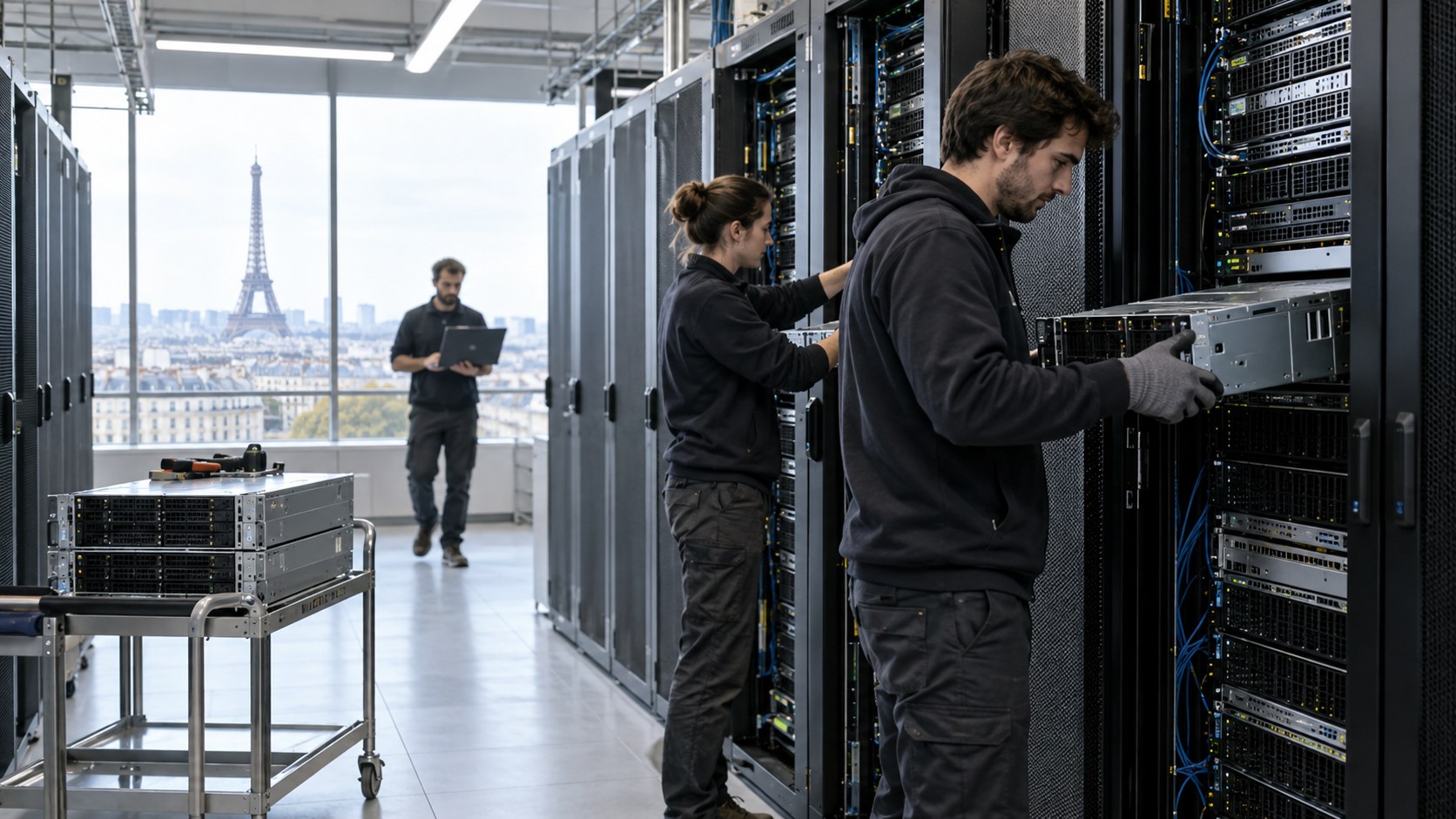
That challenge is capital intensive. Training runs require scarce accelerators, but inference can become the larger recurring expense once customers deploy models widely. Mistral’s AI Cloud is intended to cover both, moving the company closer to the economics of a platform operator than a research lab. Owning more of the stack can protect margins and customer relationships, yet it also exposes Mistral to utilization risk if expensive capacity sits idle.
Samsung’s role adds a strategic dimension. The Korean group spans memory, foundry services, devices and enterprise systems. It does not need Mistral to become another hyperscaler for the investment to matter. A strong independent model supplier can create demand across Samsung’s hardware portfolio and give the company another route into enterprise AI deployments where customers want alternatives to vertically integrated American platforms.
Europe Gets a Larger Seat at the Table
The round lands as European policymakers try to close the gap between AI regulation and AI production. The European Commission’s AI Factories initiative is expanding access to supercomputing resources, while the AI Act is creating a common compliance framework. Mistral can benefit from both trends if it helps local companies build systems that are powerful, inspectable and deployable under European rules.
Capital alone will not erase the scale advantage held by American labs or the rapid progress of Chinese open models. OpenAI, Anthropic and Google can spread research costs across huge cloud relationships and global product distribution. Alibaba and other Chinese groups have made capable open-weight releases part of a broader platform strategy. Mistral’s path is narrower: it must remain technically competitive while convincing buyers that control and portability deserve a premium.
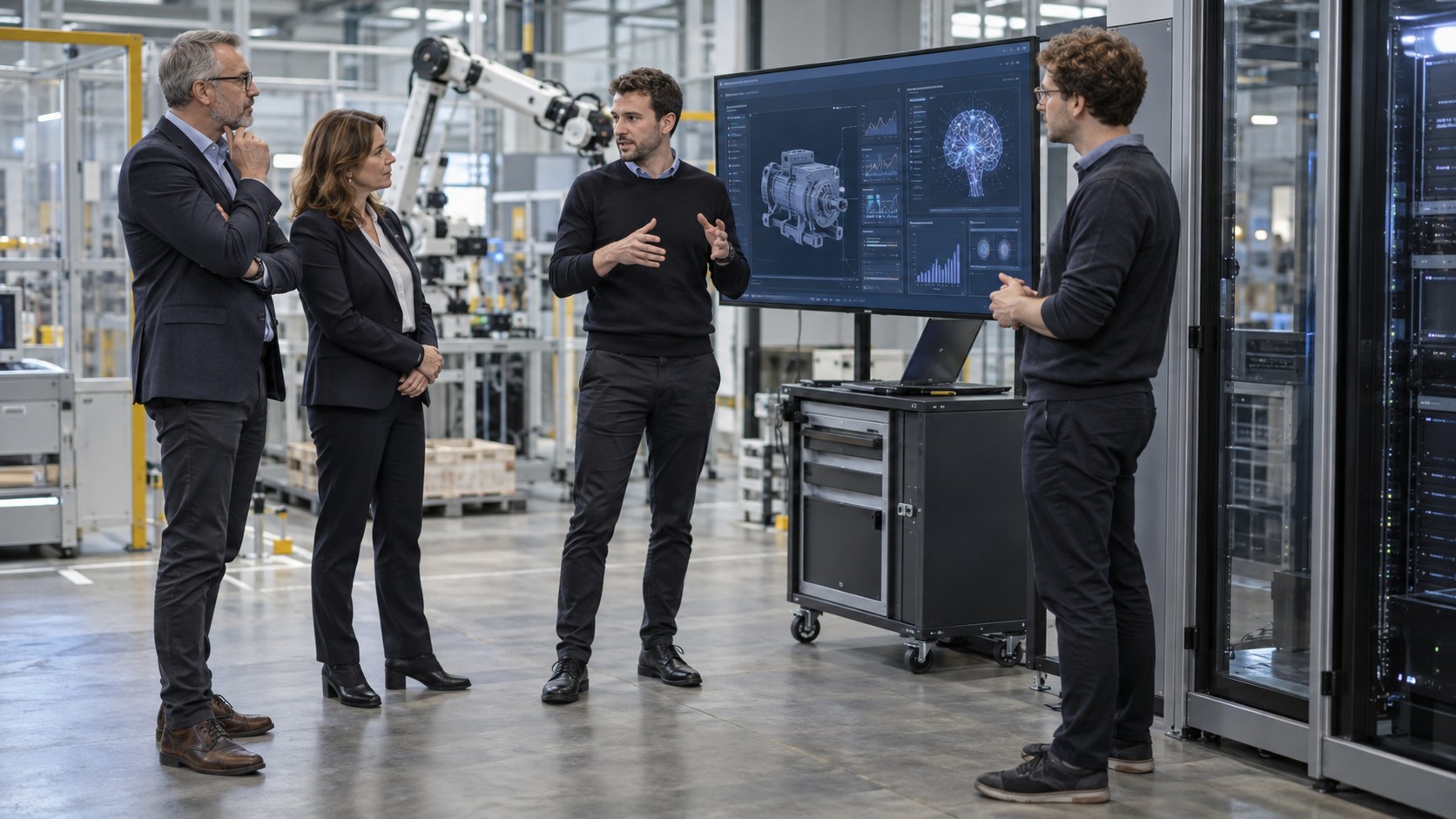
The company’s recent product line shows how it intends to do that. Studio manages prompts and skills as governed assets. Forge helps enterprises build models around proprietary knowledge. Shieldstral addresses policy-sensitive moderation, and Mistral’s in-region inference plan is designed to keep data and operations within chosen jurisdictions. These products make the sovereignty argument tangible rather than abstract.
There is still a tension between openness and commercial capture. Open weights can accelerate adoption and let customers avoid lock-in, but they also make it easier for rivals to adapt the underlying work. Mistral must earn revenue from infrastructure, customization, support and operational trust. Its moat cannot be a download link. It has to be the ability to keep complex systems reliable after the demo ends.
The Next Test Is Commercial
The financing also changes the negotiating balance inside Europe’s AI market. Large customers now have a local supplier with enough capital to make multi-year commitments, while cloud and hardware partners gain a buyer that is not controlled by an American hyperscaler. That can improve competition even for organizations that never select Mistral, because incumbent providers must respond to demands for portability, local processing and clearer contract terms.
Execution will require discipline across several businesses at once. Research teams must keep models competitive, infrastructure teams must secure and utilize capacity, and commercial teams must convert pilots into recurring deployments. Each activity has a different investment cycle. A breakthrough model can arrive in months, a data center takes years, and a regulated enterprise rollout can stall over procurement. The new capital gives Mistral room to synchronize those clocks.
Investors will eventually ask whether the company’s growth justifies a valuation that has nearly doubled in a year. Mistral does not disclose detailed revenue or margins, so the public cannot yet compare the pace of customer expansion with the cost of compute and international operations. The new round buys time to pursue the strategy, but it also raises the performance threshold for the next financing or any future public listing.
Customers should read the announcement as evidence of staying power, not proof of technical superiority. A well-capitalized supplier is less likely to disappear in the middle of a multi-year deployment, and a broad industrial shareholder base may improve access to hardware and markets. Procurement teams still need to test model quality, total inference cost, data controls, portability and incident response against their own workloads.
For Europe, the deal is a milestone because it shifts the question from whether the region can fund a frontier contender to whether that contender can build a sustainable global company. The European Investment Bank has repeatedly identified scale-up financing as a weakness in the region’s technology ecosystem. Mistral has now crossed that financing barrier at unusual speed.
The round gives Mistral the resources to remain independent while the AI market consolidates around a small number of model and infrastructure providers. What it does not provide is immunity from the underlying economics. The company must translate sovereign control into deployments, deployments into recurring revenue, and revenue into enough cash generation to support the next generation of models. Europe has financed the attempt. The commercial verdict will come from customers.
Topics: Mistral AI, Samsung, European AI, funding, sovereign AI