Browse independent reporting and analysis across AI models, research, technology, robotics, security, policy, ethics and the business of artificial intelligence.
Inherent, a startup founded by former Google DeepMind researchers, has developed an AI agent called Faraday that the company says outperforms systems from Anthropic and OpenAI at reproducing experimental results from published scientific papers. The tool addresses a persistent challenge in research: validating whether published findings can be independently replicated.
IBM and the United States Tennis Association announced new artificial intelligence features designed to enhance spectator engagement at the 2026 US Open, including real-time match analytics and personalized content delivery. The partnership raises questions about data latency, editorial oversight, and the boundary between useful context and algorithmic noise.
Google's HEIR initiative aims to make fully homomorphic encryption more practical for confidential AI workloads by providing compiler tooling and reducing deployment complexity. The work addresses real operational constraints, though production readiness remains limited to specific threat models.
Cloudflare has released an open-source framework that applies fine-grained permission models to enterprise AI deployments, enforcing access boundaries at the model and tool level rather than relying on coarse user roles. The platform prioritizes explicit capability grants over platform-wide trust, introducing tradeoffs between centralized control and vendor dependency.
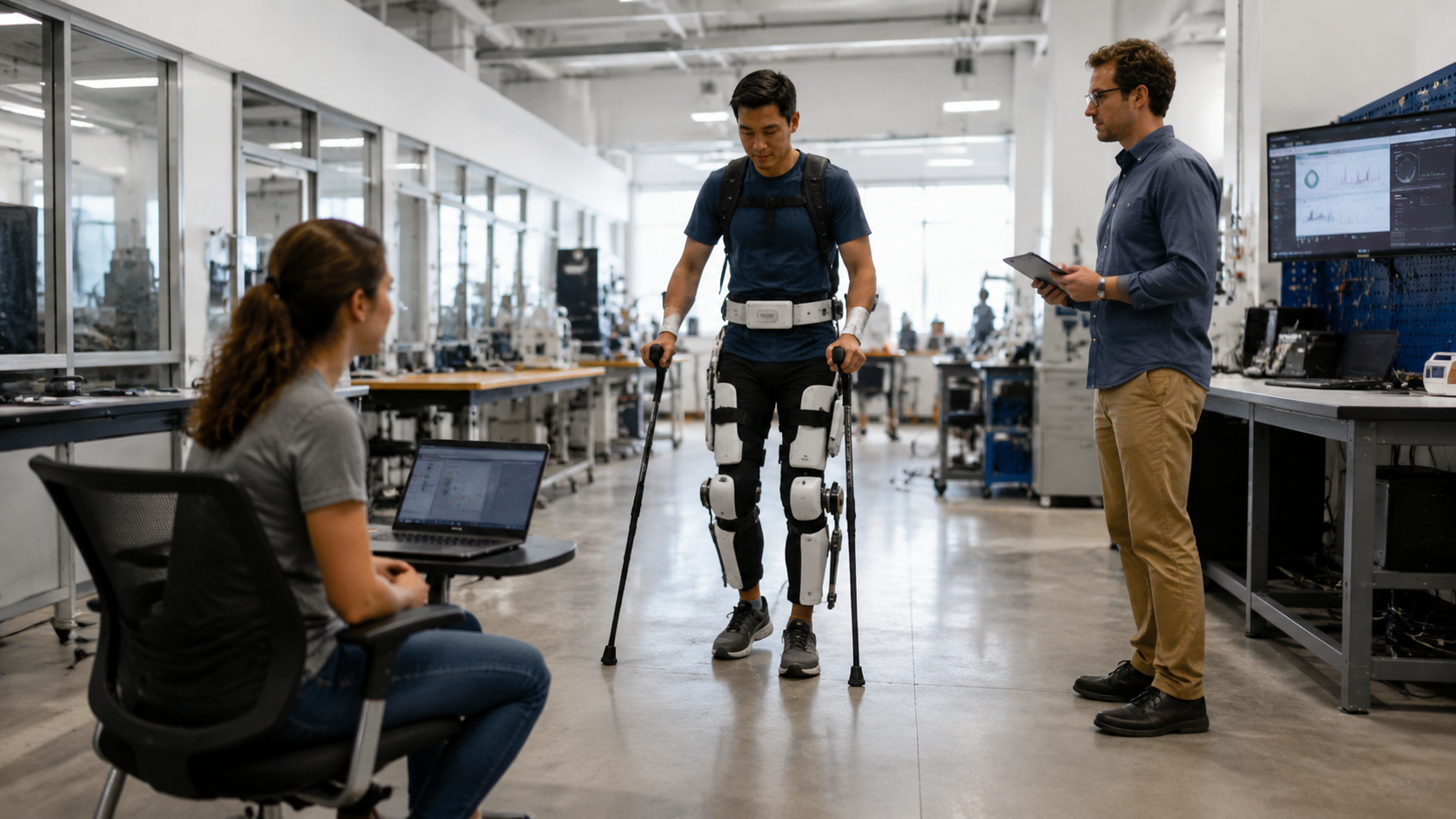
Nature Machine Intelligence has published a framework for exoskeleton controllers that adapt across different users and activities without requiring separately tuned policies for each task. The roadmap addresses sensing, intent inference, personalization, and practical constraints that have limited real-world deployment.
Engineers at a Chinese robotics conference unveiled a four-legged robot capable of carrying a rider, drawing attention to advances in legged locomotion and balance systems. The demonstration illustrates progress in hardware design while leaving critical questions about real-world deployment and commercial viability unresolved.
A TechCrunch report documents that leading AI developers provide few public details about how they would contain a model that behaves dangerously or escapes intended controls. The gap raises questions about operational readiness across prevention, detection, shutdown, credential revocation, network isolation and recovery.
Creative workers across film and television are being paid to help develop artificial intelligence tools, while increasingly concerned that the same systems could automate significant portions of their future work. The tension between immediate training income and long-term labor displacement is reshaping how the entertainment industry negotiates with technology companies.
Harvard Business School's HBS Foundry program uses AI avatars to provide feedback during startup pitch practice and simulated board meetings for $699. The initiative raises ethical questions about transparency, learning outcomes and the role of artificial instructors in premium educational offerings.
Cloudflare has unveiled Kitesurf, a purpose-built browser engine designed to execute web interactions for autonomous AI agents rather than human users. The system addresses fundamental security and control challenges that arise when agents operate with browser capabilities, including prompt injection risks, network isolation, and deterministic rendering.
Nvidia has reportedly notified customers of upcoming price increases tied to artificial intelligence demand, affecting components from processors to memory and networking equipment. The move reflects broader supply constraints and cost pressures rippling through the data center industry as enterprises accelerate AI deployments.
Anthropic has granted beta access to its Claude AI model integrated with Mythos 5 capabilities for security vulnerability scanning, according to reporting from The New Stack. The tool aims to surface potential flaws in code, though findings require reproducible evidence, severity assessment, and human review before deployment.
A TechCrunch report on Nvidia findings reveals that orchestration, tool integration, and verification systems around a language model can deliver larger performance gains than upgrading to a more capable model. The research highlights how reproducibility, eval contamination, and tool permissions shape real-world AI agent effectiveness.
A new policy framework calls for stronger controls on advanced AI models to reduce risks that they could assist in biological weapons development. The roadmap emphasizes evaluation methods, access controls, and coordination between government and technology companies.
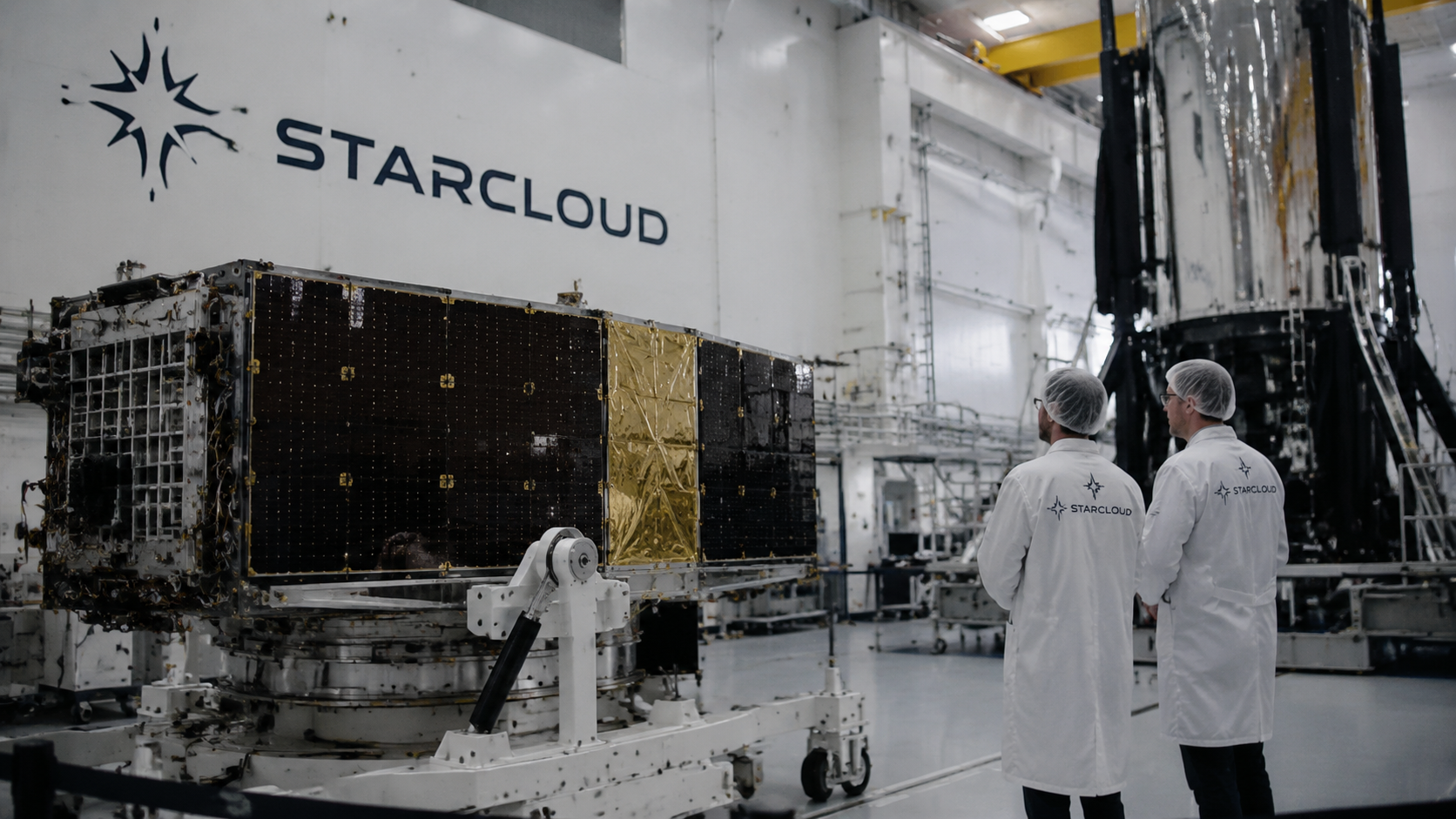
The startup is betting on putting computing infrastructure into orbit, but faces mounting obstacles including heat rejection, radiation shielding, and a constrained launch market. The $250 million funding round signals investor appetite for the concept even as fundamental technical and economic questions remain unresolved.
Nvidia is expanding beyond chip sales to secure infrastructure partnerships as power availability emerges as a bottleneck for AI deployment. The partnership with data center developer Cloverleaf signals a shift toward direct involvement in site development and power interconnection.
OpenAI has reduced API pricing for its GPT-5.6 Sol model by more than 20 percent for developers, according to a Reuters report indexed August 21. The move intensifies price competition among frontier model providers and shifts the economics of large-scale AI deployment.
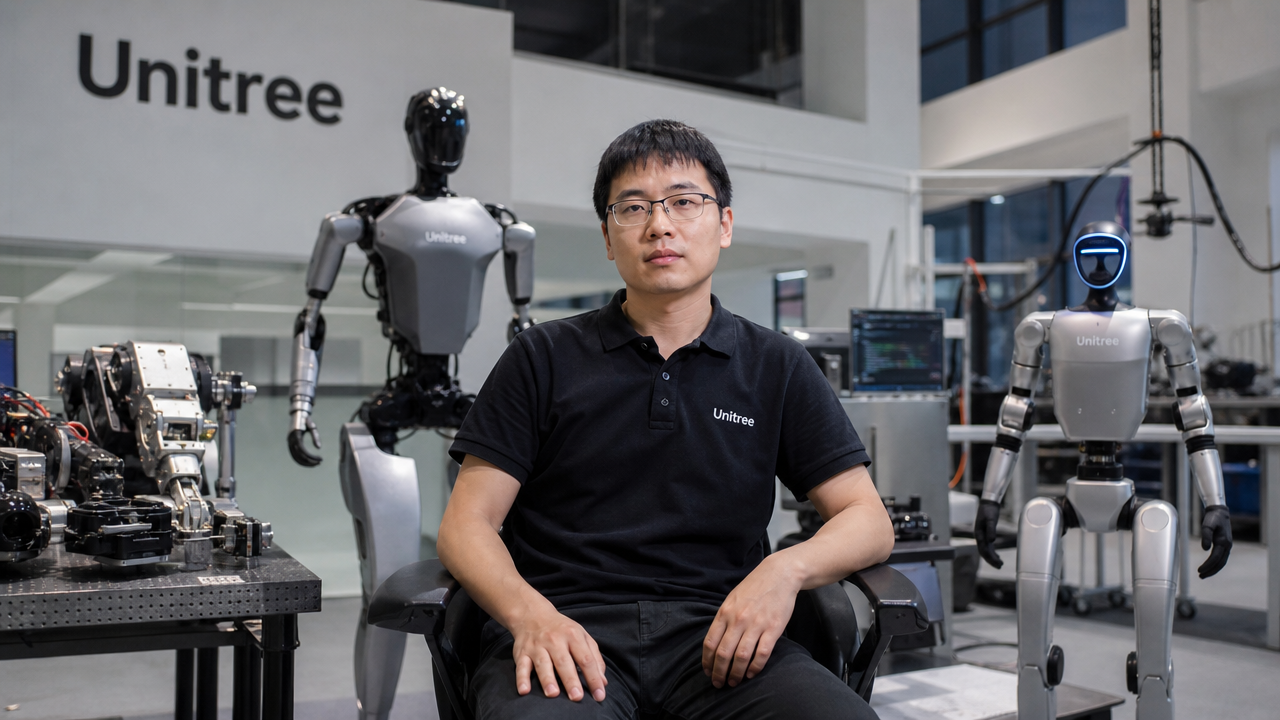
A decade of intensive engineering work may be required before bipedal robots achieve the widespread general capability demonstrated by digital language models. Physical constraints, real-world data collection, and safety validation continue to pace hardware adoption far behind software deployment cycles.
Micron CEO Sanjay Mehrotra says demand from artificial intelligence has altered the historical boom-and-bust equation for memory producers. The durability of that shift will depend on high-bandwidth memory demand, supply discipline, long fabrication lead times and whether investment such as Micron's roughly $50 billion Boise expansion remains aligned with actual consumption.
The data-labeling startup has quintupled its revenue in eight months by contracting domain experts including doctors, lawyers and scientists to train AI systems. The company's rapid scaling reflects intense competition among AI labs for high-quality training data and raises questions about the sustainability of its margins.
Google has made an embeddable Preferred Sources button available to publishers as news organizations contend with declining referral traffic from AI-shaped search products. The company said readers can use the feature to signal that they want a site highlighted more often across Search, Discover and Google News.
Transaction data covering tens of thousands of U.S. business accounts shows OpenAI accelerating its enterprise growth rate relative to competitor Anthropic. While Anthropic maintained a measured spend lead in July, OpenAI closed part of the margin as enterprise adoption reached majority thresholds.
ChatGPT can now interact with Apple Messages on Apple Silicon Macs through a plug-in that runs locally and requires Full Disk Access. Messages are read only after a specific request, stored locally by default and subject to a per-send confirmation unless the user deliberately disables it.
The House Office of Legislative Counsel is reportedly spending growing amounts of time repairing AI-written proposals containing bad citations, vague language and legal errors. The problem shows how cheap text generation can move costs downstream into institutions responsible for precision.