Robotics
Robot Horse and Rider Demonstrated at Chinese Robotics Conference
Engineers at a Chinese robotics conference unveiled a four-legged robot capable of carrying a rider, drawing attention to advances in legged locomotion and balance systems. The demonstration illustrates progress in hardware design while leaving critical questions about real-world deployment and commercial viability unresolved.
By Michael G ·
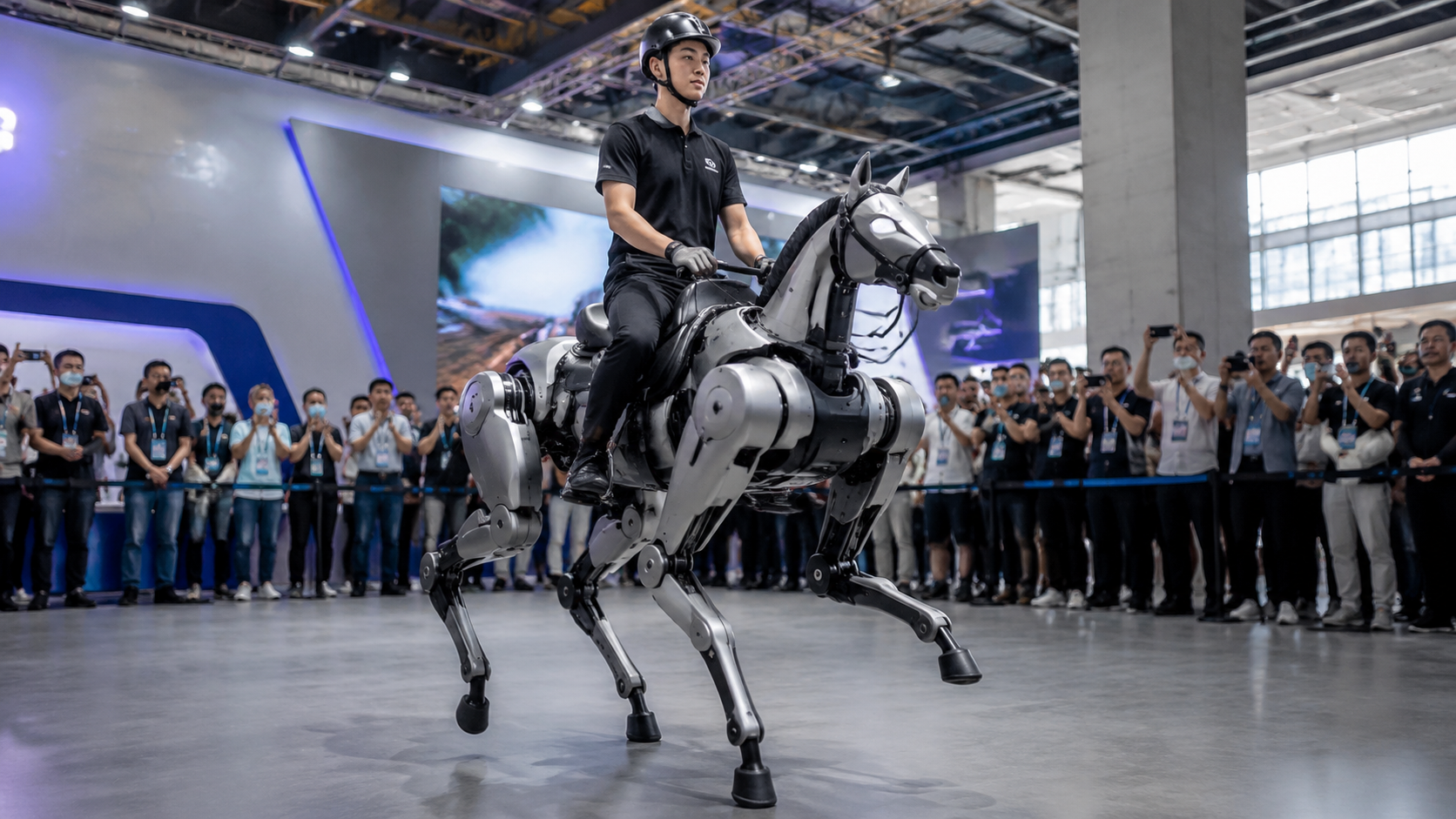
A robot horse and rider demonstration at a Chinese robotics conference has drawn international attention to the state of legged locomotion systems, though engineers and analysts caution that public spectacles often obscure the harder problems of deployment economics and sustained performance. The BBC report on the event documented the robot's ability to carry a human rider across varied terrain, a milestone that highlights technical progress in balance, payload management and structural design. However, the transition from conference demonstration to field-ready system remains a distinct and largely unresolved challenge.
The robot was showcased at a major Chinese robotics conference, where it competed for attention among dozens of other autonomous systems. The World Robot Conference and similar international events have become venues where hardware manufacturers demonstrate engineering capability to investors, researchers and media. Such gatherings serve a legitimate function in stress-testing hardware in front of technical audiences and generating interest in a sector where commercial viability remains uncertain for most applications. BBC report documents the reporting behind this account.
Legged robots face a different set of constraints than wheeled or tracked systems. A four-legged platform must solve the problem of coordinating multiple joints to maintain balance while distributing payload forces across legs that move in sequence. The robot horse, according to reported descriptions, achieved this through a combination of real-time balance feedback and leg coordination algorithms. These capabilities represent genuine engineering accomplishment in robotics, a field that encompasses everything from industrial arms to autonomous vehicles.
Locomotion, Balance and Structural Limits
Walking robots must constantly calculate the position of their center of mass relative to their base of support, a computational problem that wheeled systems largely avoid. The robot horse appears to have addressed this through sensor feedback and active stabilization, allowing it to carry a human payload that might weigh between 60 and 100 kilograms. The terrain over which the demonstration occurred, and the specific payload tested, define the operational envelope: a robot that performs well on flat ground may struggle on slopes, mud or uneven stone surfaces. Without published performance data under controlled conditions, assessing the true range of the system requires skepticism. World Robot Conference offers useful technical background for evaluating the claim.
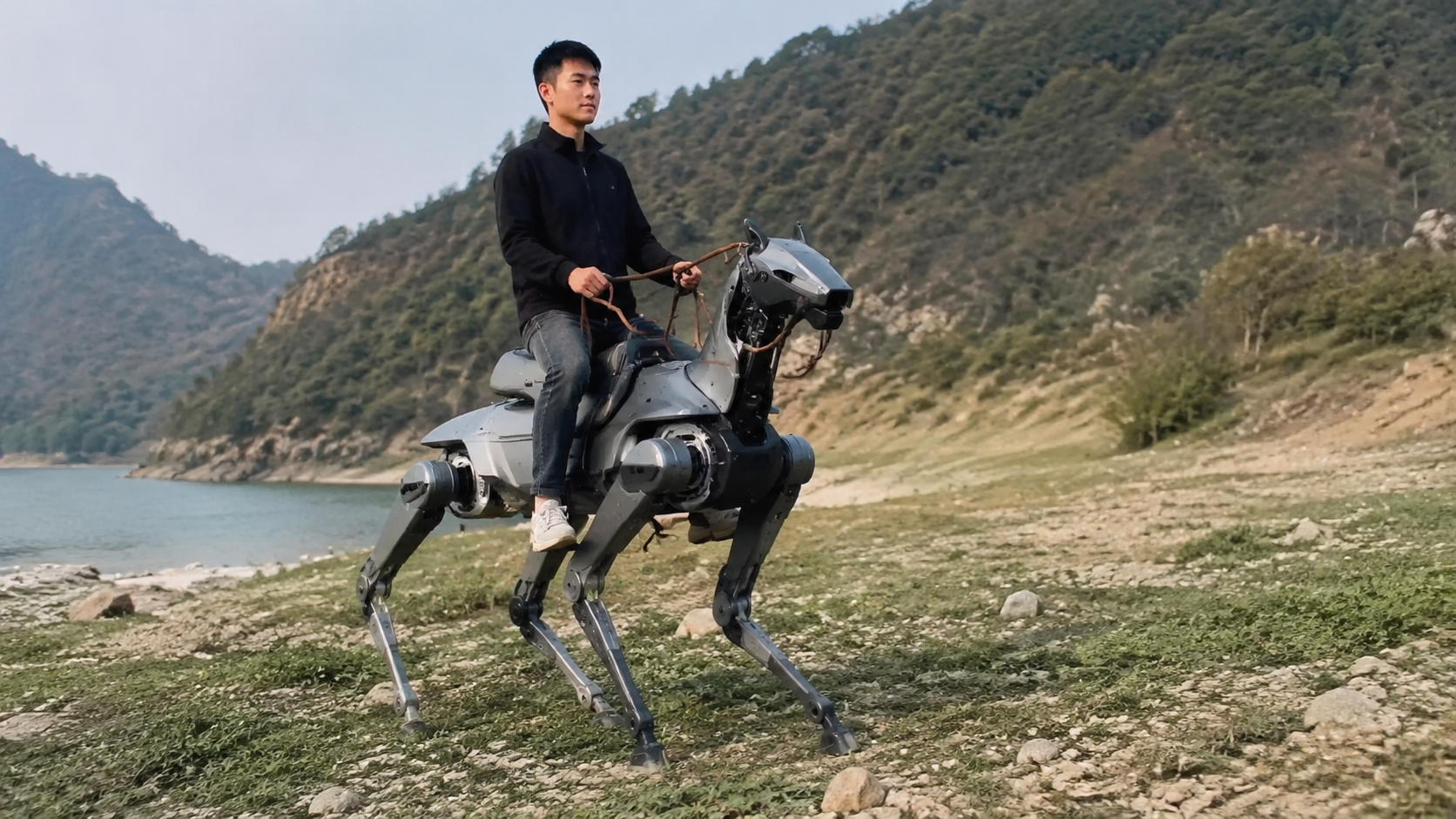
Endurance presents another practical constraint. Legged locomotion requires continuous energy to maintain balance and coordinate leg movement, making battery duration a limiting factor for field deployment. A demonstration lasting minutes to hours provides little insight into whether the system could operate for the full working day required in industrial or transportation contexts. Maintenance also grows more complex with legged systems: four or six legs multiply the potential points of failure compared to wheels or tracks, and replacing damaged actuators or sensors requires technical expertise that may not be available outside major research institutions. The China Association for Science and Technology and other institutional sponsors of such conferences understand that public demonstrations serve multiple purposes. They showcase national capability in advanced manufacturing and robotics, attract venture capital, and provide venues where researchers can present work that might not yet be ready for peer-reviewed publication.
From Demonstration to Deployment
Distinguishing between impressive demonstrations and validated, deployable systems remains essential for understanding the state of autonomous systems. A robot that walks smoothly across a conference floor under careful supervision represents proof of concept, not proof of market readiness. The question of whether such systems will see commercial use in transport, agriculture, mining or rescue operations depends on factors that spectacle cannot resolve: cost per unit, training requirements for operators, reliability under field conditions where sensors may fail and terrain varies unpredictably, and regulatory approval in jurisdictions where such robots might operate. The IEEE Robotics and Automation Society publishes peer-reviewed work on legged locomotion, and engineers in that community understand the gap between laboratory performance and field performance.
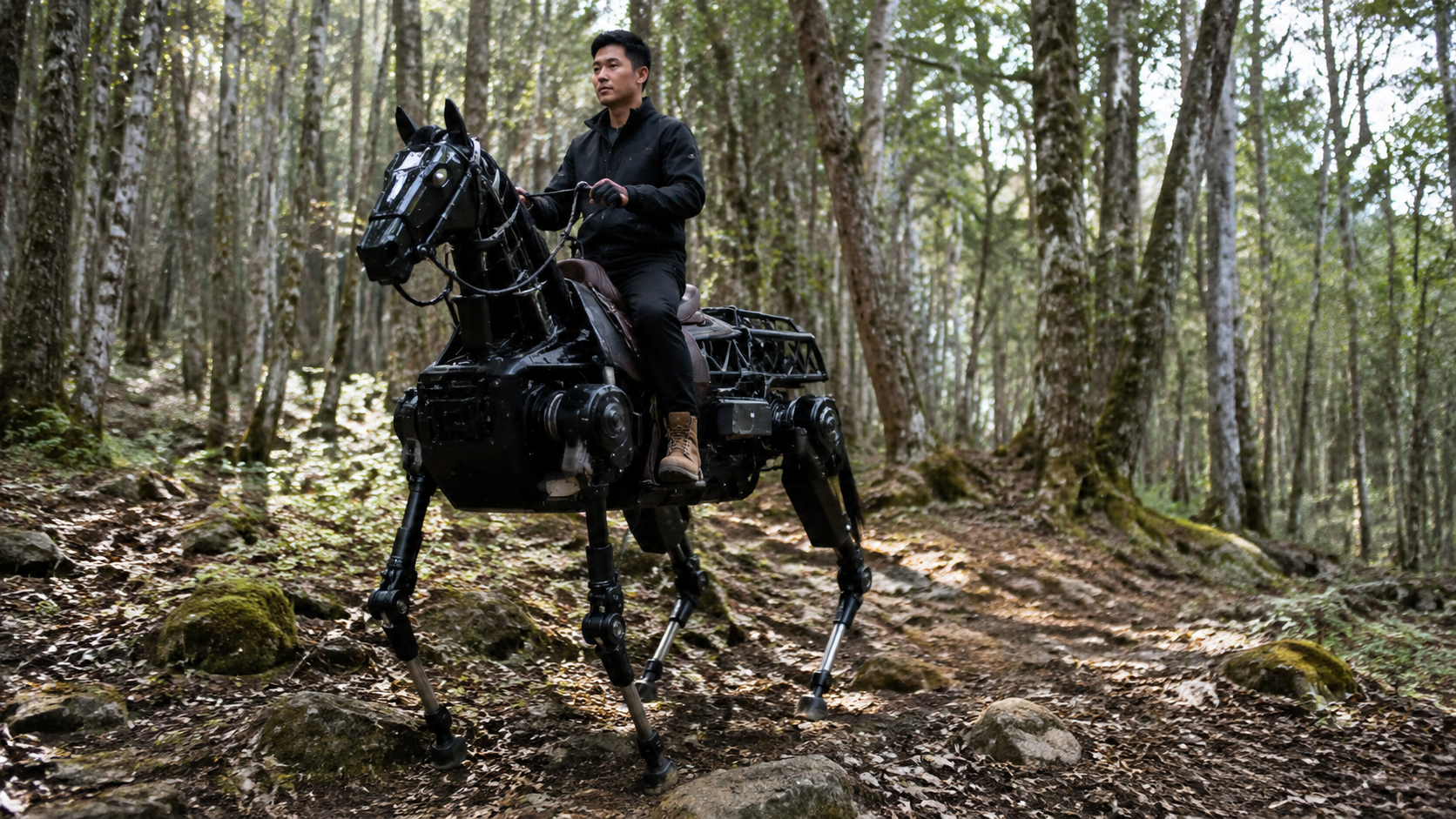
A robot that successfully carries a rider at a conference has cleared a particular engineering hurdle, but has not yet demonstrated the durability, cost efficiency and operational simplicity that customers in agriculture, logistics or transportation would require. Private companies developing these systems rarely publish detailed performance benchmarks or cost analyses, preferring instead to cultivate investor interest through controlled demonstrations. The broader field of autonomous systems has learned from decades of overpromising and underdelivering. Self-driving cars, despite billions in investment and genuine technical progress, remain limited to specific routes and weather conditions. Humanoid robots, repeatedly forecast to enter homes and workplaces, have remained largely confined to laboratories.
The lesson is not that progress is impossible, but that the path from demonstration to deployment involves challenges that public events cannot adequately surface. The robot horse may eventually find applications in specific niches, much as tracked and wheeled robots have found roles in mining, construction and disaster response. Or it may remain primarily a research platform and conference centerpiece, valuable for advancing the field but not for commercial logistics. For now, the demonstration serves its intended purpose: it advances the conversation about what robotics can achieve, attracts talent and investment to the field, and provides a concrete example of engineering progress to researchers working on related problems. Observers should recognize that conference showcases and real-world deployment operate in different worlds, with different constraints and different measures of success. The robot horse walks well in one direction. Whether it walks toward commercial viability remains an open question. The final point can be checked against IEEE Robotics and Automation Society.
Topics: robotics, China, autonomous systems, hardware engineering, conference