Robotics
Telexistence Tests a World Model for Convenience Store Robots on AWS
The Japanese robotics company is testing DreamZero as a way for store robots to predict physical outcomes before acting, a practical experiment in whether world models can reduce the edge cases that stall retail automation.
By Michael G ·
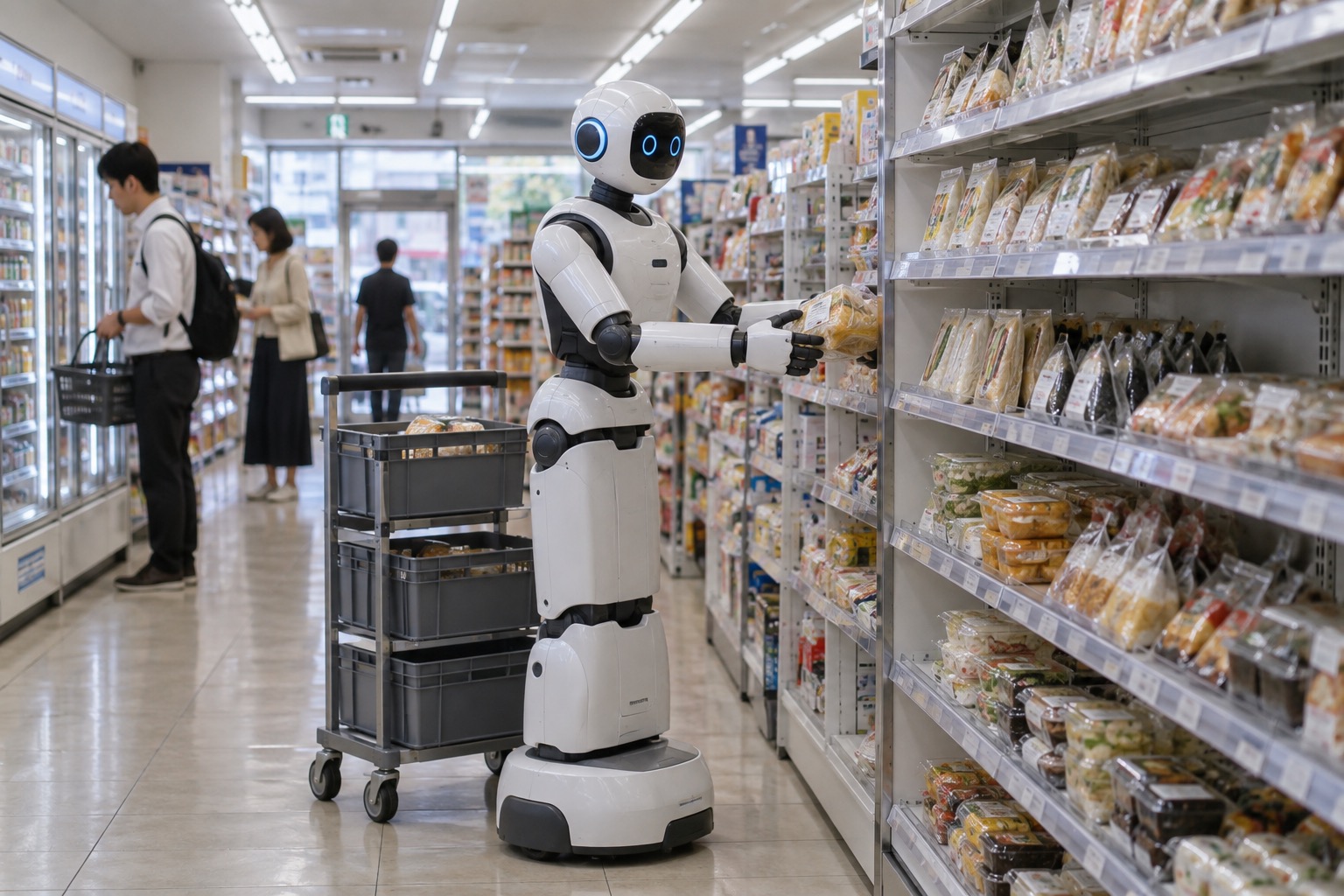
TOKYO. Telexistence is testing a frontier world model called DreamZero on Amazon Web Services to help robots perform convenience-store work by predicting the physical consequences of an action before committing to it. The experiment targets the ordinary variation that makes retail automation difficult: packages shift, shelves change, people enter the workspace and objects rarely appear exactly as they did in training.
World models learn representations of how a scene can evolve. In robotics, that can let a controller evaluate possible movements against an imagined next state instead of relying only on a fixed rule or immediate sensor reading. The promise is better adaptation with fewer real-world trials. The risk is that an imagined outcome can be confidently wrong in precisely the unusual situation where a store needs the machine to stop.
The Store Is a Harder Lab Than It Looks
Convenience stores combine repetitive work with constant exceptions. A robot may restock the same shelf hundreds of times, but packaging can deform, labels can face the wrong direction and an item can be left in the path by a customer. Lighting changes across the day, reflective surfaces confuse cameras and narrow aisles limit recovery motions. Each small variation expands the state space a controller must handle.
Telexistence has deployed remotely supervised robots in Japanese retail environments, giving it operational data that many laboratory projects lack. Remote assistance provides a fallback when autonomy fails and creates examples of successful recovery. A world model can learn from those interventions, but the system still needs to recognize when its confidence is too low and hand control back before contact causes damage.
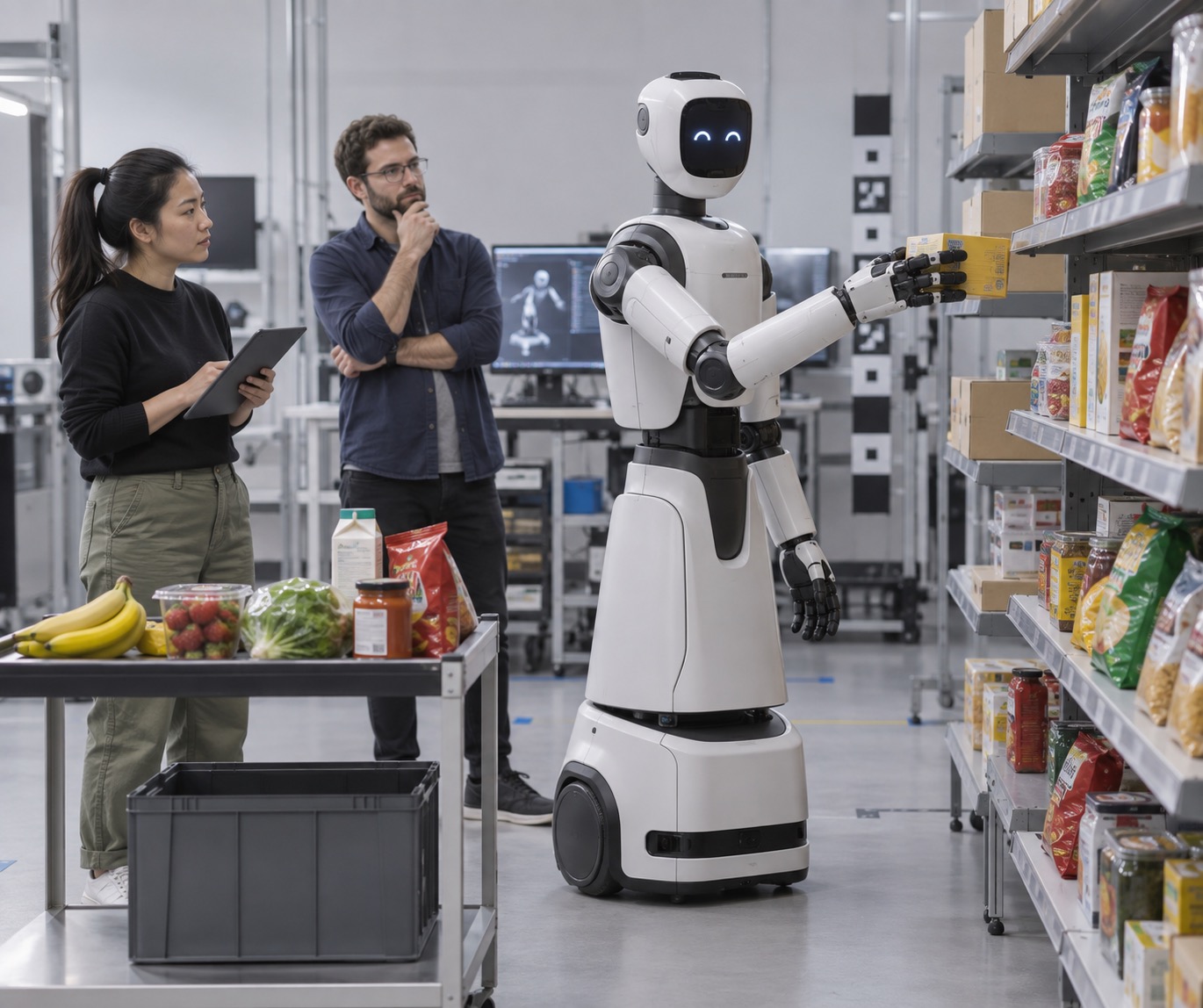
AWS provides elastic compute for training, simulation and evaluation. Cloud capacity can accelerate experimentation, but the deployed robot cannot assume a perfect network connection. Safety-relevant perception and stopping behavior must remain available locally. A practical architecture divides the workload: immediate control runs at the edge, while heavier training, fleet analysis and model updates happen in the cloud.
The engineering metric is not a benchmark score. It is the number of successful, useful interventions per operating hour after accounting for remote supervision, downtime and recovery. A robot that completes most picks but frequently requires an expert to untangle its failures may move labor rather than save it. The cost model has to include the people behind the autonomy.
Prediction Needs a Safety Envelope
A world model can rank possible actions, but it should operate inside constraints that do not depend on the model's imagination. Force limits, collision detection, speed restrictions and protected zones provide a separate safety envelope. This layered design is familiar in industrial robotics and becomes more important in public environments where people do not follow factory procedures.
Evaluation also needs adversarial variety. Teams should deliberately change packaging, obscure labels, move shelves and interrupt an action. Success on average cases is not enough because the commercial value of a general robot comes from handling change without a new engineering project. The long tail is the product.
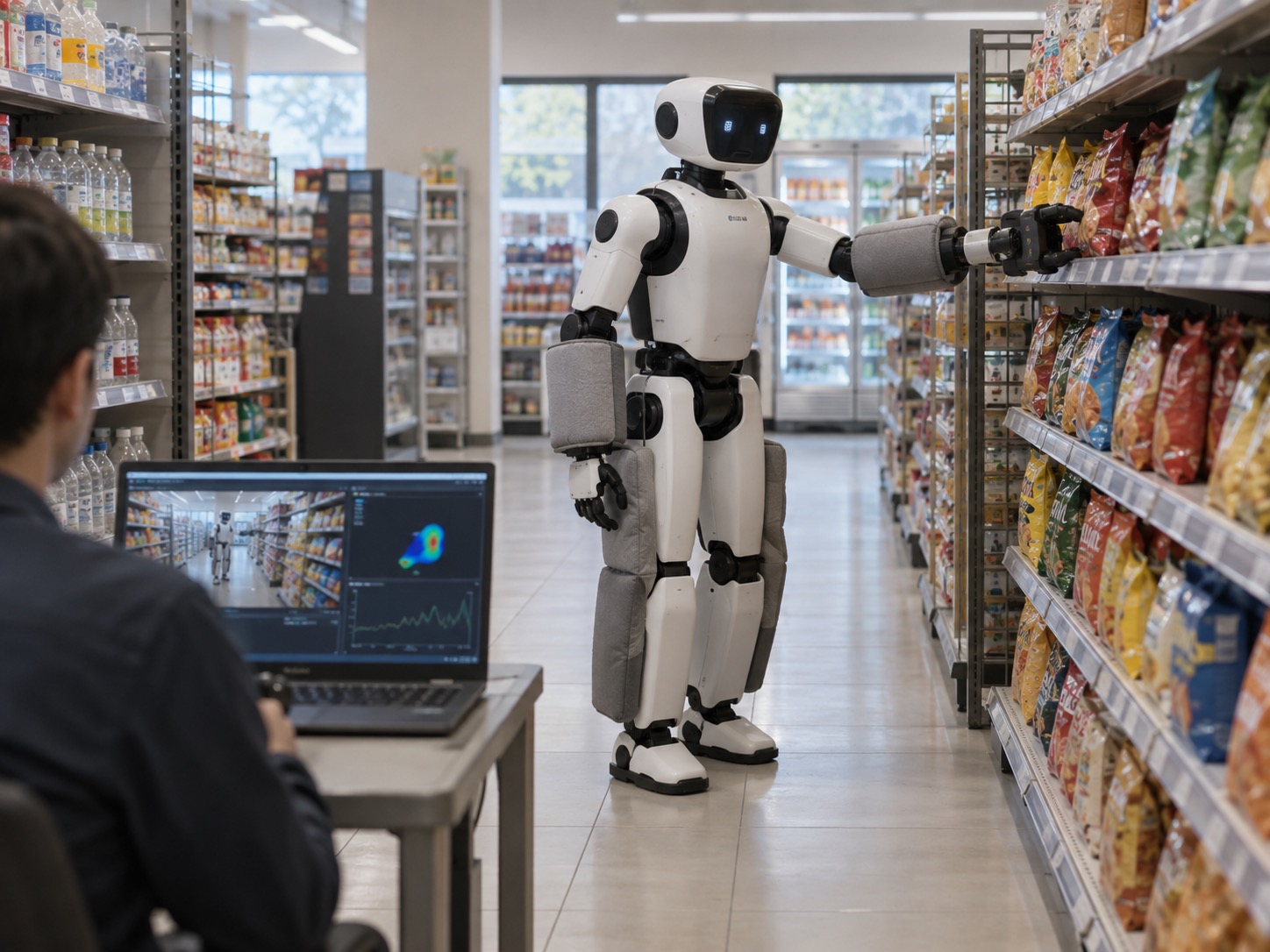
Retailers will care about more than motion quality. Robots need secure software updates, clear incident logs and privacy controls for cameras operating around customers and workers. Fleet management creates a central point from which one bad update can affect many stores. Staged rollout and fast rollback are therefore part of robot safety, not only software operations.
The DreamZero experiment reflects a wider shift in physical AI. Research is moving from policies that map a current image directly to an action toward systems that build an internal model of the world and plan over time. That approach can improve flexibility, but it increases the amount of behavior engineers must validate. A richer internal model is not automatically a more trustworthy machine.
Convenience stores are a useful proving ground because the task is economically meaningful and unforgivingly ordinary. If the system can predict, act, detect uncertainty and recover across thousands of small disruptions, world models will have earned a place in production robotics. Until then, the most important capability may remain knowing when to ask a person for help.
Topics: Telexistence, DreamZero, AWS, world models, retail robotics