Robotics
Unitree Founder Estimates Humanoid Robots Remain a Decade Away From ChatGPT Moment
A decade of intensive engineering work may be required before bipedal robots achieve the widespread general capability demonstrated by digital language models. Physical constraints, real-world data collection, and safety validation continue to pace hardware adoption far behind software deployment cycles.
By Michael G ·
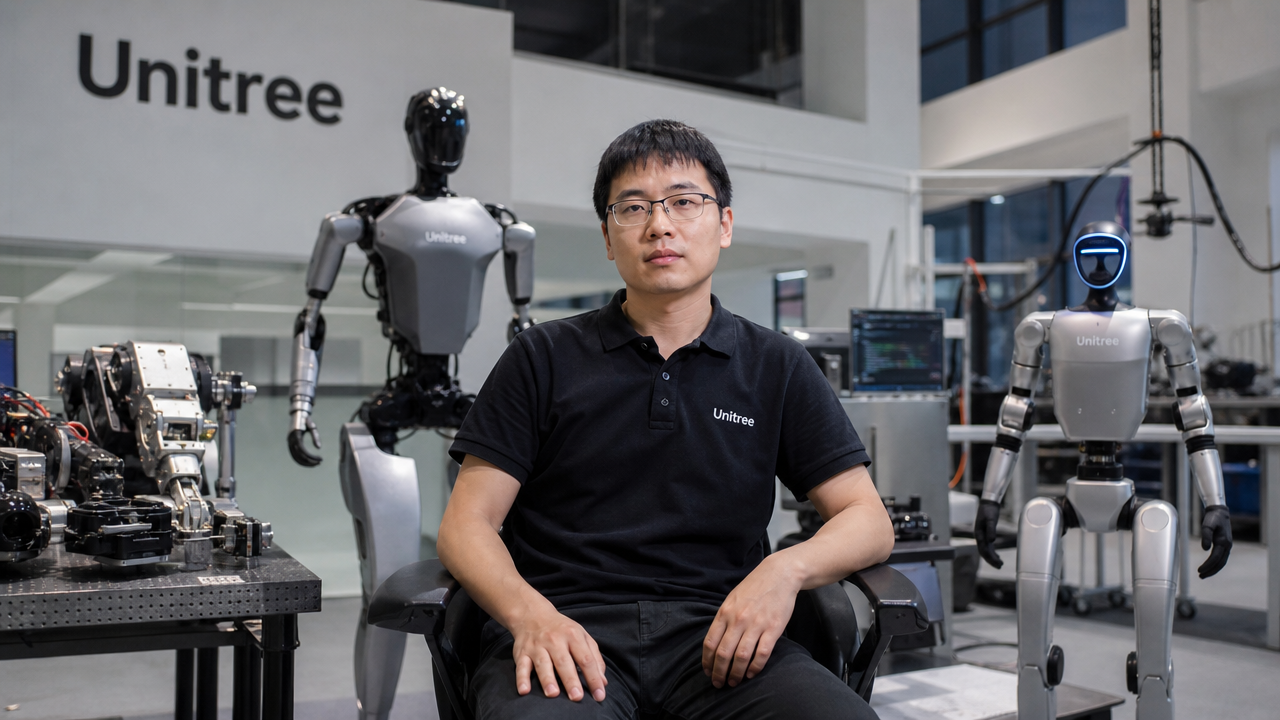
Humanoid robotics may require up to ten years of technological development before experiencing a breakthrough comparable to the broad public inflection point seen in generative software models, according to estimates provided by the founder of Chinese robotics manufacturer Unitree in a recent report published by CNBC. The forecast highlights how hardware deployment operates under fundamentally different constraints than digital artificial intelligence, positioning the timeline as an individual executive forecast rather than a formal industry consensus. While software platforms can distribute updates globally across digital infrastructure instantly, physical machines encounter mechanical, thermal, regulatory, and financial barriers that inherently slow widespread adoption. Data recorded in the August 20 news index reflects ongoing industry debates over whether current hardware architectures can scale at the velocity demonstrated by cloud-hosted language models.
The operational timeline outlined by Unitree reflects the technical distance between laboratory demonstrations and reliable commercial operation in unstructured environments. Controlled video demonstrations frequently showcase dynamic agility, backflips, and scripted task execution, but these controlled scenarios do not correlate directly with industrial reliability. In real-world environments, autonomous platforms must handle unanticipated surface variations, shifting object weights, dynamic environmental lighting, and continuous mechanical wear without human intervention. The transition from high-performing prototypes to enterprise systems capable of operating continuously over long shifts remains one of the primary engineering challenges across the global hardware ecosystem. August 20 news index documents the reporting behind this account.
A fundamental factor distinguishing software models from physical robotics is the physics of interaction. While digital models process text tokens or images within server clusters, a humanoid robot must continuously solve inverse kinematics, balance control, force feedback, and tactile manipulation in real time. A failure in a software model results in an incorrect text response or a system error, whereas a failure in a multi-kilogram mobile platform presents immediate kinetic risks to surrounding equipment and human personnel. Consequently, software iterations can be released weekly, whereas physical platforms require rigorous hardware verification and safety isolation protocols before field testing.
Physical Manipulation and Mechanical Constraints
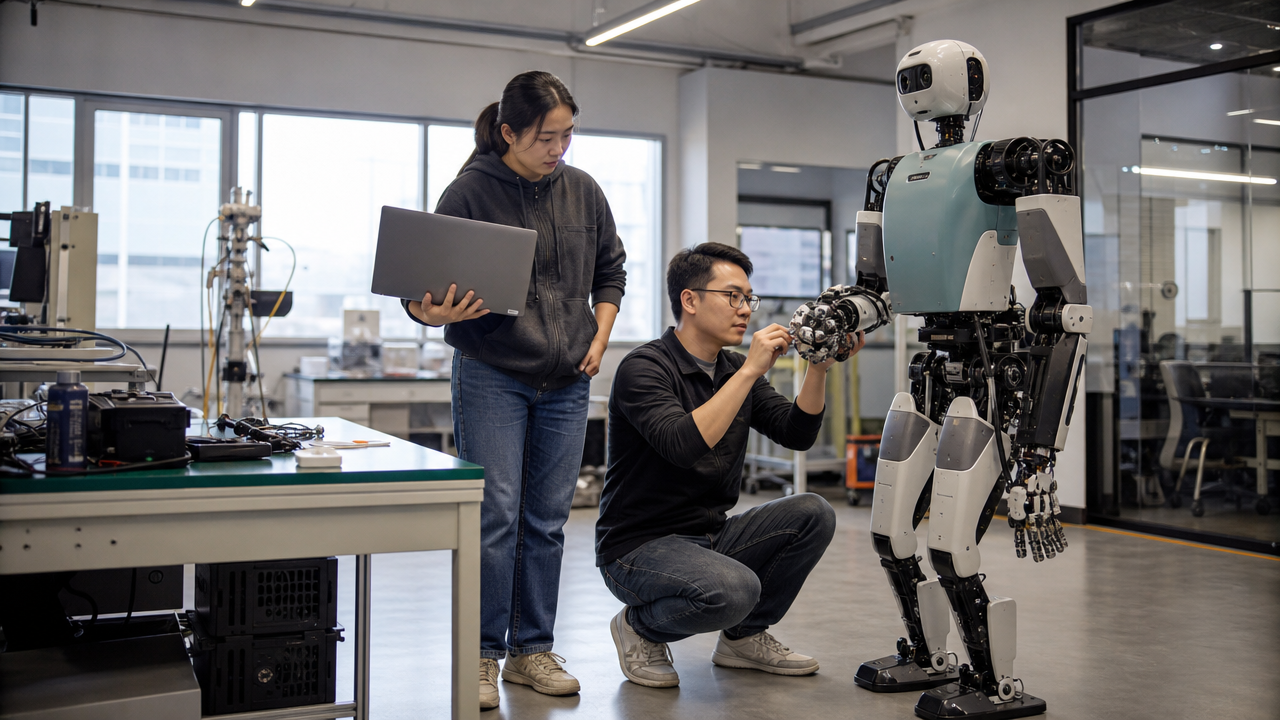
Fine motor manipulation remains a critical technical bottleneck for general-purpose robotic platforms. Human hands possess thousands of tactile receptors capable of detecting subtle shear forces, surface textures, and slippage in real time, allowing humans to adjust grip force dynamically without damaging delicate objects. Replicating this capability in electromechanical end-effectors requires high-density sensor arrays, compact motor drivers, and durable strain gauges integrated into constrained spaces. Current robotic hands often balance structural durability against sensor density, resulting in grippers that are either too rigid to handle delicate variations or too fragile for heavy industrial work. Unitree offers useful technical background for evaluating the claim.
System reliability and mean time between failures present additional operational hurdles. Industrial machinery in automotive assembly plants is expected to run tens of thousands of hours with minimal downtime. Bipedal systems rely on custom strain wave gears, high-torque brushless motors, and complex planetary gearboxes that experience accelerated gear tooth wear, thermal degradation, and bearing stress. Because humanoids utilize dynamic self-balancing, every joint motor is subjected to continuous micro-corrections even while standing still. This constant active duty cycle accelerates component fatigue compared to standard fixed-arm industrial systems. The robotics field has documented these wear patterns extensively, yet translating laboratory findings into production-grade durability standards remains incomplete. The operational tradeoff is also reflected in humanoid robot.
Safety engineering adds substantial overhead to deployment schedules. Establishing functional safety for mobile manipulators operating near human workers requires multi-layered redundancy, including hardware-level power cuts, secondary brake mechanisms, and fail-safe torque limits. When vision systems encounter low visibility, optical glare, or sensor occlusion, the platform must enter a safe degraded state without falling over or striking adjacent structures. Validating these edge cases across diverse environment types demands extensive empirical testing, preventing the rapid deployment strategies common in software industries.
Energy Limits and Manufacturing Scalability
Energy storage efficiency continues to constrain the runtime of self-powered bipedal units. High-power actuators required for dynamic balancing and heavy lifting draw significant electrical currents, consuming considerable power during active operation. Current lithium-based battery packs often restrict untethered operational endurance to continuous windows of two to four hours depending on payload weight and terrain difficulty. Increasing battery capacity introduces additional mass, which in turn increases motor load and energy consumption. Achieving full eight-hour shift operation without frequent automated battery swaps or long charging cycles requires advancements in power density and actuator efficiency that remain in early developmental stages. For broader context, robotics outlines the relevant standard or institution.
Manufacturing scale remains closely tied to specialized supply chains and precision engineering. Producing high-performance humanoid platforms requires precision-machined structural alloys, custom magnetic materials, low-backlash speed reducers, and high-frequency motor controllers. Unlike standard consumer electronics, these components are produced in limited quantities with tight machining tolerances, keeping per-unit hardware costs elevated. Scaling production from hundreds of experimental units to tens of thousands of commercial platforms requires establishing dedicated manufacturing facilities, standardization of component modules, and quality control systems capable of ensuring part consistency across supplier networks for autonomous systems.
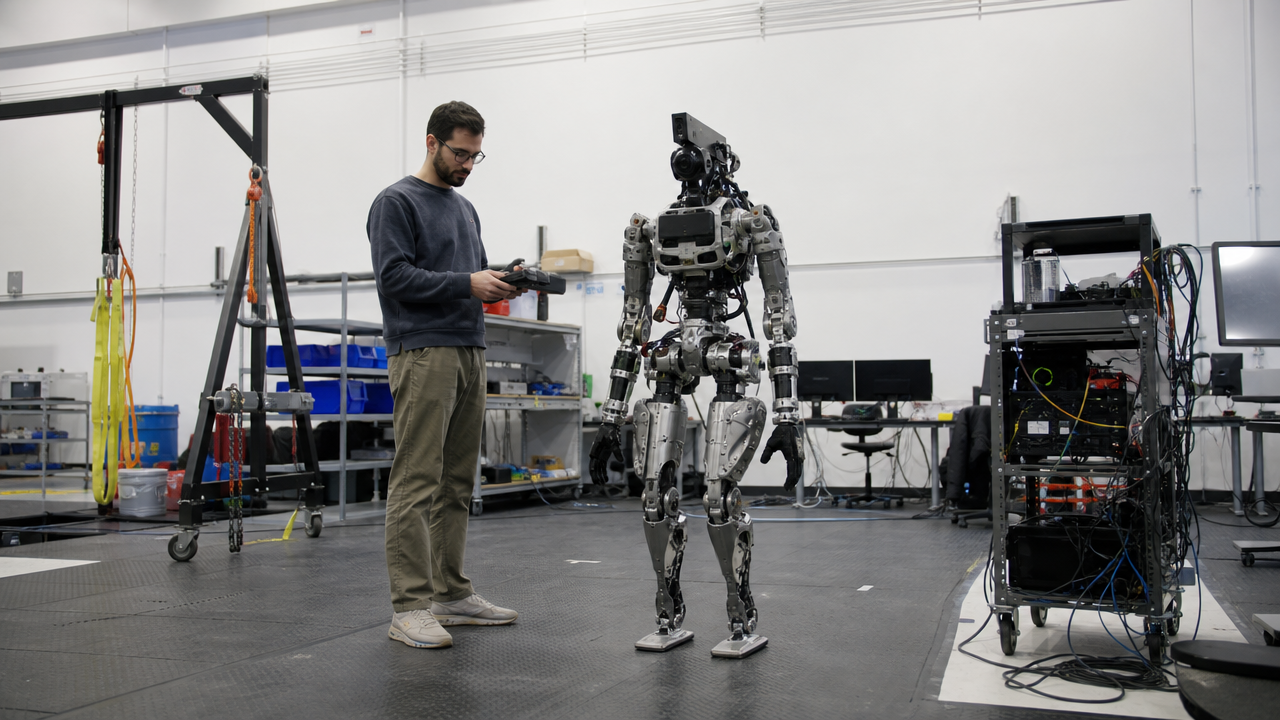
Data acquisition for physical intelligence poses a vastly different challenge than scraping text or image data from digital networks. Training generalist neural networks for physical control requires rich datasets that capture contact dynamics, material compliance, force interactions, and complex spatial trajectories. While synthetic data generated within physics simulators can accelerate early-stage training, the reality gap between simulation and real-world friction, backlash, and sensor noise remains significant. Collecting high-quality real-world telemetry through human teleoperation or hardware fleet data gathering is slow, capital-intensive, and bounded by physical real-time constraints. autonomous systems helps place the issue within its wider policy and engineering context.
Commercial integration frameworks must also adapt to existing facility infrastructure. Warehouses, manufacturing plants, and commercial buildings have historically been engineered around fixed automation, conveyors, standard pallets, and human worker ergonomics. Introducing mobile bipedal machines into these existing environments requires integration with enterprise resource planning systems, facility management networks, and standardized wireless telemetry infrastructure. As research documented by the IEEE Robotics and Automation Society highlights, non-standardized communication protocols and facility variations frequently prolong pilot evaluation periods across enterprise trials, extending adoption timelines significantly.
The ten-year horizon suggested by Unitree's founder underscores the distinction between incremental prototype improvements and widespread industrial adoption. While rapid advances in artificial intelligence give the impression of imminent robotic deployment, physical hardware development is governed by non-negotiable physical laws, mechanical wear rates, safety verification timelines, and supply chain scaling. Overcoming these multi-faceted challenges will require sustained engineering iterations across motor design, battery chemistry, control theory, and hardware manufacturing before bipedal robots achieve seamless integration into daily commercial operations. The final point can be checked against IEEE Robotics and Automation Society.
Topics: Robotics, Humanoid Robots, Unitree, Physical AI, Hardware Engineering