Robotics
Actuate 26 Opens In San Francisco With Physical AI Focused On Real-World Deployment
Actuate 26 will bring robotics leaders from Google DeepMind, NVIDIA, Wayve, Zipline and production startups to Fort Mason, with the agenda centered on data, safety and the infrastructure required to operate robots outside demos.
By Michael G ·
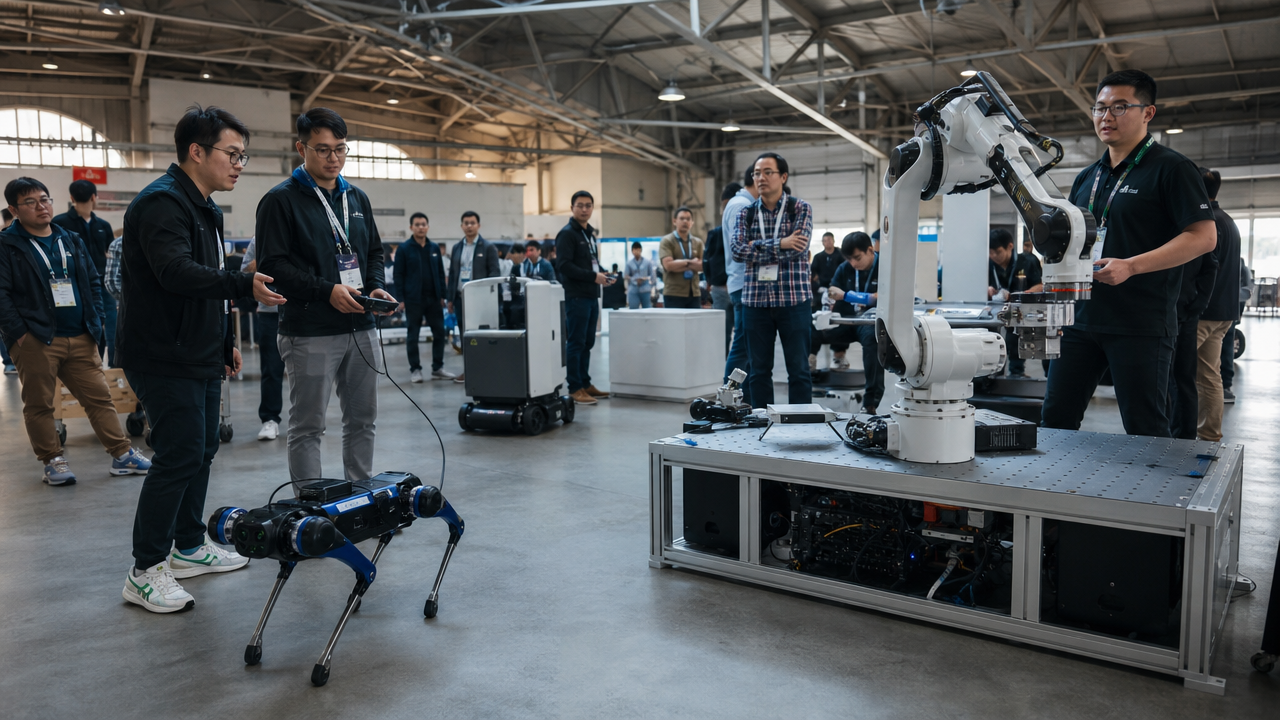
Actuate 26 opens Tuesday at Fort Mason in San Francisco with a program built around a practical question: what does it take to make physical AI work after a robot leaves the laboratory? The two-day developer conference brings together engineers from Google DeepMind, NVIDIA, Wayve, Zipline, Aurora and a group of robotics companies already operating in factories, fields, roads and the air.
The agenda reflects a field moving away from one impressive demonstration toward fleet operations. Sessions cover outdoor autonomy, flexible assembly, biomanufacturing, construction, simulation, data capture and open development ecosystems. These are not separate concerns. They form the pipeline that determines whether a robot can repeat a task safely under changing conditions.
Foxglove, the conference organizer, expects more than 1,000 attendees from autonomous vehicles, drones, humanoids, defense, construction, logistics, agriculture and industrial automation. The variety is useful because physical systems share infrastructure problems even when their bodies and missions look different.
The Data Loop Is The Product
A robot learns from more than a training run. Production fleets collect camera, lidar, force, control and diagnostic data while moving through environments that designers did not fully predict. Teams need to record those streams, identify failures, reproduce them in simulation and deliver an improvement without breaking behavior that already works.
That loop explains why a developer-tools company can convene a robotics conference. The hardware attracts attention, but the operational record determines reliability. Engineers need synchronized telemetry and a way to trace a poor decision back through perception, planning and control. Without that record, a failure becomes an anecdote rather than training material.
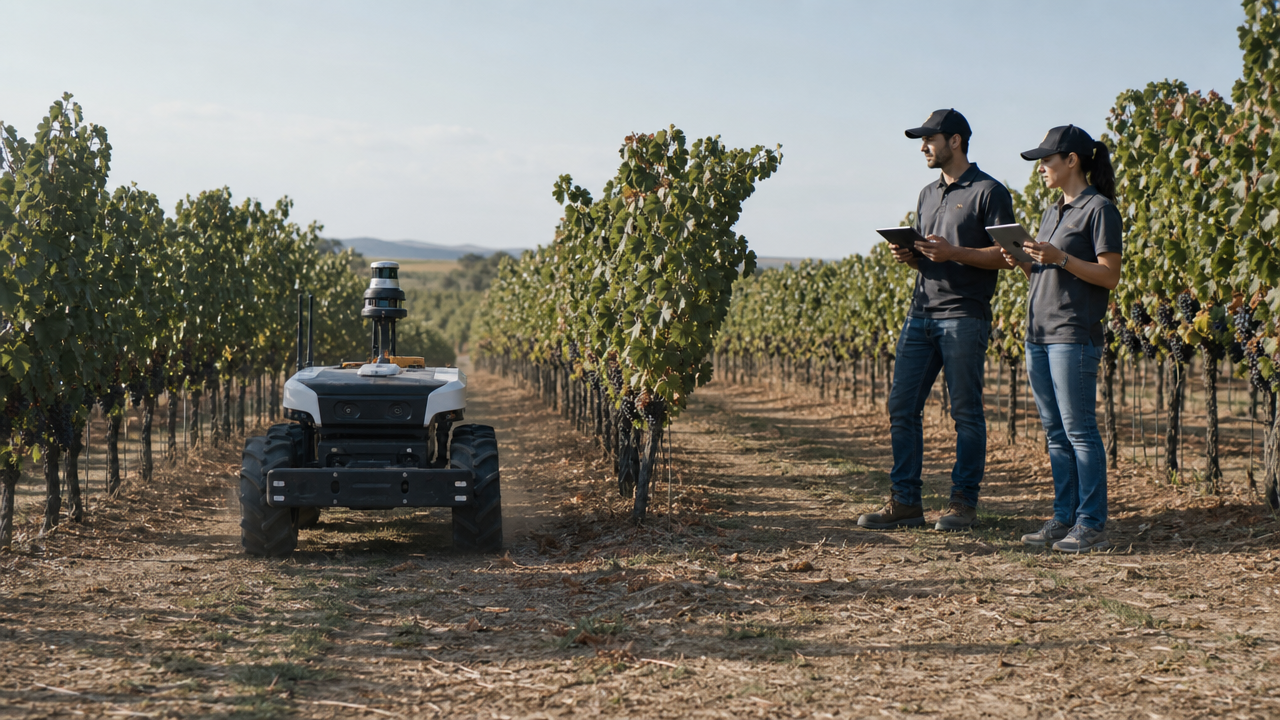
Burro is scheduled to discuss a million hours of outdoor autonomy across vineyards and rail yards. That scale changes the engineering conversation. Rare obstacles stop being theoretical, maintenance becomes part of model performance and connectivity gaps become normal operating conditions rather than exceptions.
Google DeepMind's Carolina Parada will present how Gemini can connect language to robot motion. Vision-language-action models can make robots easier to instruct and more adaptable across tasks. They also add uncertainty between a natural-language request and a physical action. The system needs to know when to stop, ask for clarification or hand control back to a person.
The conference's panel on human data, universal manipulation interfaces and teleoperation points to another constraint. Robots need examples of successful behavior, but collecting them can be slow and expensive. The quality and diversity of demonstrations affect how a system responds when an object, workspace or human collaborator differs from the training set.
Production Means Designing For Failure
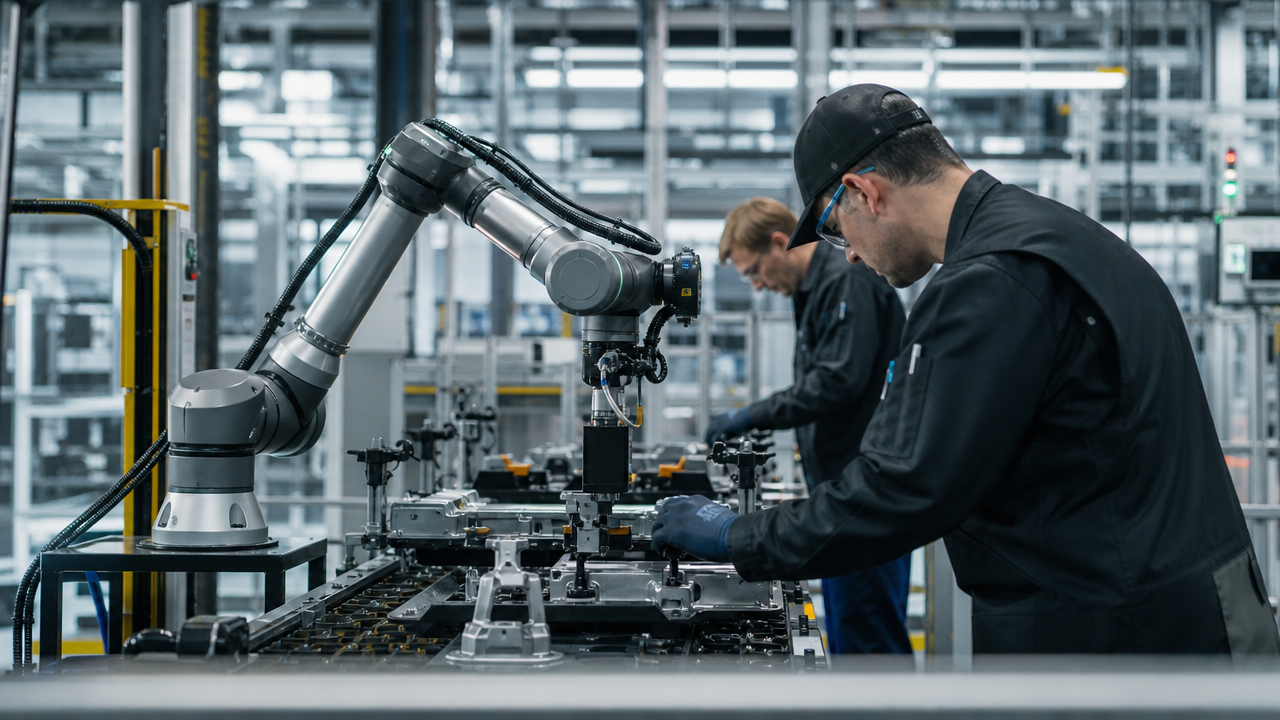
Physical AI cannot rely on the same recovery model as a chatbot. A bad answer can be corrected on screen. A bad motion can damage a product, stop a line or injure someone. Deployment therefore requires safety-rated controls below the model, clear operating envelopes and a fallback state that remains reliable when higher-level software becomes confused.
Cobot is scheduled to discuss robots working alongside people, while Foundry Robotics will present a hybrid assembly architecture that combines general policies with scan-and-plan methods. Hybrid systems are likely to remain important because factories value predictable behavior. A learned policy can handle variation, while a more structured planner can constrain execution where precision matters.
Construction presents a different version of the problem. Bedrock Robotics will discuss turning visual information from unstructured sites into actions involving real payloads. Construction environments change daily, include multiple contractors and rarely provide the clean geometry of a demonstration cell. Perception quality and worksite coordination become inseparable.
Autonomous driving brings the longest record of this discipline. Aurora's Chris Urmson and Wayve's Alex Kendall are both on the program. Their companies use different technical approaches, but both operate in a domain where edge cases, regulation and fleet evidence determine whether a model can move from a supervised test to a commercial service.
Zipline adds an aviation perspective. Drone delivery systems must connect autonomy to weather, airspace, maintenance and a service operation that customers experience. Reliability is measured across the mission, not only in the flight controller. A package arriving safely and on time is the output that matters.
Physical AI Needs An Open Operational Layer
NVIDIA's Sanja Fidler will close the program after sessions spanning simulation, foundation models and robot infrastructure. NVIDIA supplies much of the computing stack used to train and run these systems, but the robotics market is more heterogeneous than cloud AI. Different sensors, processors, middleware and safety systems make interoperability a strategic issue.
An open operational layer can keep robot data and evaluation from becoming trapped inside one body or one model provider. It can also make incidents easier to investigate across suppliers. Openness does not remove the need for certification or proprietary advantage. It gives teams a common way to observe what happened.
Actuate 26 arrives at the right moment because investment in physical AI is racing ahead of evidence from sustained deployments. The conference will produce its share of polished demonstrations. The more consequential conversations will concern logs, maintenance, handoffs and the unglamorous systems that keep a fleet working on the thousandth day.
Robotics has spent years proving that machines can perform remarkable individual tasks. The next standard is stricter: whether they can perform useful work repeatedly, around people, at a cost an operator can justify. Fort Mason will be full of ambitious models and machines. Production discipline will decide which of them are still operating after the exhibition floor closes.
Topics: Actuate 26, robotics, physical AI, Foxglove