Technology
Micron says AI demand has changed the economics of the memory industry
Micron CEO Sanjay Mehrotra says demand from artificial intelligence has altered the historical boom-and-bust equation for memory producers. The durability of that shift will depend on high-bandwidth memory demand, supply discipline, long fabrication lead times and whether investment such as Micron's roughly $50 billion Boise expansion remains aligned with actual consumption.
By Michael G ·

Artificial intelligence demand is changing the economics of the memory industry, according to Micron CEO Sanjay Mehrotra, as data center operators require increasingly large quantities of specialized memory alongside expensive processors. His comments, covered in a CNBC report, point to a possible break from the sector's familiar cycle of shortages, aggressive expansion, oversupply and collapsing prices. Whether that break lasts will depend less on enthusiasm for AI than on physical shipments, disciplined production and the rate at which customers put new computing capacity into sustained use.
The argument matters directly to Micron, one of the major suppliers of dynamic random access memory and flash storage. Memory has historically behaved like a commodity business: suppliers commit capital years before output arrives, while relatively small mismatches between production and demand can produce large changes in pricing. AI systems may improve the demand side of that equation, but they do not eliminate its timing problem. A fabrication project approved during tight conditions can begin producing after customer requirements, product designs or investment priorities have changed.
Mehrotra's case rests on a real architectural constraint. Advanced AI processors can perform enormous numbers of calculations, but useful performance depends on moving model parameters and intermediate results to those processors quickly enough. When memory bandwidth is insufficient, costly computing units wait for data. That makes memory capacity, bandwidth and power consumption part of the system performance calculation rather than secondary specifications. It also gives memory manufacturers an opportunity to sell more technically demanding products than the conventional modules used in general-purpose servers. CNBC report documents the reporting behind this account.
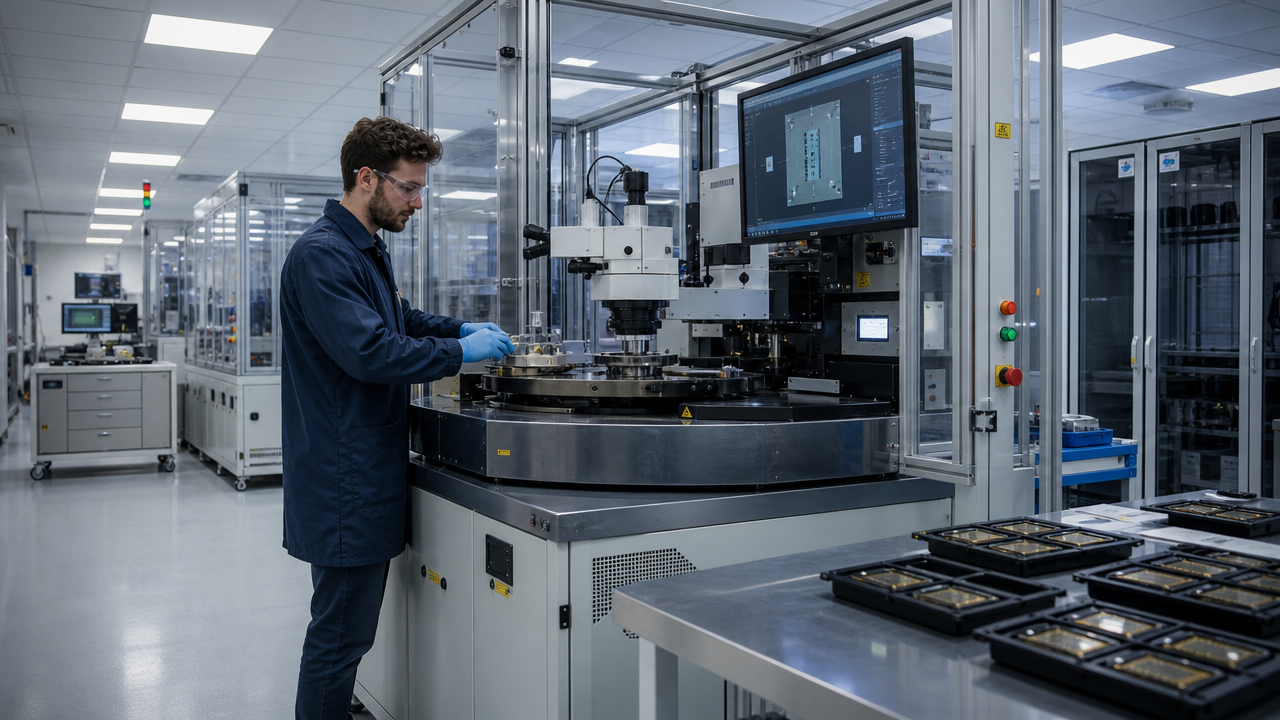
That opportunity is clearest in high-bandwidth memory, or HBM, which places multiple memory dies in a vertical stack and connects them through dense electrical pathways. The arrangement can deliver much more bandwidth close to an accelerator than ordinary memory configurations, but it introduces difficult manufacturing and packaging requirements. Producing the individual dies is only one stage. Suppliers must also manage stacking, bonding, thermal behavior, testing and integration with the larger processor package, with yield losses at any stage affecting the number of usable products.
HBM changes the product mix
HBM therefore changes more than the quantity of memory sold. It changes the amount of manufacturing capacity consumed by each deliverable product and places greater weight on packaging capability, process control and customer qualification. A shipment of working HBM represents the output of several linked processes, each with its own equipment, cycle time and yield. That complexity can support firmer economics while demand is strong because qualified supply cannot be expanded instantly. It can also magnify losses when defects occur or when a product misses a customer's technical window. Micron offers useful technical background for evaluating the claim.
For investors and customers, the useful measure is not a demonstration showing that a memory stack can operate with an accelerator. The relevant threshold is validated production performance: acceptable yields, repeatable electrical behavior, manageable thermals and reliable delivery at the required volume. Qualification takes time because an error inside a tightly integrated package can compromise a much more expensive assembly. Customers consequently have strong reasons to test designs carefully, while suppliers must avoid treating early engineering success as proof that mass production economics are settled.
AI demand may also absorb more conventional memory. Training and operating large models requires host servers, storage systems and networking equipment in addition to accelerators. Yet the relationship is not one-for-one. A company can reserve accelerator capacity without deploying it immediately, and a completed data center can take time to reach high utilization. Orders, construction plans and customer forecasts are evidence of intended demand. They are not equivalent to continuous workload consumption, which ultimately determines replacement cycles and the amount of infrastructure that operators can justify.
The distinction is especially important for enterprise AI, where adoption can be constrained by data preparation, security requirements, model reliability and the cost of integrating software into existing operations. Experimental projects can use meaningful computing resources, but they do not automatically become recurring production workloads. Memory suppliers need aggregate demand rather than success from any single application. The stronger case for a durable cycle would come from many deployed systems remaining busy across training, inference and supporting data services, rather than from a concentration of large initial purchases. The operational tradeoff is also reflected in high-bandwidth memory.
Supply discipline remains decisive
Memory manufacturers cannot control the pace of AI adoption, but they can control how quickly they add supply. That is where Mehrotra's view faces its hardest test. Strong pricing and visible customer demand create an incentive for every producer to expand. If several suppliers make similar decisions, their combined output can exceed the market's needs even when total demand continues growing. The industry does not require a collapse in AI spending to recreate oversupply. It only requires production to grow faster than consumption for long enough to build inventories and weaken purchasing urgency.
Supply discipline includes more than limiting the number of new buildings. Manufacturers can add equipment within existing facilities, improve yields, increase wafer starts or shift capacity among product categories. Each decision changes effective output on a different schedule. HBM further complicates the picture because its production can consume more wafer capacity and advanced packaging resources than simpler products. A constrained HBM market can coexist with weaker conditions in other memory segments, so broad statements about industry demand need to be tested against product-level capacity, qualification status and customer inventories.
Lead times prevent suppliers from adjusting all of those variables quickly. Semiconductor fabrication requires specialized buildings, controlled environments, complex tools and tightly sequenced process steps. Even after a facility is structurally complete, equipment must be installed, calibrated and brought to stable yields. A factory is therefore not a single switch that converts announced spending into immediate output. Capital is committed in stages, and the useful production resulting from that capital arrives later, often under market conditions that differ from those prevailing when the project was approved.
Boise tests the long-term thesis
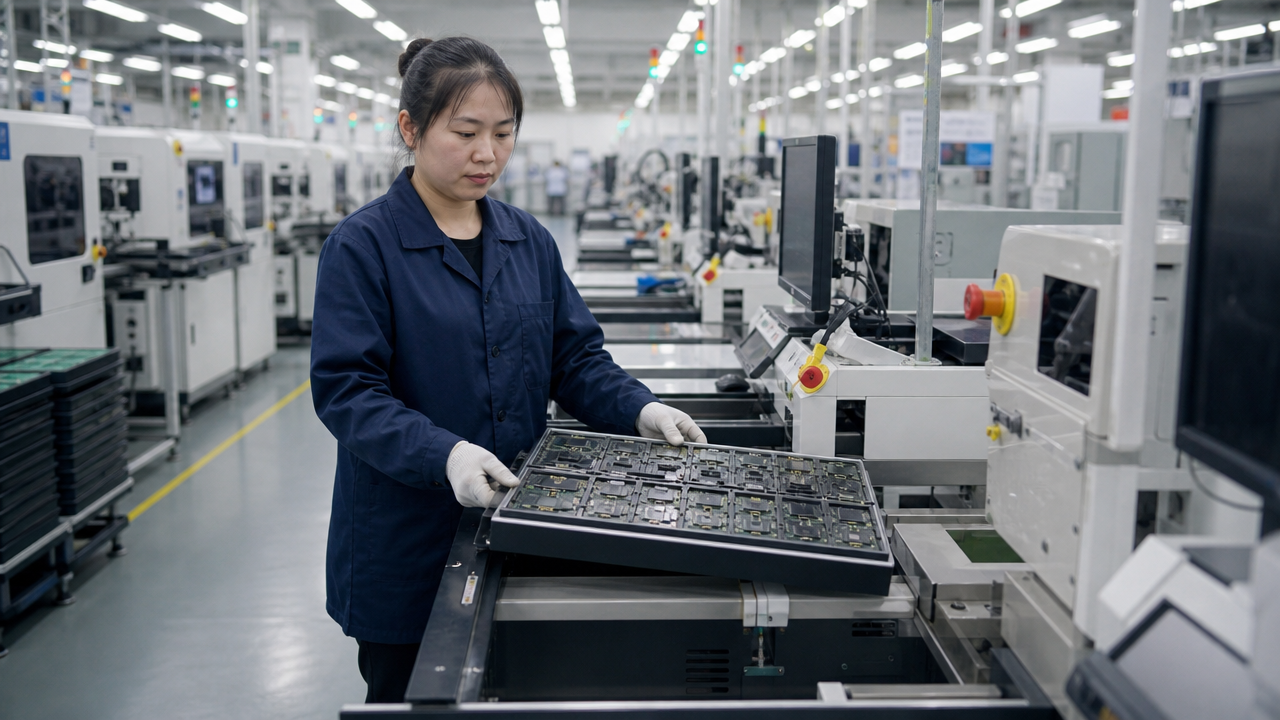
Micron's roughly $50 billion expansion in Boise places that timing issue at the center of the company's strategy. The scale indicates a long planning horizon rather than a response that can be reversed with one quarter of weaker orders. It also makes the distinction between announced investment, construction spending, installed tools and qualified output essential. Those stages do not carry the same demand risk. Without a complete stage-by-stage spending and production profile in the reporting brief, it would be premature to infer exactly when the project changes industry supply.
The physical constraints are straightforward even when the commercial outcome is uncertain. Fabrication capacity requires reliable power, water, materials, maintenance and a trained workforce. Tool installation must fit the intended process flow, and production recipes must achieve adequate yields before nominal capacity becomes economically useful. HBM adds downstream constraints in assembly and testing. Spending more can address some bottlenecks, but money cannot remove every sequencing requirement or compress every qualification period. That slows supply growth, while also making mistakes in demand forecasting expensive and persistent. enterprise AI helps place the issue within its wider policy and engineering context.
Demand forecasts must also account for how cloud computing providers deploy hardware. Large operators can place orders in batches, change the balance between internal systems and external services, and improve software efficiency after equipment is installed. Better utilization can increase the value of an existing fleet without requiring an equal increase in physical servers. Conversely, new models or heavier inference workloads can consume memory faster than efficiency gains offset them. The direction of demand may remain positive while the slope varies enough to challenge a fabrication plan built around a narrower forecast.
There is also a difference between contractual visibility and durable end demand. Long-term customer commitments can help a supplier schedule production and reduce near-term uncertainty, particularly for products requiring close technical coordination. They cannot guarantee that the wider market will remain balanced after additional capacity arrives. Contract terms can differ, customer forecasts can change and demand can migrate among memory types. The reporting brief does not establish the duration, pricing structure or enforceability of any specific commitments, so those details should not be assumed when evaluating cycle risk.
The strongest version of Micron's thesis does not require memory to stop being cyclical. It requires AI to raise the baseline amount of memory consumed, increase the technical value of leading products and make capacity additions slower or more selective relative to demand. Evidence for that shift would include sustained HBM shipments at validated yields, continued use of installed AI systems, measured expansion by suppliers and limited inventory accumulation across adjacent memory categories. No single product announcement or factory milestone can establish all of those conditions.
The counterargument is equally mechanical. High current demand can produce optimistic forecasts, those forecasts can support simultaneous capital programs, and delayed capacity can arrive after customers have improved utilization or moderated purchases. In that scenario, AI remains a major computing workload while memory pricing still follows an old pattern. The technology can be durable even if the investment cycle overshoots it. Boise will help show whether long lead times and more complex products encourage restraint, or merely postpone the point at which new supply tests demand. The final point can be checked against cloud computing.
For now, Mehrotra's assessment is best read as an industry thesis under construction. AI accelerators have a genuine need for fast, nearby memory, and HBM imposes physical production constraints that cannot be solved overnight. Those facts support a tighter market and a richer product mix. They do not repeal the consequences of excess capacity. The outcome will be determined over the years in which Micron and its competitors convert capital budgets into qualified output, while customers convert ambitious AI plans into workloads that run often enough to pay for the hardware.
Topics: Micron, artificial intelligence, memory chips, semiconductors, HBM