Technology
HBM Memory Is Becoming The AI Market's Hidden Capital-Allocation Layer
The AI infrastructure race is usually described as a GPU story. But high-bandwidth memory availability increasingly determines which accelerators ship, which clusters scale, and which model roadmaps stay on schedule.
By Michael G ·

High-bandwidth memory is becoming the hidden capital-allocation layer of the AI market. The public story is still dominated by GPUs, but the practical question for many clusters is whether enough advanced memory can be packaged with accelerators quickly enough to meet demand.
That changes how investors should think about AI infrastructure. Compute is not a single input. It is a bundle of accelerators, memory, networking, packaging, power, cooling, and software. A shortage in one layer can slow the entire roadmap.
Memory Decides Utilization
AI accelerators are only useful if data can reach them fast enough. Memory bandwidth shapes training efficiency, inference throughput, and the economics of serving large models. When memory supply is tight, chip designers, cloud providers, and labs all compete for the same bottleneck.
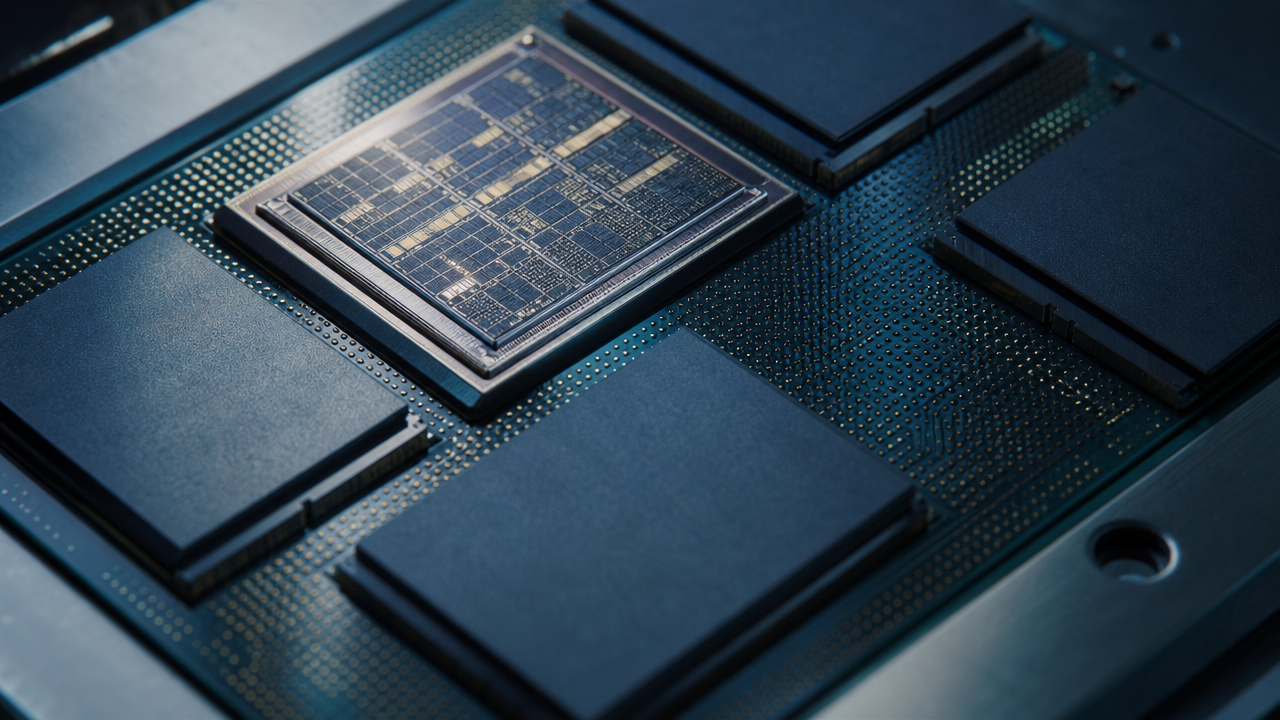
This is why South Korea's memory champions and advanced packaging supply chains have become central to AI geopolitics. The country is not merely exporting components. It is supplying a constraint that decides how quickly the rest of the stack can grow.
The Bottleneck Moves Around
The AI boom keeps moving the bottleneck. One quarter it is GPUs. The next it is HBM. Then it becomes power, transformers, networking, or data-center construction. The winners are the companies that can see the whole system and reserve capacity before the shortage becomes obvious.

There is also a margin story. If memory remains scarce, more of the AI profit pool can shift toward suppliers that control the tightest layer. That does not replace Nvidia's role, but it complicates the idea that one company captures all infrastructure value.
Topics: HBM, memory, AI chips, semiconductors