Policy
AI-Generated Bills Are Overwhelming The Lawyers Who Draft U.S. Laws
The House Office of Legislative Counsel is reportedly spending growing amounts of time repairing AI-written proposals containing bad citations, vague language and legal errors. The problem shows how cheap text generation can move costs downstream into institutions responsible for precision.
By Michael C ·
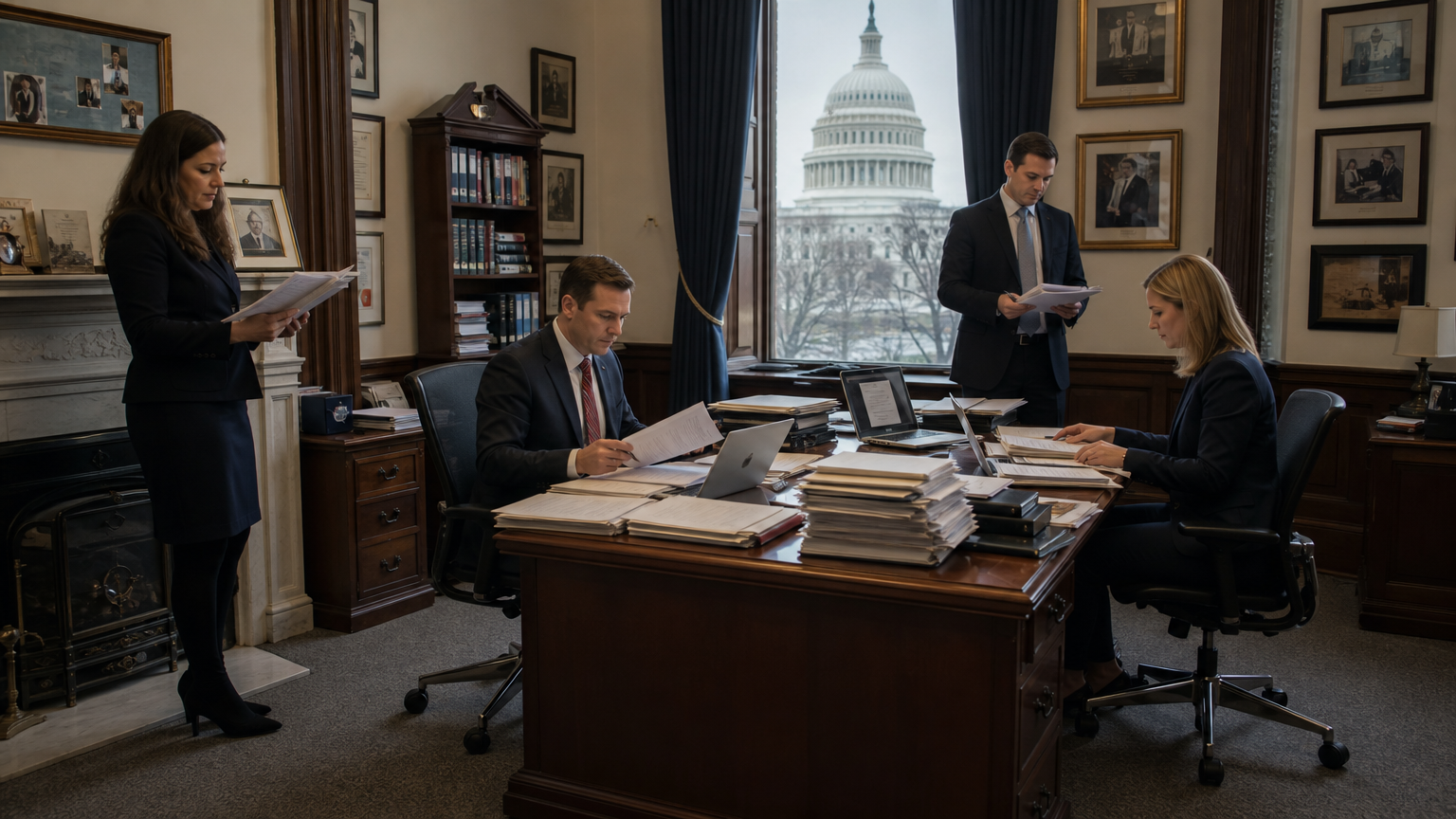
Congressional lawyers are confronting a growing stream of AI-generated bill drafts that contain incorrect citations, vague commands and language that can fail to produce the policy its author intended. Current and former officials told Politico that the House Office of Legislative Counsel is spending more time repairing some machine-written proposals than it would have taken to draft the legislation from the beginning.
The office performs one of Congress's least visible and most important functions. Its nonpartisan attorneys translate political objectives into statutory language that agencies can administer and courts can interpret. A misplaced definition or citation is not a cosmetic error. It can change who receives a benefit, which conduct is prohibited or whether a law survives challenge.
Generative AI makes it almost free for a congressional office, lobbyist or advocacy group to produce pages that resemble legislation. That apparent productivity transfers the expensive part of the work to the lawyers who must verify every cross-reference and infer what the author actually wanted. More text arrives, but legislative capacity does not increase.
The episode is a warning for every institution adopting AI. Output volume is not the same as completed work. When a system generates material that requires expert review, the downstream queue can grow faster than the organization can process it. The result is not automation but congestion disguised as efficiency.
Legal Language Has Consequences Beyond Fluency
Large language models are good at reproducing the surface form of bills. They can create sections, definitions and amendment instructions that look familiar. They do not reliably understand the entire U.S. Code, committee jurisdiction, precedent or the operational consequences of changing one phrase in a connected statutory scheme.
A model can cite a provision that does not exist, use a term differently from the law being amended or create a duty without identifying the agency responsible for it. It can combine language from states or policy areas with incompatible legal assumptions. Fluency makes those mistakes harder to spot because the draft does not look unfinished.
Legislative counsel normally works through intent with staff: which population is covered, what exceptions apply, how enforcement works and how the proposal interacts with existing authority. A chatbot can fill silence with plausible language instead of exposing an unresolved policy choice. The resulting draft may conceal disagreement that Congress still needs to settle.
The House Office of Legislative Counsel publishes drafting guidance that emphasizes clarity, consistency and the precise amendment of existing law. Those principles depend on judgment and institutional knowledge. AI can assist with research or comparison, but responsibility for operative text remains with people who understand the consequences.
Outside groups add another problem. Lobbyists have long supplied model language, and lawmakers have long adapted proposals written beyond Capitol Hill. AI changes the scale. One organization can generate many versions, tailor them to offices and flood limited review capacity. Quantity can become a tactic even when no individual draft is ready for enactment.
The office cannot simply reject every AI-assisted submission because authorship is difficult to determine and some uses may be responsible. A staff attorney could use a model to compare definitions and then verify every result. Another person could paste a policy request into a chatbot and submit the output untouched. The relevant distinction is verification, not whether a model participated at all.

Congress Needs Intake Rules, Not A Prohibition It Cannot Enforce
A workable response begins with disclosure. Offices and outside submitters should identify when generative tools produced material portions of a draft, which system was used and who verified the result. That information would help counsel triage work without treating disclosure as proof that the language is defective.
Submissions should also include a plain statement of policy intent and a source map for every legal citation. If the draft amends existing law, the author should provide the current text and explain the intended change. Those requirements would force the submitter to perform basic verification before consuming scarce counsel time.
Congress could develop secure internal tools that retrieve from authoritative legal sources and flag unsupported citations. Retrieval does not eliminate hallucination, but it narrows the source set and creates evidence a reviewer can inspect. Any system should preserve the source passage rather than merely attaching a confident answer.
The Government Accountability Office has developed an accountability framework for federal AI use built around governance, data, performance and monitoring. Similar discipline belongs in legislative workflows. A tool should have a defined purpose, measured error rate, named owner and process for reporting failure.
Training is necessary, but generic prompt classes will not solve the issue. Staff need examples of legislative failure: invented cross-references, inconsistent definitions, missing enforcement authority and language that creates unintended private rights of action. Understanding the failure modes is more useful than learning to make a model sound formal, and the federal generative-AI risk profile offers a practical starting point for that instruction.
The institution must protect its own lawyers from becoming a hidden correction layer. If an office repeatedly submits unverified text, counsel should be able to return it with requirements for clarification rather than absorb the cost. Accountability should remain with the member and staff responsible for introducing the bill.
Cheap Drafting Can Make Lawmaking More Expensive
The paradox is that AI can reduce the time required to create a first draft while increasing the time required to reach trustworthy language. That pattern appears in software, research and customer service as well. Automation produces more candidates, and experts spend their time sorting, repairing and documenting them.
Congress is especially vulnerable because its expert capacity is constrained. Committees and support offices handle complex policy with limited staff while outside interests can generate material at industrial scale. Giving every participant a text machine without expanding verification resources worsens the imbalance.
There are responsible uses. Models can compare versions, summarize public comments, identify terms that vary across a draft and help staff locate relevant provisions. Those tasks support human judgment rather than pretending to replace it. They are also easier to evaluate because the output can be checked against a defined source.
The National Archives and Congress maintain authoritative legislative records that should anchor any internal system. A model-generated citation should resolve to official text, and a reviewer should be able to see the exact version used. Legal work cannot rely on a model's memory of what a statute probably says.
AI companies have a role as well. Products marketed for legal or government work should make source verification easy, preserve audit trails and avoid implying that polished language is legally reliable. Warnings buried in terms of service do little when the interface encourages users to produce finished-looking documents.
The House lawyers' workload makes the cost visible before an erroneous bill becomes law. That is fortunate. The institution now has a chance to establish that machine assistance does not reduce human responsibility. Congress can use AI to support legislative work, but it cannot outsource the meaning of its own words.
Topics: Congress, legislation, generative AI, legal drafting, governance