Browse independent reporting and analysis across AI models, research, technology, robotics, security, policy, ethics and the business of artificial intelligence.
Gradial has raised $65 million to automate enterprise marketing workflows with AI agents. The Seattle startup's pitch shows where practical enterprise AI is heading: not a smarter chatbot, but an execution layer across Adobe, Salesforce, ServiceNow, Databricks, and the messy approval chains large brands already use.
OpenAI has hired Meta communications executive Ha Thai to lead communications for its devices division, Axios reports. The move suggests the Jony Ive partnership is entering a more public phase, where OpenAI has to turn an abstract hardware ambition into a consumer story.
Google DeepMind has published an AI Control Roadmap for monitoring and containing increasingly autonomous agents. The security framing matters: as agents gain tool access, companies may need to treat them less like software features and more like high-privilege actors inside the system.
Sen. Bernie Sanders has proposed that the U.S. government take 50% equity stakes in large AI companies. The plan is unlikely to become law as written, but it makes explicit a question that has been hovering over the AI boom: who captures the economic upside if the technology displaces labor at scale?
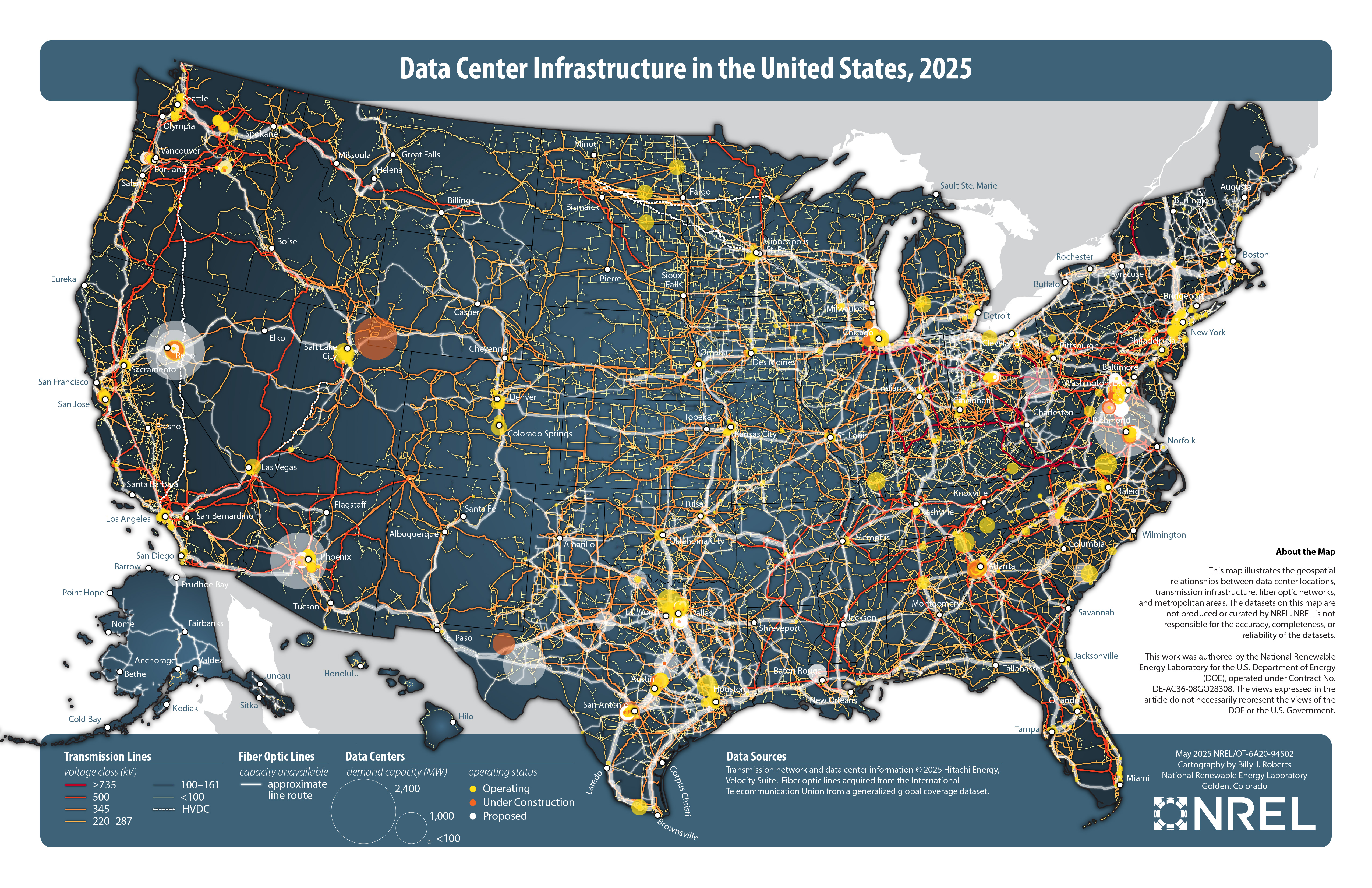
Arizona has become a test case for the AI boom's power and water constraints. As data centers expand around Phoenix, officials are asking who pays for grid upgrades, how scarce water should be allocated, and whether the infrastructure race can keep local trust.
The Trump administration says it opposes AI regulation, but Axios reports that it is shaping the sector through case-by-case interventions on model access, state-law preemption, federal procurement, and national security. The result is not no regulation; it is informal regulation without stable rules.
The G7 AI conversation has shifted from broad safety principles to the harder question of controlled access. After the U.S. restricted Anthropic's latest models, allied governments and AI CEOs are being forced to design a trusted-partner model for frontier AI.
Noam Shazeer, the Character.AI co-founder and transformer co-author, is reportedly leaving Google for OpenAI. The move shows that the frontier AI race is being fought not just with compute and capital, but with a small group of researchers who can reshape model roadmaps.
CuspAI has reportedly raised $400 million from investors including Bezos Expeditions and Kleiner Perkins. The Cambridge startup's materials-discovery pitch shows that AI's next capital race is moving from chatbots into chemistry, semiconductors, climate, and industrial science.
The UK's National Cyber Security Centre says critical infrastructure faced more than 200 cyber incidents in a year, with state-linked actors behind most of them. Its warning that AI could accelerate the threat by 2028 turns frontier AI into an infrastructure resilience problem.
Pramaana Labs has raised $27 million in seed funding led by Khosla Ventures, with Accel, BoldCap, Nexus Venture Partners, Premji Invest, and Unbound participating. The round shows Indian AI funding moving beyond sovereign-model headlines into enterprise agents and workflow automation.
HighGround has raised $6.5 million to build an AI-fueled intelligence layer for defense and aerospace investors. The startup's pitch shows how AI is turning Pentagon budgets, procurement behavior, legislation, and company data into a market-analysis product.
DeepSeek has reportedly raised more than $7.4 billion at a valuation above $50 billion, making it China's most valuable AI startup. The round reframes the China AI story from model efficiency alone to whether domestic capital, chips, and infrastructure can sustain frontier competition.
Sarvam AI's $234 million round led by HCLTech values the Bengaluru startup at $1.5 billion and gives India's sovereign AI push a serious enterprise backer. The question is whether local language models can become a full-stack platform for government, banks, defense, and regulated industries.
After Washington blocked Anthropic from supplying its latest models to foreign users, U.S. and European officials are reportedly discussing a trusted-partner scheme. The idea could become the first major access-control framework for frontier AI among allies.
The Anthropic access shock has pushed Europe's AI sovereignty debate from rhetoric into infrastructure. The EU already has the AI Act; now the harder question is whether it can finance compute, models, procurement channels, and industrial champions fast enough.
A new arXiv paper describes invisible manipulation channels in AI-assisted financial advisory systems, showing how inference-stage sampling can bias recommendations while evading output-based audits. The risk is not a bad chatbot; it is market advice that looks compliant while being quietly steered.
A new research system called AI Supply Chain Galaxy maps more than 908,000 Hugging Face models and finds compliance risks or metadata conflicts in over half of them. The open AI ecosystem is becoming too interconnected for spreadsheet-era compliance.
A reported U.S. order limiting access to Anthropic's Fable 5 and Mythos 5 models shows how quickly frontier AI release decisions can become national-security policy. The fight is less about one model than about who controls access when capability, cybersecurity, and geopolitics collide.
Arcade.dev's new Series A funding lands at the exact moment enterprises are asking how AI agents should be allowed to act. The answer increasingly looks like authorization, policy enforcement, credential protection, and audit logs built directly into the agent stack.
Google DeepMind's medical AI work is shifting from exam-style answers toward systems that help researchers generate and test scientific hypotheses. The strategic leap is from assistant to collaborator, with all the promise and governance risk that implies.
A new SAE World Congress paper frames embodied AI as a deployment challenge, not just a model challenge. As robots, autonomous vehicles, and industrial machines gain more autonomy, safety depends on engineering discipline across the full system lifecycle.
AI leaders are converging on a biosecurity issue that used to sit outside the mainstream AI debate: gene synthesis screening. As models improve at biological reasoning, the question is whether DNA-order controls can keep up before misuse becomes easier.
BT has joined Anthropic's Project Glasswing, making telecom networks a live proving ground for defensive AI. The move shows why critical infrastructure operators are becoming early customers for restricted cyber-capable models.