Research
DeepMind's Medical AI Push Is Moving From Answers To Hypotheses
Google DeepMind's medical AI work is shifting from exam-style answers toward systems that help researchers generate and test scientific hypotheses. The strategic leap is from assistant to collaborator, with all the promise and governance risk that implies.
By Michael G ·
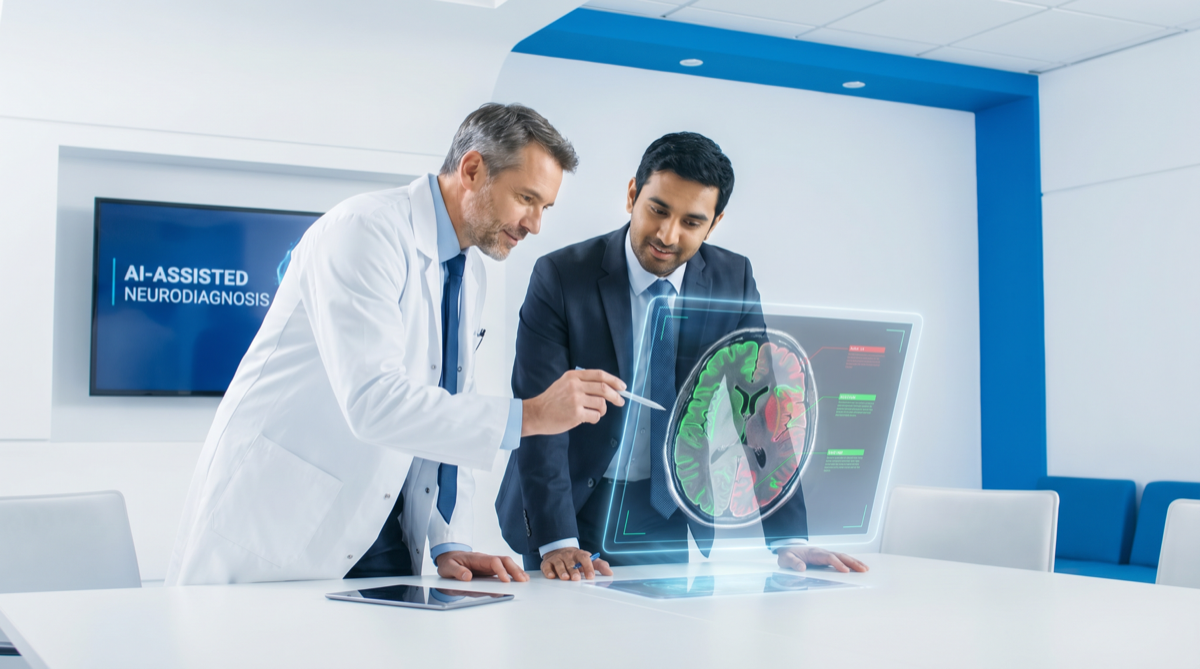
Google DeepMind's medical AI work is increasingly about more than answering clinical questions. A new Business Insider profile of Vivek Natarajan frames the work around a larger mission: using AI to help researchers and clinicians chase cures by moving from medical reasoning toward testable scientific hypotheses.
That is an important pivot. The first wave of medical language models was often judged by whether a system could answer exam questions or summarize clinical text. The next wave is more ambitious: can AI help find candidate treatments, explain mechanisms, prioritize experiments, and accelerate the long path from lab insight to patient benefit?
From Medical Exams To Scientific Workflows
Google's Med-PaLM work showed that large language models could approach medical-answering tasks with specialist-level performance, while AMIE explored diagnostic conversations. Those systems helped establish that medical AI could reason over symptoms, evidence, and language. They did not, by themselves, solve the harder discovery problem.

The AI co-scientist is the more revealing direction. Google Research describes it as a multi-agent system built with Gemini 2.0 to help scientists generate novel hypotheses and research proposals. In biomedical settings, the system has been used for drug repurposing, target discovery, and antimicrobial-resistance reasoning.
Hypotheses Are Not Cures
The promise is obvious, especially in diseases where progress feels painfully slow. Natarajan's personal motivation, shaped by his father's Parkinson's disease, gives the work a human urgency. But the distinction between generating hypotheses and proving cures must stay sharp.
A good AI-generated hypothesis can save time, surface overlooked connections, and help a lab prioritize experiments. It cannot replace wet-lab validation, clinical trials, regulatory review, or the messy work of determining whether a treatment is safe and effective in real patients.
The Governance Question Comes Early
The governance challenge is that discovery systems may look assistive while quietly shaping research agendas. If AI tools rank hypotheses, suggest targets, or influence which experiments get funded, institutions will need audit trails, uncertainty reporting, conflict-of-interest controls, and clear boundaries around clinical use.
Topics: Google DeepMind, medical AI, AI co-scientist, healthcare