Research
DeepMind's Bioresilience Plan Shows Why Biology AI Needs More Than A Safety Policy
Google DeepMind has outlined a bioresilience approach for AI-enabled biological research, arguing that scientific upside and misuse risk need to be managed through capability, access and real-world safeguards.
By Michael G ·
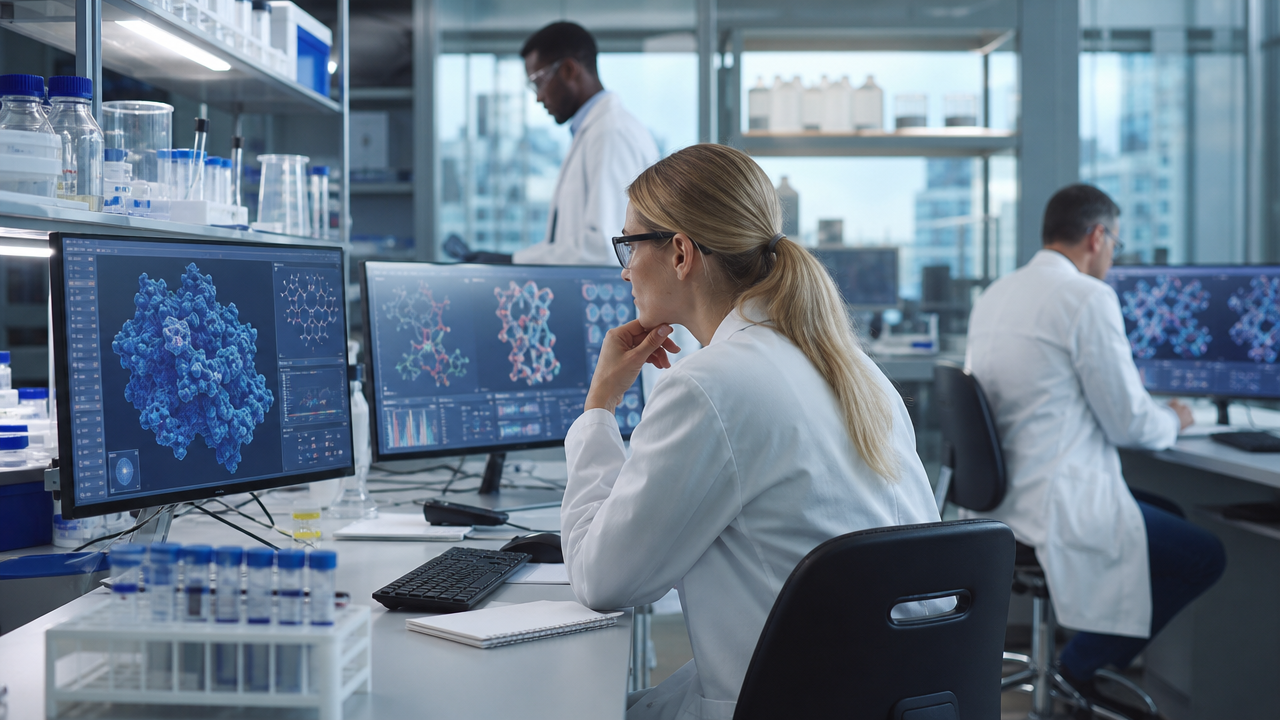
Google DeepMind has set out an approach to bioresilience as AI systems become more useful in biological research. Its July 16 statement argues that advances in areas such as protein structure, genomics and drug design can improve scientific work while also demanding safeguards around the ways powerful biological capabilities are evaluated and accessed.
The important point is that biology risk does not live in a model alone. It emerges when a model is connected to experimental knowledge, lab equipment, synthesis services and human intent. A policy that only asks whether a model can answer a sensitive question misses the chain between information and action. A serious safety program has to consider the users, the tools, the providers and the monitoring around that chain.
That does not make broad scientific access a mistake. Researchers use computational tools to understand disease, identify compounds and design experiments that would otherwise take much longer. The challenge is to build graduated controls that do not make benign work impossible while still slowing or detecting requests that combine sensitive biological detail with a plausible path to misuse.
DeepMind's framing matters because it connects safety to scientific practice rather than presenting it as a separate compliance step. Evaluation needs domain experts. Access rules need to recognize different users and contexts. Incident response needs to be prepared before a worrying capability is exposed in a public product. These are difficult operational commitments, not simply a model-card paragraph.
The clearest measure of bioresilience will be whether labs can show their work remains useful under safeguards. If controls are understandable, proportionate and tested with researchers, they can support trust in AI-assisted science. If they are vague or imposed only after release, they risk becoming another source of uncertainty for the people doing the experiments.
Topics: Google DeepMind, bioresilience, AI safety, biology