Policy
Europe's AI Sovereignty Debate Just Became Much Less Abstract
The Anthropic access shock has pushed Europe's AI sovereignty debate from rhetoric into infrastructure. The EU already has the AI Act; now the harder question is whether it can finance compute, models, procurement channels, and industrial champions fast enough.
By Michael C ·

Europe's AI sovereignty debate has become much less abstract after the U.S. government forced Anthropic to suspend access to its most advanced models for foreign users. A new Le Monde opinion piece argues that the episode exposed Europe's political dependence on technologies designed, hosted, and controlled elsewhere.
The argument lands because the Anthropic action did not look like ordinary regulation. It looked like a sudden interruption of access to a critical capability. For European companies, governments, researchers, and security agencies, that is a warning about dependency. If a foreign administration can cut access to frontier models without a shared framework, model availability becomes a political risk.
The AI Act Is Not Enough
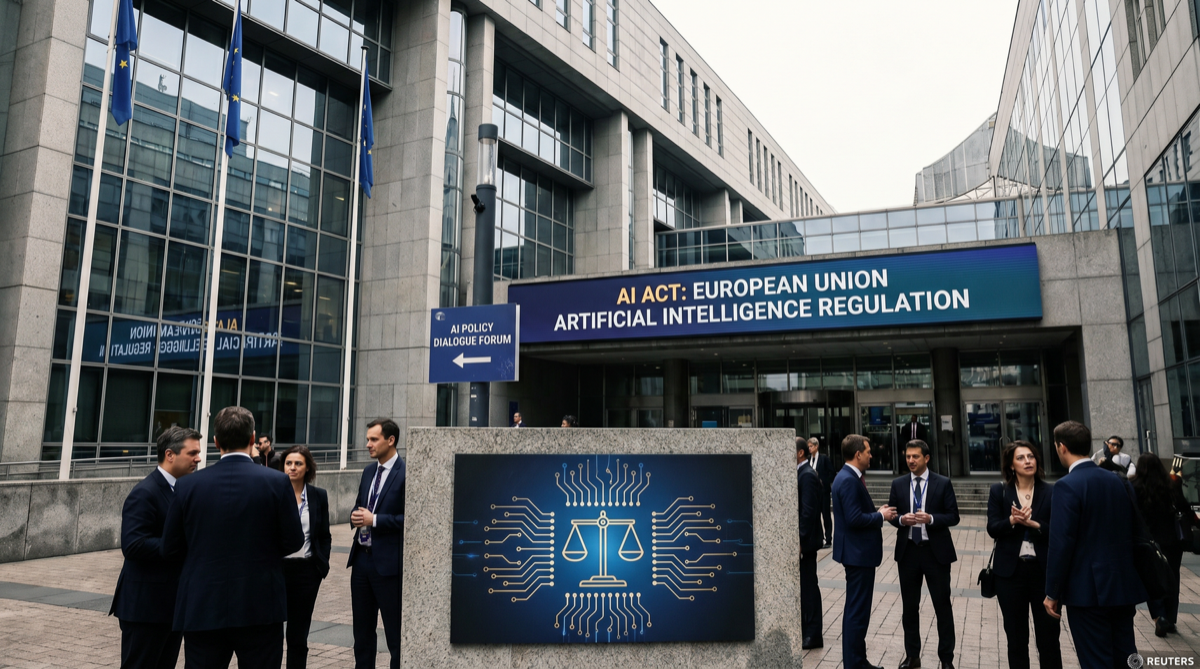
The European Union already has a demanding regulatory framework through the EU AI Act. That matters, but it does not solve the infrastructure problem. Rules can define obligations for high-risk systems, transparency, and accountability. They cannot by themselves create sovereign compute capacity, competitive foundation models, or procurement markets large enough to support European AI champions.
This is the uncomfortable lesson from the latest access fight. Europe can regulate AI, but if the most capable models, chips, cloud platforms, developer tools, and deployment channels sit outside Europe, regulation becomes only one layer of sovereignty. The deeper question is whether European institutions can actually buy and run systems that are accountable to European law and strategic priorities.
From Indignation To Procurement
Le Monde's critique is that European leaders have often responded with broad calls for an awakening while avoiding hard commitments. A real sovereignty agenda would require large public procurement, compute financing, energy planning, startup support, public-sector adoption, and security partnerships that let European providers move beyond promising demos.
The 2027 French presidential campaign may force the issue. Candidates can no longer talk about digital independence as a vague principle. They will be asked what resources they would allocate, which compute projects they would back, how they would treat American cloud dependence, and whether Europe should tolerate strategic model access controlled by Washington.
Sovereignty Without Isolation
The smarter goal is not AI autarky. Europe will still need partnerships with U.S. labs, open-source communities, Asian hardware suppliers, and global cloud providers. But sovereignty means having enough domestic capacity and legal leverage that Europe is not merely a customer waiting to learn whether access continues.
Topics: Europe, AI sovereignty, EU AI Act, infrastructure