Models
Nvidia's Co-Design Push Makes Model Architecture An Infrastructure Decision
Nvidia's new guidance on hardware-friendly language-model design shows that the next AI efficiency fight will be decided as much by model geometry and quantization as by the chips underneath.
By Michael G ·

Nvidia's latest engineering guidance carries a message the AI industry has been slowly learning: a language model is not only a software artifact. Its architecture is an infrastructure decision with consequences for latency, power, cost and how many users a system can serve.
The company argues that model dimensions, quantization choices and parallelism strategies should be shaped around the way modern accelerators actually execute work. In plain terms, a model that looks elegant on paper may waste expensive hardware if its layers, memory access patterns and communication overhead do not fit the machine well.
That is a meaningful shift from the old frontier-model narrative, where scale was the headline and architecture was a specialist detail. As inference becomes the recurring bill, efficiency is no longer a back-office optimization. It determines whether an AI product can be priced competitively and still make money.

The technical tools include lower-precision formats, layout choices that align with GPU compute tiles, and strategies for distributing mixture-of-experts workloads across systems without letting communication become the bottleneck. None of those choices is glamorous to an end user. All of them affect how fast an answer arrives and what it costs to generate.
For model builders, the implication is uncomfortable but useful. They cannot assume that a capability gain is worth shipping if it creates a disproportionate infrastructure penalty. A slightly smaller or better-aligned model can be a stronger product if it delivers reliable quality at a fraction of the serving cost.
For cloud buyers, co-design makes vendor choice more consequential. The model, compiler, runtime, network and accelerator may increasingly arrive as a package. That can produce excellent performance, but it can also deepen dependence on a single hardware and software ecosystem.
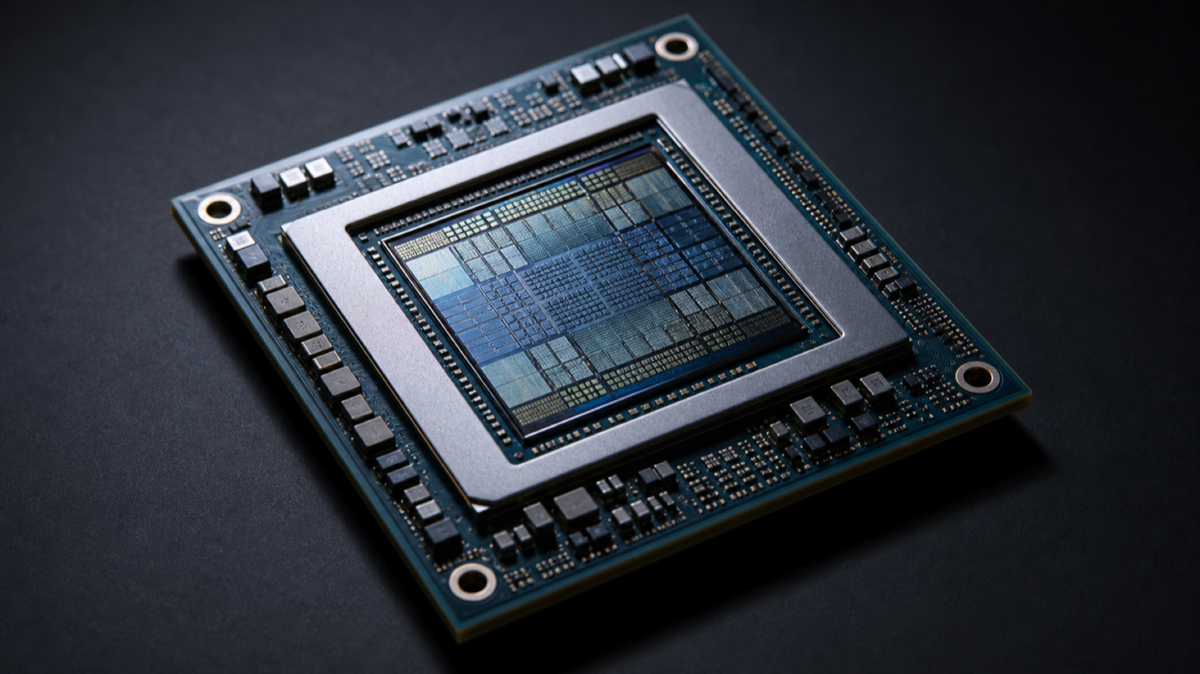
This is also why custom chips and open models are converging around the same question. The most valuable system is not necessarily the one with the largest parameter count. It is the one that turns a given amount of silicon, electricity and networking into useful work with minimal waste.
Nvidia is not merely selling a faster generation of hardware. It is encouraging the industry to build models that make its hardware look inevitable. The next inference race will be won by teams that understand both sides of that equation.
Topics: Nvidia, Blackwell, LLM inference, model co-design