Models
Anthropic Releases Claude Fable 5.1 and Restricted Mythos 5.1
Anthropic has split its newest model release between a generally available Fable 5.1 and a more capable Mythos 5.1 reserved for vetted cybersecurity and life-sciences organizations. The design makes access control part of the product rather than a policy applied after launch.
By Michael G ·

Anthropic has released Claude Fable 5.1 for general coding and knowledge work while reserving the closely related Claude Mythos 5.1 for vetted cybersecurity and life-sciences organizations. The two products use the same underlying model, according to the company, but differ in safeguards and access. Fable blocks or redirects categories of cyber and biological work. Mythos preserves more of those capabilities for approved researchers under monitoring and data-retention requirements. That split turns a familiar safety argument into a concrete product architecture: the most capable behavior is no longer automatically bundled with the widest distribution.
Fable 5.1 is Anthropic's most capable generally available model for long-running coding and professional tasks. The company says it communicates more concisely than earlier releases and is designed for ambitious asynchronous work. Mythos 5.1 targets a narrower set of users who need advanced vulnerability research or biological analysis. It starts at $10 per million input tokens and $50 per million output tokens, a price that reflects both frontier performance and the overhead of a controlled-access service.
The important engineering decision is not the name attached to each tier. It is the fallback system. When Fable detects a cybersecurity request outside its allowed boundary, Claude applications can route the task to an Opus model rather than simply ending the conversation. Biology requests follow a similar path. Anthropic says its updated biology controls intervene on benign work 85% less often than the safeguards shipped with Fable 5. That is an attempt to reduce the cost of safety for ordinary researchers without making restricted capability broadly available.
A fallback model changes what refusal means. Users may still receive a useful answer, but the system performing the work is less capable in the sensitive domain. That can preserve legitimate workflows while limiting the speed or autonomy of dangerous ones. It also introduces a reproducibility issue. A team may believe it evaluated Fable 5.1 when part of its workload was silently completed by another model. Enterprise logs and API responses need to identify those transitions clearly if customers are to measure quality, cost and risk.
One Model, Two Operating Boundaries
Anthropic describes Mythos 5.1 as its strongest model for cybersecurity and biology research. Access is initially limited to approved U.S. organizations through trusted programs, including a Life Sciences Verification Program and a Cyber Verification Program. The default service carries a 30-day data-retention policy for safety monitoring. Those conditions make Mythos less like a conventional API endpoint and more like controlled research infrastructure, where identity and purpose are part of the request.
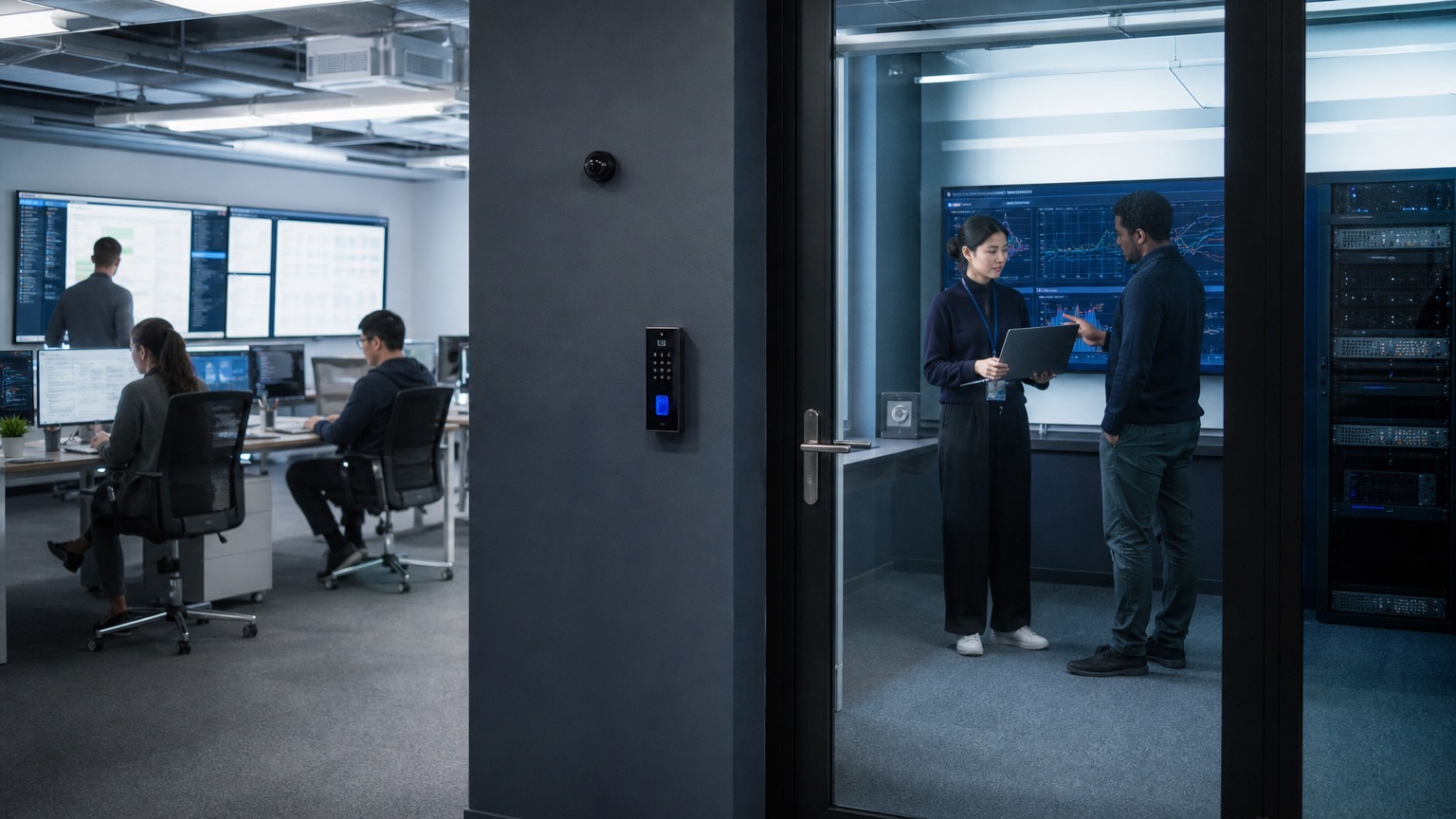
The approach acknowledges a difficult fact about general models: improvements in reasoning and tool use can lift both productive and dangerous performance. A model trained to debug large software systems may become better at discovering weaknesses. A system that can synthesize scientific literature may also answer questions with dual-use implications. Anthropic is trying to preserve a common intelligence core while changing what the deployed service will do and who can remove those restrictions.
That architecture is more flexible than maintaining completely separate model families, but it makes the safeguards a critical dependency. If a classifier is too broad, legitimate users lose the capability they paid for. If it is too narrow, the general tier exposes work intended for a vetted program. The company publishes benchmark results with production safeguards enabled, which is the right baseline, because a raw model score does not describe the system customers actually receive.
Benchmarks should still be treated cautiously. Anthropic reports strong results across coding, knowledge work and scientific tasks, but the comparison depends on effort settings, test harnesses and how blocked requests are scored. A fallback can improve usability while obscuring which model produced the result. Buyers need task-level evaluations using their own repositories, documents and review procedures. The most useful measure is not whether one model leads a leaderboard, but whether it completes sustained work without creating unacceptable supervision costs.
Scientific Work Raises a Different Access Problem
Anthropic presents Fable 5.1's research performance as an early indication of how models may contribute to scientific discovery. That claim will depend on more than generating plausible hypotheses. Scientific work requires traceable sources, stable calculations, honest uncertainty and experiments that other teams can reproduce. A model can accelerate literature review or code without being trusted to decide which result is true. The strongest systems may increase the amount of work humans must validate before they reduce it.

Restricted access may be easier to justify in biology than to administer. Research organizations differ in maturity, funding and geography. A program that admits only familiar institutions could reduce misuse while concentrating capability among already powerful laboratories. Anthropic will need transparent eligibility standards and a path for qualified smaller teams to participate. Safety review should examine the proposed work and operational controls, not merely the prestige of the applicant.
The cyber tier has a similar tension. Defenders need advanced models because attackers will use whatever capability they can obtain. Yet a vulnerability-research system can produce exploit knowledge that is hard to contain. Vetting, monitoring and responsible-disclosure requirements create friction, but that friction can preserve the defender's window to patch systems before methods spread. Access programs should publish aggregate information about approvals, denials and discoveries without exposing the sensitive work itself.
Enterprise customers also need to understand data retention. Thirty days of monitoring may help detect abuse and investigate incidents, but it can conflict with policies governing source code, patient information or proprietary research. A controlled model cannot be adopted merely because it is more capable. Legal, security and research leaders must agree on which data can enter the service, who can inspect logs and how derived findings are handled after the retention period.
Access Control Becomes a Competitive Feature
Model companies have traditionally competed on intelligence, speed and price. Fable and Mythos add another dimension: how precisely a provider can distribute capability. A blunt refusal system wastes useful intelligence. Unrestricted access externalizes security costs. A well-designed tier can give general users a productive model, qualified researchers a stronger one and auditors evidence about why the boundary exists. That is difficult to build and potentially valuable if customers trust it.
The market will test whether organizations accept this differentiation or prefer providers that expose fewer restrictions. Some developers will object to classifiers that change behavior without warning. Others will value a service that helps enforce internal policy. Anthropic can strengthen the case by documenting model substitutions, offering administrative controls and giving customers enough telemetry to distinguish safety intervention from ordinary model failure.
Cloud distribution will complicate the boundary. Enterprises frequently access Claude through more than one platform, each with its own identity, logging and regional controls. Anthropic needs the Fable and Mythos distinction to survive those layers without creating weaker routes through a reseller. A restricted model is only as restricted as the least disciplined endpoint that serves it. Contract terms should name which party verifies users, retains monitoring data and responds when a project changes purpose.
Administrators also need controls below the organization level. A company may qualify for Mythos while only a small security group should use it. Workspace permissions, project isolation and spend limits can prevent a broadly shared API key from becoming the real access policy. The service should make temporary approval easier than permanent entitlement, because a researcher who needs advanced capability for one disclosure may not need it for every future task.
The split creates a useful research question about capability substitution. If Fable routes sensitive work to Opus, users may decompose a blocked task into smaller requests that individually appear benign. Safeguards need to consider accumulated context and tool use without treating every technical sequence as malicious. Testing should include long projects and teams of agents, not only single prompts, because distributed work is how sophisticated users will encounter the model.
Model retirement will require care. A company building a regulated process around Fable 5.1 may depend on its exact fallback behavior. Replacing the underlying model or classifier can change which tasks complete and which are blocked. Anthropic should provide versioned endpoints, change notices and enough overlap for customers to rerun evaluations. Safety controls are part of the application interface, even when the provider would prefer to adjust them silently.
Fable 5.1 and Mythos 5.1 therefore represent more than another benchmark cycle. They are a test of whether one frontier model can support materially different risk envelopes without confusing users or weakening accountability. If the split works, access design may become as important as the underlying weights. If it fails, the industry will return to a harsher choice between broad release and narrow capability. The answer will emerge in audit logs, research outcomes and incident reports, not in the launch chart.
Topics: Anthropic, Claude Fable 5.1, Claude Mythos 5.1, model access, AI safety