Models
fal Releases H3 Max With Five-Second Video Generation in Under Three Seconds
fal says its post-trained version of MiniMax H3 generates a five-second clip in under three seconds while leading its human-preference tests. The release shifts competition in generative video toward inference systems that can sustain interactive production speeds.
By Michael G ·

Generative-AI infrastructure company fal has released H3 Max, a post-trained version of MiniMax H3 that it says can generate a five-second video in less than three seconds while leading its own human-preference evaluations for quality, prompt understanding and aesthetics. fal reports roughly 35 times the throughput of the official H3 endpoint and an average 15-fold speed advantage over systems with comparable quality. The claim matters because video models are moving from batch rendering toward an interactive production loop.
The model is available for text-to-video and image-to-video generation through fal's playground, agent interface and API. It was post-trained by fal Research and optimized by the company's inference team. That joint development is the central technical story. Model weights and serving infrastructure were tuned together rather than treating deployment speed as a problem to solve after the model was finished.
Video generation has traditionally forced a choice between fast previews and higher-quality output. A creator may wait minutes for a short clip, then discover that the camera move or subject motion is wrong. Faster-than-real-time generation changes the economics of iteration. An editor can test several variations during a live session instead of submitting a queue and reviewing it later.
fal says H3 Max leads its Bayesian Elo comparisons with 95% confidence intervals and wins a majority of head-to-head evaluations against every model tested. It also points to independent results from Artificial Analysis and Design Arena. Preference tests are useful because video quality is difficult to reduce to one automated metric. They remain sensitive to prompt selection, evaluator population and how outputs are presented.
Inference Speed Becomes Part of Model Quality
A slow system can produce an excellent isolated clip and still fail a professional workflow. Creative work depends on iteration, comparison and revision. Latency determines how many ideas a team can explore before a deadline. When generation falls below clip duration, the model begins to behave more like an instrument than a rendering service. That can change interface design and the kinds of people willing to use it.

Throughput figures need careful interpretation. A provider may measure one clip on warm hardware while customers experience queueing, upload time and regional network delay. Resolution, duration, frame rate and concurrency all affect production performance. fal should publish percentile latency and sustained throughput under load, not only a best-case wall time. Enterprise users care about whether the hundredth job finishes predictably.
Speed can also conceal cost. A high-end GPU cluster may complete a clip quickly while consuming significant power and expensive capacity. The relevant business metric is cost per acceptable second, including failed generations and reruns. If faster iteration causes users to generate many more discarded clips, total spending can rise even as unit latency falls.
Post-training may improve prompt adherence and aesthetics without altering the underlying architecture. That is commercially valuable because users experience the complete service, not a research taxonomy. It also complicates model comparisons. A provider can combine proprietary tuning, scheduler changes, quantization and hardware optimization. The product name captures a stack whose components may change faster than a conventional model release.
Preference Leadership Needs Production Evidence
Human raters often prefer visually dramatic output even when it contains continuity errors. Professional users care about identity consistency, editable motion, temporal stability and whether a sequence matches surrounding footage. H3 Max should be tested on repeated characters, precise product details, typography-free environments and long camera moves. Aesthetic preference is one dimension of usefulness, not the complete score.
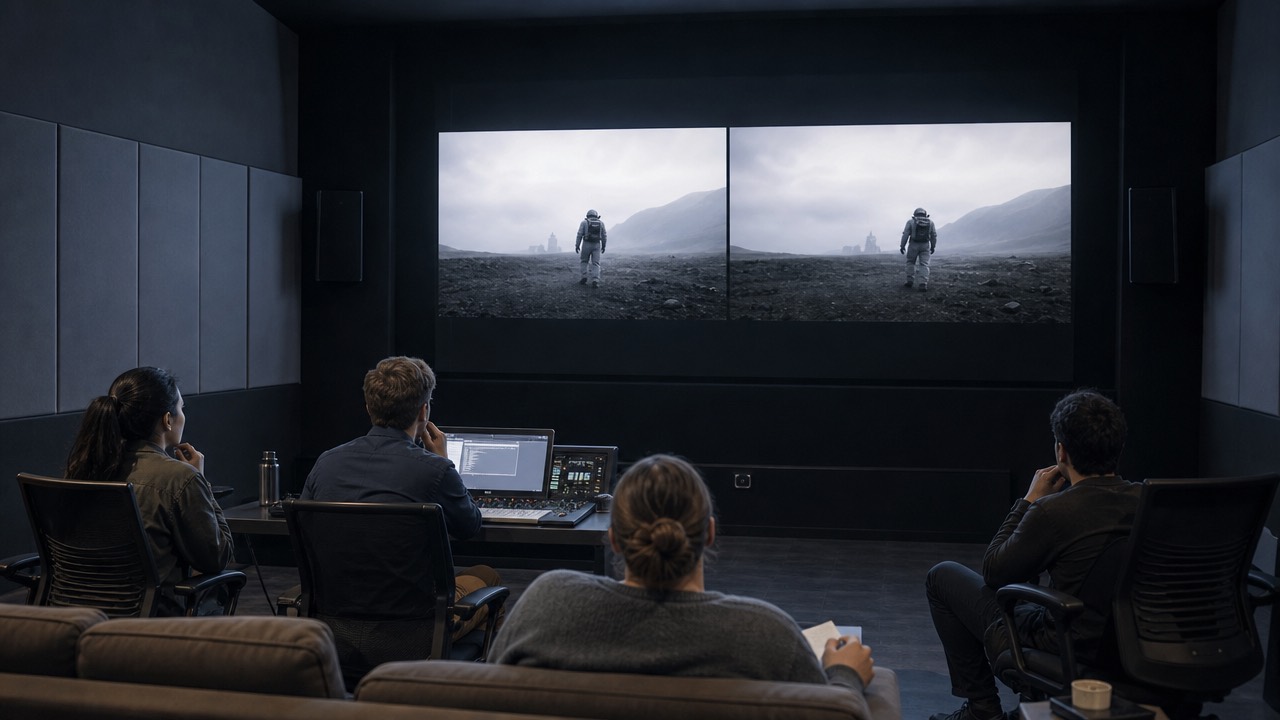
Image-to-video workflows may benefit first because the starting frame constrains composition. Advertising, visualization and storyboarding teams can supply approved art, generate motion and reject weak versions quickly. Text-to-video remains more open-ended, which makes fast generation valuable for exploration but harder to direct. Controls for camera, duration and motion will determine whether speed translates into final work.
Rights and provenance remain unresolved by better inference. A production team needs to know the terms governing generated assets, whether uploaded reference images are retained and how the provider responds to content claims. Faster generation can increase output volume and therefore the number of clips requiring review. A professional service should make metadata and account-level controls as accessible as the render endpoint.
The release also shows how infrastructure companies can move up the value chain. fal began as a platform for serving generative models and now presents research and post-training as part of its product. Owning both layers can create a feedback loop: production traces reveal bottlenecks, model changes improve serving and infrastructure improvements support new training choices. It also places more responsibility on the provider for safety and evaluation.
Interactive Video Will Change the Interface
Most generative-video products still use a form and job queue because latency made conversation impractical. Faster-than-real-time output supports scrubber-based revision, live prompt adjustment and multiple variations updating side by side. Those interfaces can give creators more control than a chat box. They will also require predictable seeds, versioning and a record of which settings produced an approved clip.
Developers should test API behavior under cancellation and rapid iteration. If a user changes direction after one second, the system should stop consuming capacity for an obsolete render. Streaming previews may allow applications to reject a bad trajectory before the final frame. Efficient cancellation and partial results can matter as much as raw generation time in a responsive product.
Regional availability can affect the interactive promise. Video files are large, and moving reference images or outputs across continents can erase part of the inference gain. fal should expose region selection and report end-to-end latency from major markets. Studios may also require data residency, making capacity placement a product feature rather than an invisible infrastructure choice.
Version stability matters for applications built on a visual style. A silent update that improves average preference can change character appearance, color or motion in an existing campaign. The API should provide pinned versions and a migration period, with samples showing where behavior changed. Creative consistency is a production requirement even when a newer model wins a benchmark.
Safety filtering should be measured as part of latency and quality. A fast model that sends many legitimate prompts into slow manual review will not feel interactive. At the same time, high-throughput video can generate abusive material at scale. Providers need layered controls, account monitoring and clear appeal paths, then should report intervention rates without publishing evasion methods.
Competitive pressure will spread the optimization. Other providers can reduce precision, distill models or redesign schedulers, while hardware vendors tune kernels for video workloads. That may make today's lead temporary and the broader cost decline durable. Developers should avoid architecture that assumes one provider will remain fastest and preserve the ability to compare quality, latency and rights terms over time.
H3 Max's strongest claim is not that one model permanently leads video quality. That ranking will move. The durable change is a serving target: high-quality video can be generated quickly enough to participate in the creative process rather than interrupt it. fal now has to prove that the speed survives real traffic and that users can turn more iterations into better finished work rather than a larger pile of disposable clips.
Topics: fal, H3 Max, MiniMax, generative video, AI inference