Robotics
Foundation And AMD Tie Humanoid Robots To Defense And Factory Work
Foundation Future Industries, backed by Eric Trump, said it will use AMD processors to co-develop humanoid robots for military and industrial use, according to Reuters.
By Michael G ·
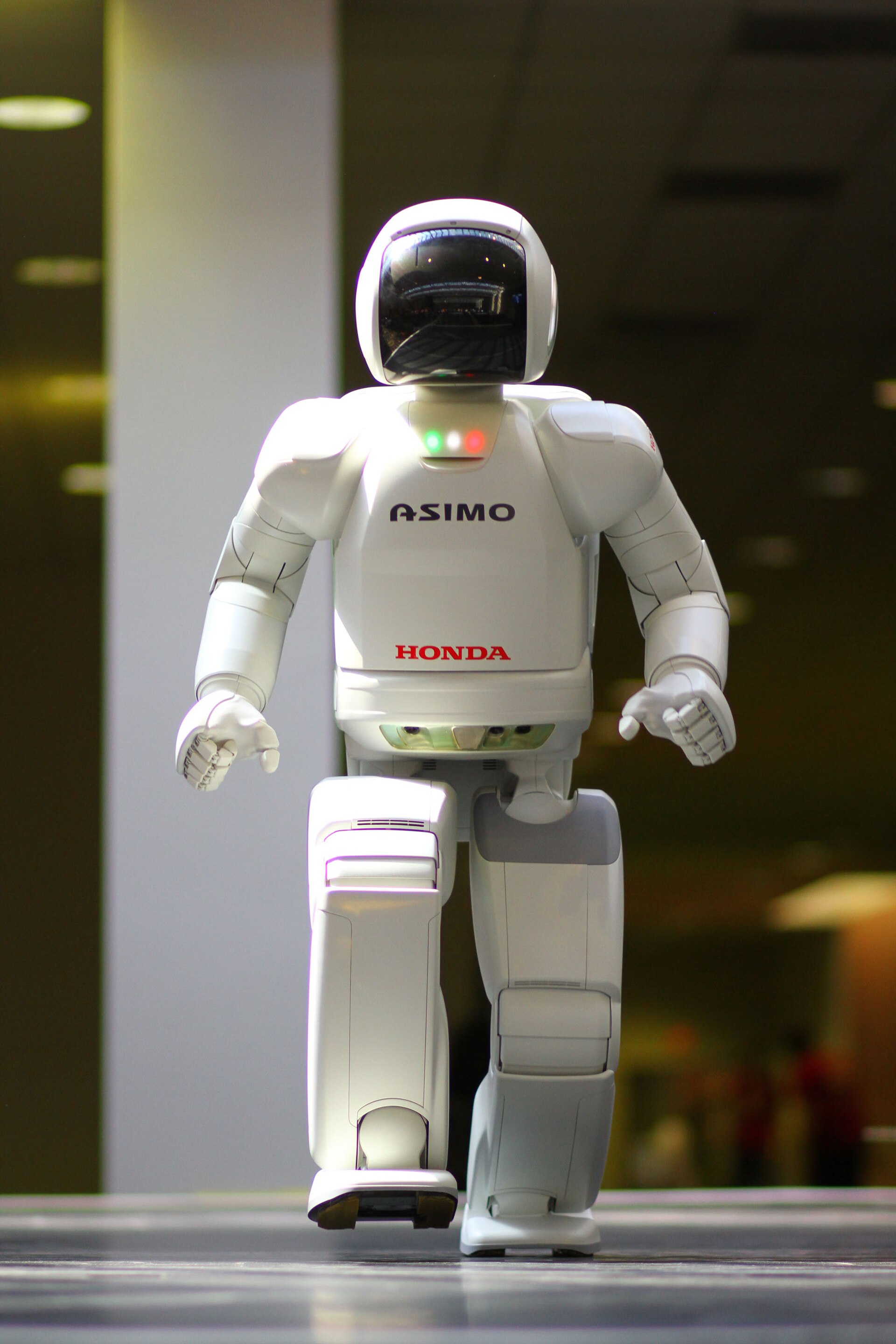
Foundation Future Industries, a startup backed by Eric Trump, is partnering with AMD to use the chipmaker's processors in autonomous humanoid robots for military and industrial use, according to Reuters. The company said it plans to use AMD Ryzen AI Embedded X100 Series processors in the second version of its Phantom robot, known as Phantom MK-2. The value of the deal was not disclosed. For robotics, the important part is less the political attention around the investor list and more the operating claim: humanoid platforms are being sold as labor systems for factories, logistics, and defense tasks, not only as demonstration machines.
The company's chief executive, Sankaet Pathak, told Reuters that Foundation deployed Phantom MK-1 robots that contributed to building more than 24,000 cars in 2025. He said the company plans to open an October factory capable of building 5,000 Phantom robots a year, followed by another facility with planned annual capacity of 50,000 robots. Those figures are company-reported and should be read as claims about deployments and plans until customers and auditors provide more detail. They still show how quickly humanoid robotics companies are moving from research posture to manufacturing posture.
AMD introduced the Ryzen AI Embedded X100 Series in January for edge AI systems that need local processing under power and space constraints. A humanoid robot is one of the harder edge environments. It has to process cameras, joint states, force readings, navigation signals, and task instructions while staying responsive enough to avoid unsafe motion. Cloud connectivity can help with monitoring and fleet learning, but the robot still needs enough local compute to keep moving when latency or network availability changes.
The military angle brings a different set of constraints. Reuters reported that Foundation is developing defense robots for materials handling and reconnaissance, with units sold to the government at about $300,000 each. Those applications may sound less dramatic than armed autonomy, but they still matter. Moving supplies, inspecting routes, and entering dangerous spaces can reduce human exposure. They also create accountability questions when a machine operates near personnel, civilians, or sensitive infrastructure.
The industrial model is closer to a lease. Pathak told Reuters that industrial-use robots cost about $100,000 per year to lease to customers. That pricing frames the robot as a labor and uptime product. A buyer is not only purchasing hardware. It is paying for maintenance, software updates, fleet management, safety cases, and the promise that a machine can do useful work across enough hours to justify the bill. In factories, the hard metric is not how humanlike the robot looks. It is whether it can sustain throughput without causing stoppages.
The partnership also shows how the robotics stack is fragmenting. Nvidia has pushed robotics through Isaac, Jetson, and physical AI simulation. AMD is trying to win more AI workloads across data centers and edge systems. Qualcomm and others are active in mobile robotics and XR. Robot makers may eventually treat processors the way model builders treat cloud providers: as a portfolio decision shaped by performance, software support, availability, and cost.
Eric Trump's involvement adds scrutiny because the Trump family's investments in defense-adjacent and government-facing companies have drawn conflict-of-interest concerns. Reuters noted that he has been an investor in Foundation since earlier this year and serves as chief strategy adviser. That does not prove wrongdoing. It does mean procurement, defense sales, and public claims around the company will be watched through a political lens as well as a technical one.
For robotics engineers, the real test is evidence from the field. How many robots are deployed? Which tasks are autonomous, and which require remote support? What are the failure modes? How often do customers intervene? How are near misses recorded? What safety certification applies? A company can announce capacity, but robots earn credibility in hours worked, incidents avoided, and maintenance logs.
Humanoid robots remain difficult because the human environment is not designed like a factory cell. Stairs, pallets, doors, cables, uneven floors, tools, and changing lighting all create edge cases. A humanoid form can make sense when a machine has to use spaces and equipment built for people, but the shape does not remove the engineering burden. Balance, grasping, perception, battery management, and recovery from mistakes are still hard. The more a company claims broad deployment, the more customers should ask which environments have actually been validated.
The AMD processor choice points to the role of local inference. A robot cannot wait for a cloud model to decide every joint movement. It needs fast sensor processing for perception and control close to the body. Cloud systems may plan, monitor, update, or learn from fleet data, but the robot has to avoid collisions, maintain posture, and stop safely in real time. That makes processor efficiency and software support as important as raw AI marketing language.
Defense use adds procurement questions that differ from commercial leasing. Government buyers need reliability, secure supply chains, maintainability, training, and clear rules for deployment. If a robot handles materials or performs reconnaissance, commanders must understand what it can see, how it transmits data, who can override it, and how it behaves when communications fail. Those requirements may slow adoption, but they also give credible robotics companies a path to contracts if the machines prove useful in constrained tasks.
Factory customers will be less interested in the humanoid label than in whether the robot can be integrated without disrupting production. A useful robot must work with safety fencing, supervisors, maintenance teams, scheduling systems, and quality controls. It may need to share space with workers or with older industrial arms that already perform narrow tasks efficiently. The business case depends on filling gaps that existing automation cannot address cheaply, not on replacing every specialized machine with a human-shaped one.
Foundation's reported lease pricing also suggests a service-company model. A customer paying annually expects uptime, repairs, software improvements, and operational support. That can be attractive because it avoids a large upfront purchase. It also leaves the vendor responsible for performance after the demonstration. In robotics, service obligations can become expensive if machines need constant human help. The company that wins is not always the one with the most impressive robot video. It is the one that can support fleets without burning cash on field service.
The capacity numbers should therefore be read carefully. A planned 5,000-unit factory and a later 50,000-unit facility would represent a major manufacturing scale-up if achieved. But robotics history is filled with aggressive production targets that met slower customer adoption, supplier constraints, or safety reviews. Investors and buyers should look for signed customers, repeat leases, utilization data, and evidence that the company can manufacture consistently at quality. Announced capacity is a starting point, not proof of demand.
There is a broader labor question running beneath the announcement. Humanoid robotics companies often describe dull, dirty, or dangerous work. Those categories are real, and automation can reduce human exposure to risk. But the transition also affects jobs, training, wages, and workplace surveillance. A robot that takes over a repetitive lifting task may help workers. A robot that tracks performance or reduces bargaining power may not. The social impact depends on how customers deploy the machines, not only on the robot's technical capability.
The chip competition around physical AI is still early. Nvidia has built a strong robotics software story around simulation and acceleration. AMD's appeal may come from embedded compute, availability, and a desire by robot makers to avoid dependence on a single supplier. If humanoid fleets scale, component choices will matter because every watt, board size, thermal constraint, and development toolkit affects the machine's economics. A robotics startup cannot treat the processor as a replaceable part once it has built its control stack around it.
Humanoid robots also expose the gap between AI demos and safety-certified machinery. A language model can recover from a bad sentence. A robot moving through a factory has mass, momentum, pinch points, and batteries. It can damage equipment or injure people if perception or control fails. That is why industrial customers will ask for risk assessments, emergency stops, training procedures, and maintenance plans before accepting wide deployment. Physical AI has to meet physical safety standards.
The defense market may tolerate higher prices if a robot reduces risk to personnel, but it also demands ruggedness. Machines have to work in dust, heat, cold, darkness, and poor connectivity. They may be handled by users who are not robotics specialists. A humanoid platform designed for clean industrial settings may need significant adaptation before it can operate reliably in the field. Foundation's partnership with AMD can support the compute side, but the environmental and operational tests remain separate.
Investors are treating robotics as one of the next places where AI leaves the screen. That expectation can push startups to announce aggressive timelines. It can also create pressure to frame every processor choice or pilot deployment as proof that general-purpose robots are close. The more disciplined reading is that each partnership solves one layer. Chips, actuators, sensors, batteries, control software, simulation, safety certification, and customer service all have to mature together.
Foundation's reported car-production claim is important if verified because automotive work is a demanding environment. Vehicle assembly and related factory work involve precise timing, quality control, and coordination with other machines and people. But the phrase contributed to building cars can cover many levels of involvement. A robot may move materials, inspect parts, perform a narrow repetitive task, or participate in a larger automation line. Customers and reporters should press for task-level detail before treating the number as proof of broad autonomy.
For AMD, the deal is a chance to make its AI story more visible outside data centers. The company competes heavily in CPUs, GPUs, and embedded systems, but physical AI gives it another way to show that local compute matters. If robots become mobile data centers on legs, the silicon inside them becomes strategic. The market will reward processors that can handle multimodal inputs, run models efficiently, and fit inside machines that cannot draw unlimited power.
The next proof point will not be whether Phantom MK-2 can look impressive on a stage. It will be whether a customer can describe a specific job the robot performs, the number of shifts it worked, the incidents it avoided, the human oversight it required, and the economics compared with existing automation or labor. That level of disclosure is rare in early humanoid robotics, but it is what separates procurement from publicity. Foundation's AMD partnership gives the company a credible compute narrative. The market still needs evidence that the narrative becomes repeatable work in defense and industrial settings.
Foundation's AMD deal therefore belongs in the physical AI file, not only the political file. It shows another robotics company trying to turn humanoid ambition into factories, leases, and defense use cases. The sector's next stage will be less about viral videos and more about whether processors, software, safety systems, and service teams can keep physical machines useful after the launch announcement ends.
Topics: Foundation Future Industries, AMD, humanoid robots, physical AI