Robotics
Chinese Companies Lead 86% of Humanoid Robot Shipments in H1 2026
AGIBOT, Unitree, Galbot, UBTECH and Leju accounted for 86% of global humanoid shipments in the first half of 2026, according to Counterpoint Research. Most units still serve entertainment, research and data production rather than industrial work.
By Michael G ·
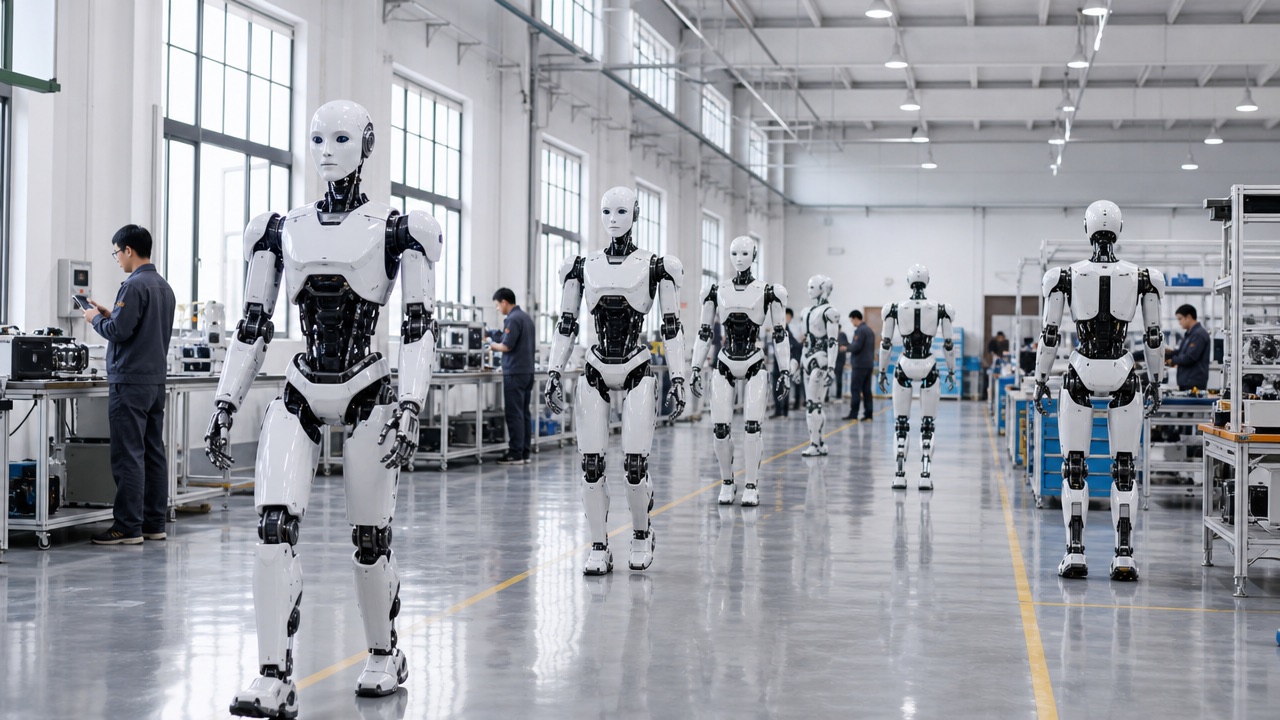
Five Chinese companies accounted for 86% of global humanoid robot shipments in the first half of 2026, according to Counterpoint Research, giving China a commanding early lead in a market that is finally moving beyond prototypes. Worldwide shipments exceeded 22,000 units, nearly four times the level a year earlier. AGIBOT led with about 9,700 robots, followed by Unitree with more than 7,000. Galbot, UBTECH and Leju completed the top five. The numbers show manufacturing momentum, but they do not yet prove that humanoids have found a large, profitable labor market.
More than 60% of shipments still went to entertainment and performance or to data production and research. Those uses matter because they create fleets, developer communities and training data. They are less demanding than a factory job that must run reliably for multiple shifts. Intelligent manufacturing represented 13% of shipments and warehousing and logistics 5%, while service and guidance accounted for roughly 19%. The market is broadening toward work, but demonstrations and experimentation still dominate the installed base.
AGIBOT held more than 43% of the market. Its X series is widely used in entertainment rentals, scientific education and data collection, while its G series has begun clustered deployments on consumer-electronics and automotive-component lines through partnerships with Longcheer Technology and Joyson Electronics. That product spread helps the company produce volume without waiting for one general-purpose machine to become competent at every task. It also makes shipment totals harder to translate into equivalent economic value because a compact research robot and an industrial system are not interchangeable.
Unitree captured about 31%, driven by the G1 series in research and education. The company's ability to manufacture relatively affordable, dynamic machines has made it a visible representative of China's robotics supply chain. Public-market access adds capital for production and research, but it also raises expectations for revenue quality. Investors will need to see recurring service, software and industrial orders rather than growth supported mainly by laboratories, schools and event operators.
Shipment Leadership Begins With the Supply Chain
China's advantage is not simply lower assembly cost. The country has dense networks for motors, gearboxes, batteries, sensors, power electronics, machining and contract manufacturing. A robotics company can iterate a joint or redesign a board while working near suppliers that already serve electric vehicles, drones and consumer electronics. Faster physical iteration reduces the time between a lab insight and a production revision. It also allows companies to field more units, collect more failure data and improve designs before rivals reach comparable scale.
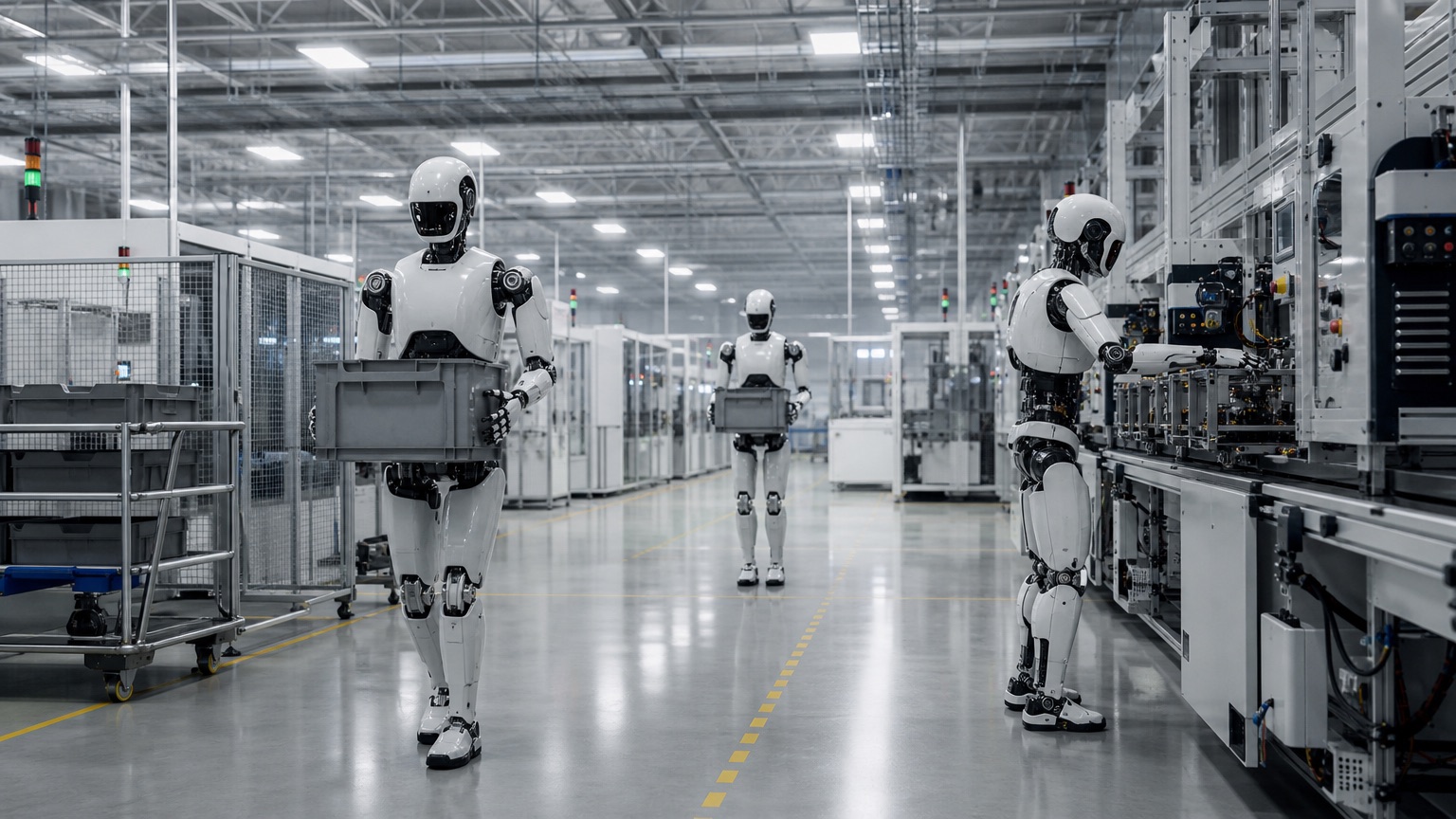
Government support and regional industrial policy reinforce that loop. Local authorities can provide facilities, procurement pilots and links to manufacturers willing to test robots. Those programs create valuable opportunities and can obscure organic demand. A robot placed in a demonstration zone is a shipment even if the buyer does not reorder after the subsidy ends. The next phase should be measured by repeat purchases, paid operating hours and the cost of human intervention, not only by units leaving a factory.
Galbot's more than 1,100 units illustrate a narrower deployment strategy. The company has used smart pharmacies and retail sites as training grounds and built vision-language-action models for industrial settings. Its wheeled dual-arm S1 targets heavy-load logistics and has been tested on CATL production lines. Wheels avoid some of the balance and energy problems of bipedal movement. That choice may look less human, but it can produce better economics in environments designed around flat floors.
UBTECH reached the thousand-unit level and raised its 2026 guidance for the Walker S series to 5,000 units. Its customers concentrate in automotive and electronics manufacturing, where tasks such as material movement, inspection and machine tending can be structured. The company has also introduced a home-focused sub-brand. Those markets require different hardware, safety assumptions and service networks. A factory robot can operate inside a controlled cell; a home robot has to cope with children, pets, stairs and a much wider range of objects.
Leju shipped about 650 units, with its Kuavo machines appearing in data-production and training centers. Data fleets are strategically useful because embodied models need examples of perception and action that the public web cannot supply. Teleoperation, simulation and automated collection can expand those datasets. The risk is building robots mainly to create data for future robots, without a customer willing to pay for the current task. Data production is an investment phase, not a complete end market.
The Hard Metric Is Productive Time
A shipment count treats every unit equally, while operators care about productive hours. A robot that requires frequent resets, remote pilots or technicians can move revenue into the vendor's quarter without reducing the customer's labor or downtime. Useful deployment data should include task completion, intervention frequency, cycle time, safety stops, energy use and maintenance. Those figures reveal whether a machine is becoming an asset or remaining an experiment.
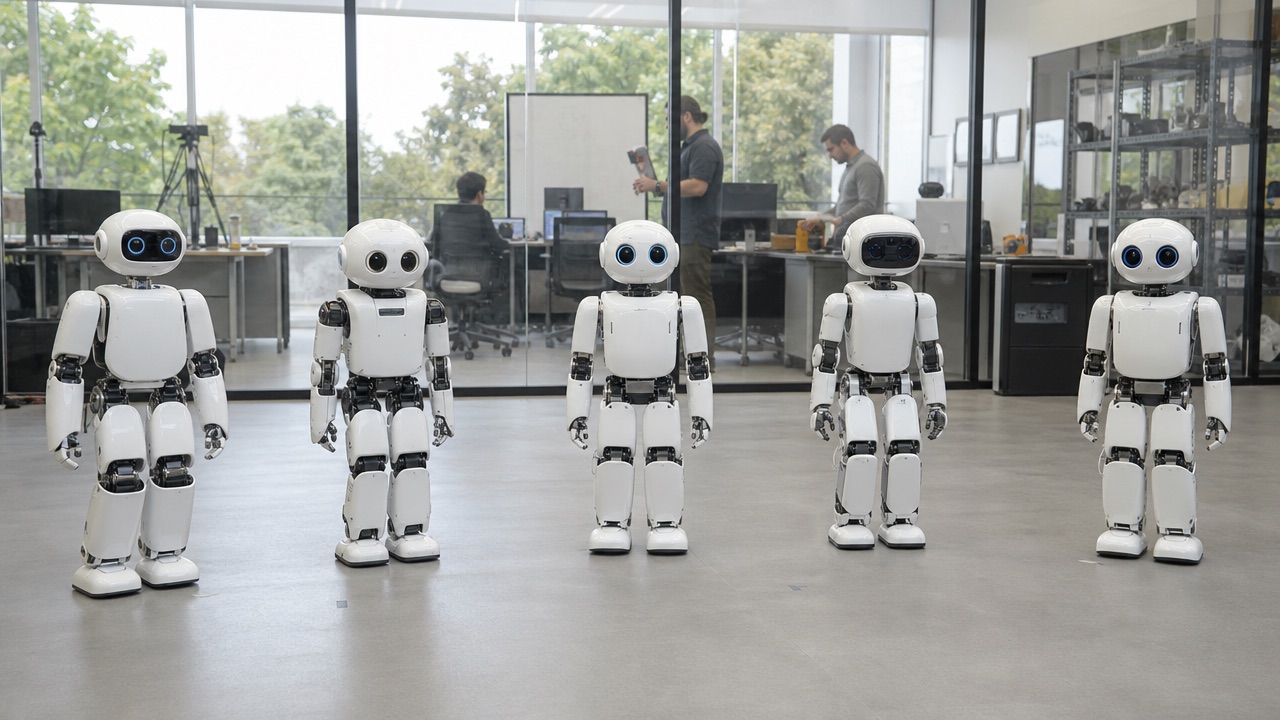
Standardized tasks are the practical entry point. Counterpoint identifies material handling, sorting and inspection in electronics, manufacturing and logistics as areas where deployment solutions are emerging. These jobs offer repeatable layouts and measurable outputs. They also expose robots to reflective parts, changing lighting, clutter, human traffic and production pressure. A successful pilot must survive that variation without turning the factory into a laboratory built around the robot.
Safety certification will slow some deployments for good reason. A humanoid places heavy actuators near people and can move in less predictable ways than fixed automation. Manufacturers need force limits, redundant sensing, controlled stop behavior and clear responsibility when a model proposes a motion outside its validated envelope. Learning systems can improve task flexibility, but safety-critical motion should remain bounded by controls that do not depend on a language model's confidence.
Service infrastructure may become a stronger moat than a dramatic demonstration. Factories need spare parts, diagnostics, field technicians and software updates that do not interrupt production. Chinese vendors can use domestic density to build that network quickly. International expansion will be harder because parts, certification, cybersecurity rules and customer expectations vary. A low purchase price loses its appeal when a machine waits weeks for a specialized joint or remote support.
A Market Split Is Becoming Visible
China appears strongest in manufacturing scale and hardware supply. U.S. companies and research labs remain competitive in foundation models, simulation and high-level autonomy. Those advantages can combine through global supply chains, or they can separate as governments impose restrictions on robotics hardware, chips and data. A fragmented market would raise cost and slow learning by reducing access to components and deployment data. It could also create distinct safety and interoperability standards.
Counterpoint projects more than 50,000 global shipments for 2026, which would represent 210% growth. Forecasts at this stage should be treated as scenarios rather than mature demand estimates. A few large pilots can move the total substantially. The more important forecast is the expected shift from entertainment and research toward service and industry over five years. That transition will decide whether humanoids become a durable capital-equipment category.
Chinese makers have earned an early volume advantage, and volume can compound through procurement experience, supplier bargaining and real-world data. It can also lock in weak designs if companies optimize for shipment targets rather than customer outcomes. The market needs fewer choreographed videos and more disclosures about utilization, reorder rates and service cost. Those measurements will identify which vendors can convert production capacity into operational trust.
Component standardization could accelerate the next stage. Common interfaces for batteries, hands, sensors and safety controllers would let operators service mixed fleets and reduce dependence on one vendor. Manufacturers may resist standards that weaken product differentiation, but customers will hesitate to deploy thousands of units if every replacement part and software tool is proprietary. China's scale gives its industry bodies an opportunity to establish de facto standards before international alternatives mature.
Workforce design matters as much as hardware. Early humanoids often require teleoperators, data annotators, field technicians and process engineers. Those jobs should be counted when vendors claim labor savings. A deployment can still create value by moving people away from dangerous or repetitive work, even if total headcount does not fall. Customers need a complete labor model that includes supervision, training and maintenance instead of comparing a robot purchase price with one worker's wage.
Cybersecurity will become more important as fleets connect perception data, cloud models and factory-control systems. A compromised humanoid can expose video, map a facility or interfere with physical processes. Enterprises should segment robot networks, sign software updates and restrict remote access. Vendors need vulnerability disclosure programs and support periods that match industrial asset life. A machine expected to operate for years cannot depend on a startup's willingness to maintain one release branch.
Energy and battery replacement also shape productive time. Dynamic demonstrations last minutes; commercial shifts last hours. A robot that spends too much time charging or swapping batteries may require a larger fleet than the headline task suggests. Operators should measure energy per completed unit of work and include battery degradation in maintenance cost. Industrial facilities can redesign charging and workflow, but that investment belongs in the return calculation.
Export markets will test data governance. Training a robot across customer sites can improve performance, yet factory video and process data may reveal trade secrets. Vendors need local-processing options and agreements defining who owns collected trajectories and derived models. Chinese companies expanding abroad will encounter national-security reviews and localization requirements. Trust will depend on technical controls that let customers verify where operational data travels rather than relying solely on corporate assurances.
The 86% figure is therefore both impressive and incomplete. It shows where the machines are being built and which companies have established distribution. It does not show who has solved general autonomy or who will capture the most economic value. China's factories have given its robotics companies a head start in the physical race. Their next challenge is proving that the units already shipped can keep working after the launch event ends and the customer's shift begins.
Topics: humanoid robots, China, AGIBOT, Unitree, industrial automation