Robotics
China's Dexterous Robot Hands Show Where The Humanoid Race Is Really Moving
Humanoid robots may get the headlines, but dexterous hands, actuators, tactile sensors, and precision assembly are becoming the supply-chain layer that decides whether physical AI can scale.
By Michael G ·
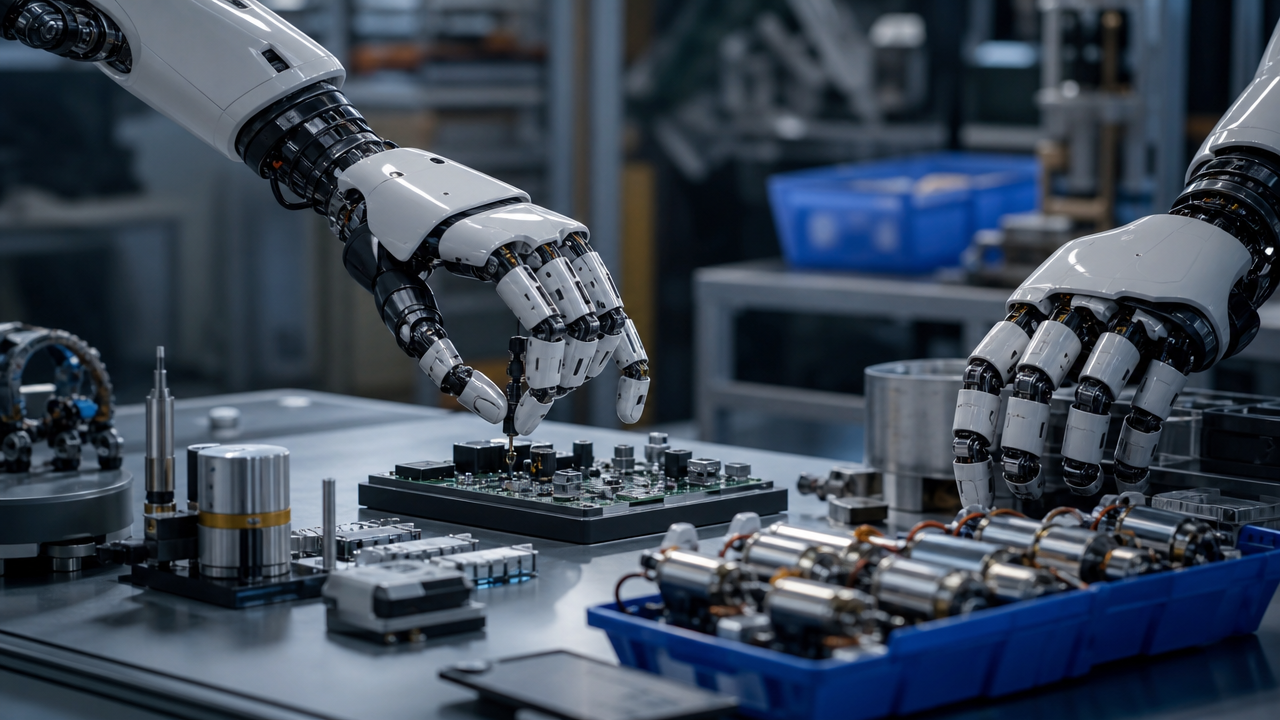
China's humanoid robotics race is moving from whole-body demos toward the components that make useful work possible. Dexterous robot hands, tactile sensors, compact actuators, and precision transmissions may decide whether physical AI can move from staged videos into factories, warehouses, and service environments.
The reason is simple: a robot that cannot grasp, rotate, lift, release, and recover from small errors is not commercially useful. Intelligence matters, but manipulation is where model planning meets friction, weight, torque, and safety.
Hands Are A Supply-Chain Problem
Dexterous hands require motors, gears, force sensors, embedded control, thermal management, and durable materials inside a very small form factor. That makes them less like accessories and more like strategic subsystems.
China's advantage is not only engineering talent. It is proximity to electronics factories, motor suppliers, machine shops, assembly partners, and customers that can test hardware quickly. That ecosystem can shorten iteration cycles even when the underlying research remains difficult.
The Investment Lens Changes
For investors, the robotics opportunity may not sit only in the best-known humanoid brands. Suppliers that improve torque density, reliability, tactile sensing, and manufacturing yield can capture value across many robot platforms.
Topics: humanoid robots, dexterous hands, China robotics, physical AI