Robotics
Figure Plans Up to 100,000 Nvidia GPUs in a $6 Billion Humanoid Robot Compute Deal
Figure and Nscale plan a Texas compute deployment that could grow to 100,000 Nvidia Vera Rubin GPUs, revealing how quickly humanoid robotics is adopting the capital model of frontier AI labs.
By Elvin C ·
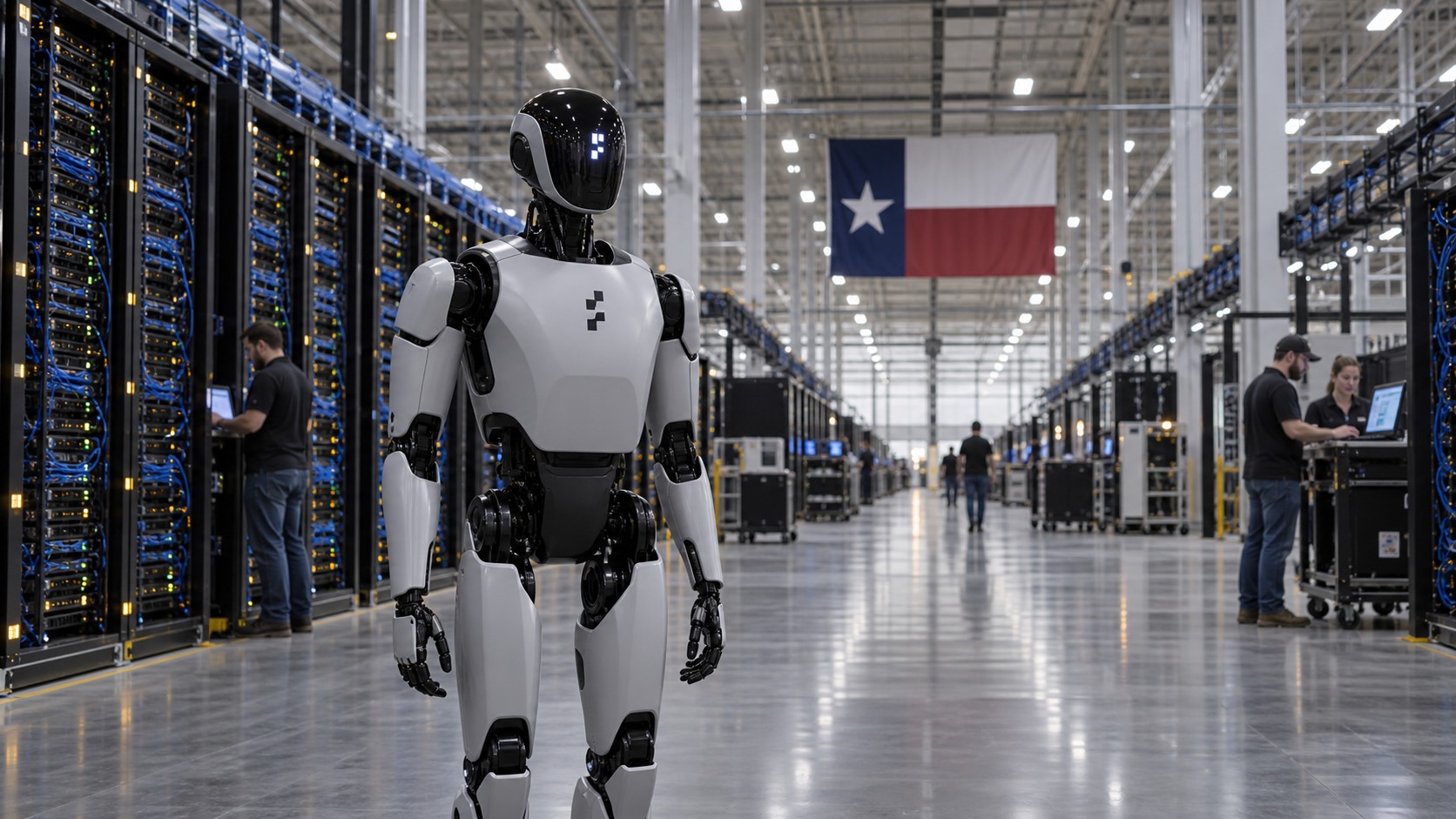
Figure has signed a multi-year partnership with Nscale that could deploy as many as 100,000 Nvidia GPUs for humanoid-robotics training, with an initial $3.5 billion compute commitment and an intention to scale beyond $6 billion. The first Vera Rubin systems are targeted for the second half of 2027 at Nscale’s site in Barstow, Texas. Nscale will also invest in Figure and become its preferred compute provider.
The agreement puts a startling price on Figure’s belief that humanoid intelligence will improve through the same recipe that drove language models: more data, more compute and larger training runs. That may be directionally right, but robotics adds a stubborn physical layer. A model can consume simulated experience at enormous speed; a machine in a factory or home still has to move safely, withstand wear and deliver work worth more than its operating cost.
Robotics Meets Frontier-Lab Economics
Figure says the capacity will train future versions of Helix, its vision-language-action model. Unlike a chatbot, Helix must turn perception and instructions into continuous motor commands. Scaling such a system requires video and sensor data, simulation, reinforcement learning and repeated validation on hardware. Figure’s published Helix research provides the technical baseline, but the compute bill can rise long before robot sales produce matching cash flow.
Nscale’s role is broader than renting accelerators. The company combines data centers, power, cloud software and fleet operations. Figure is effectively reserving an industrial training utility years in advance, while Nscale gains a flagship physical-AI customer and equity exposure. The arrangement resembles the capacity deals frontier model labs use to secure scarce hardware before demand materializes.
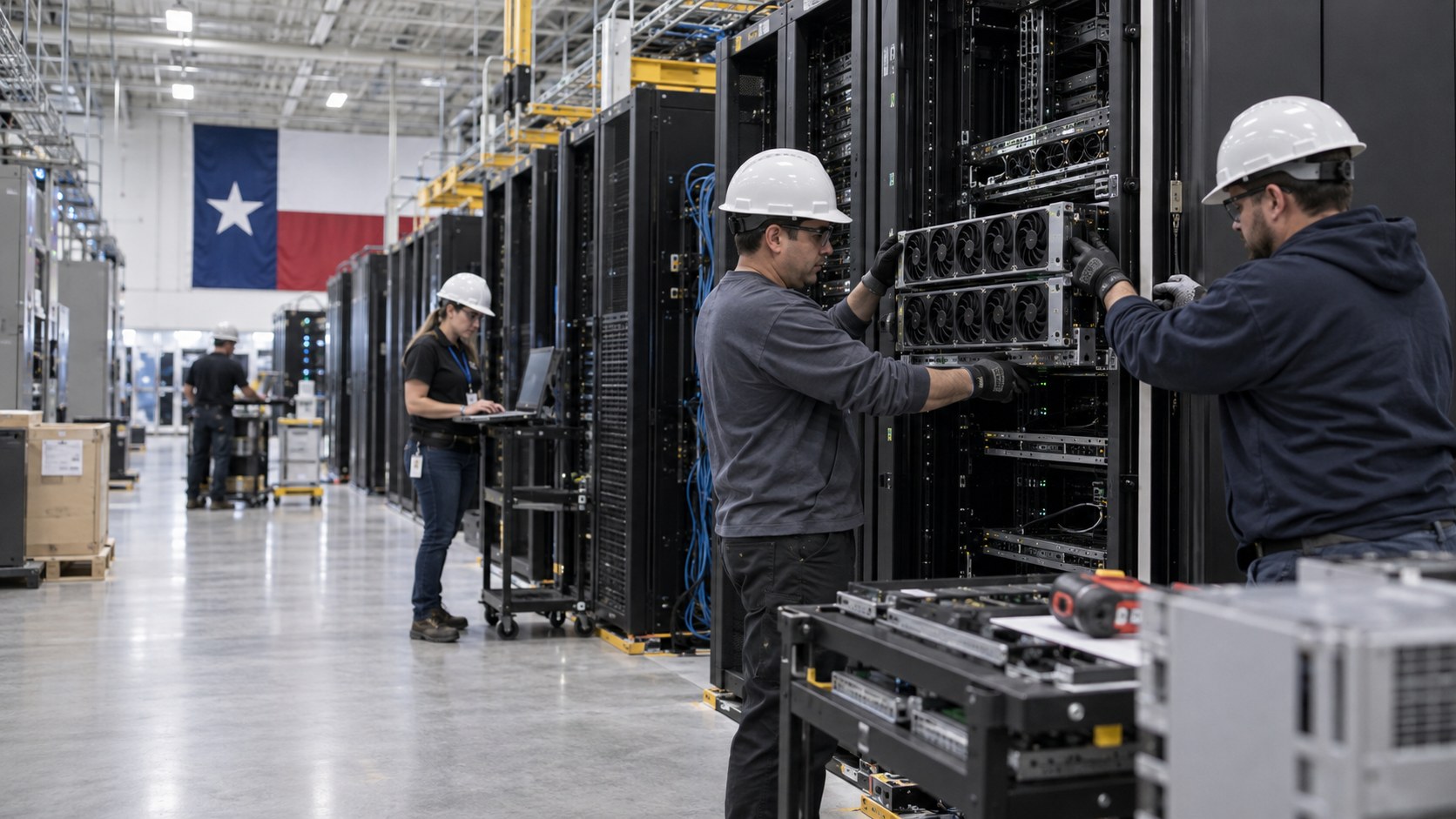
Nvidia sits at the center of the proposed flywheel. Training would run on Vera Rubin infrastructure, simulation can use Isaac tools, and deployed robots carry Nvidia compute. The company’s physical-AI platform is designed to keep customers inside a common development environment from synthetic data to edge inference. Figure can benefit from that integration, although dependence on one hardware roadmap creates pricing and schedule risk.
The word ‘up to’ deserves attention. The agreement describes potential scale, not 100,000 installed GPUs today. Initial deployment is more than a year away, and the larger commitment depends on construction, power, hardware delivery and Figure’s own progress. Announced capacity is a strategic option. Utilized capacity that produces better robots is the economic asset.
The Data Bottleneck Has a Body
Figure founder Brett Adcock says the company is constrained by data and compute. More compute can expand simulation and model training, but real-world data remains expensive because robots must perform tasks, encounter failure and be reset. Teleoperation can generate demonstrations, though it introduces labor costs and may not cover the long tail of household or industrial conditions.
Simulation helps multiply experience, especially for dangerous or rare events. Nvidia Isaac Sim provides a controlled environment for testing perception and control before hardware is exposed. The transfer from simulation to reality remains a central challenge: friction, lighting, deformable objects and human behavior can differ in ways that break a policy that looked robust in a virtual scene.
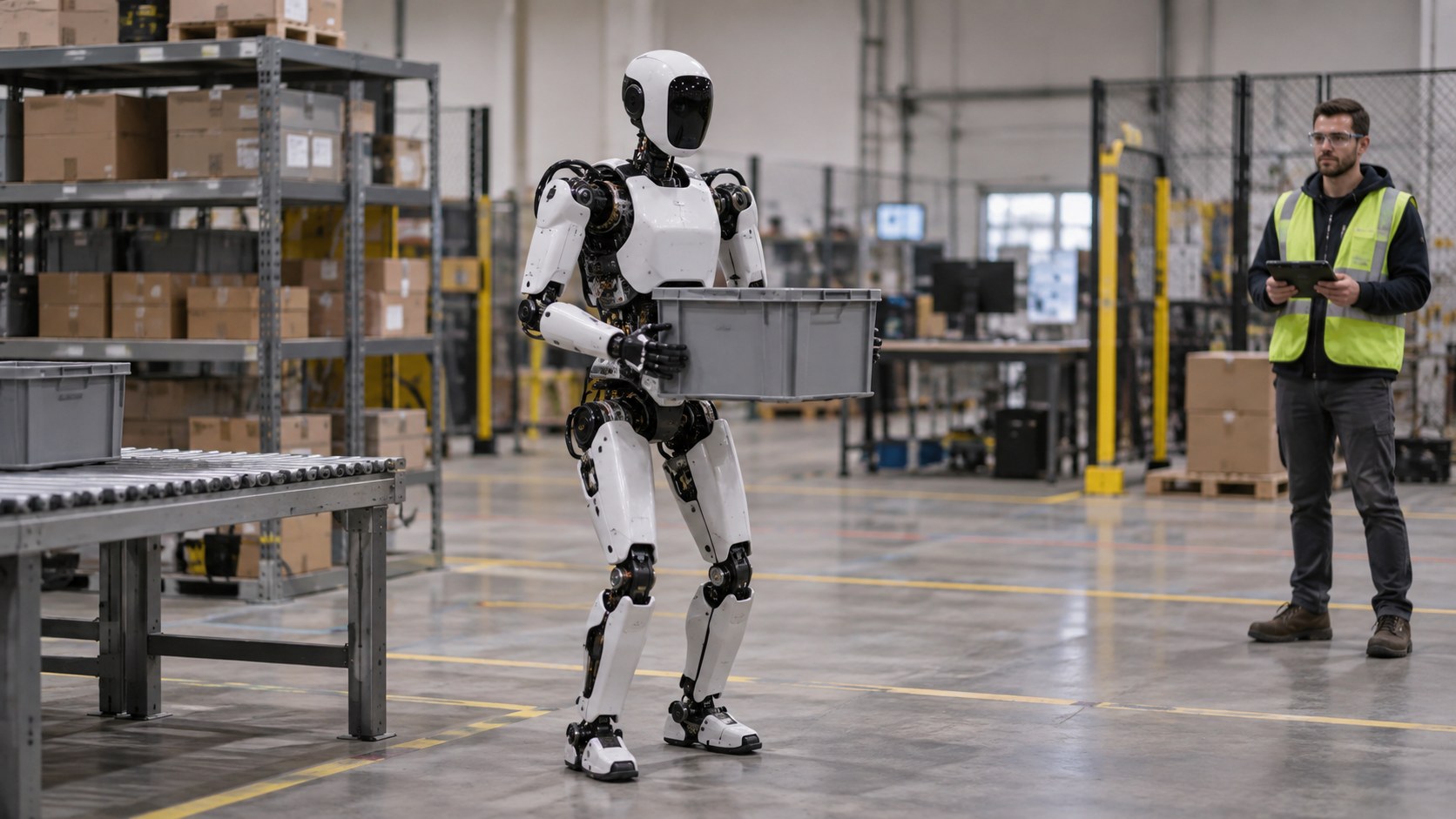
Figure also needs a manufacturing curve. A stronger model is valuable only if robots can be produced, serviced and insured at a price customers accept. Motors, batteries, hands and safety systems do not become free when training improves. The compute agreement may accelerate intelligence while shifting the commercial bottleneck toward hardware yield and field reliability.
The partnership says the companies will explore using humanoids in Nscale’s supply chain. That creates a potential customer and data source inside the relationship, but it also requires careful evaluation. A data-center construction or logistics environment has expensive equipment and human workers. Robots must prove not only task completion but safe recovery when sensors fail, loads shift or people enter the workspace.
A Large Bet With Measurable Milestones
The financing structure has not been disclosed in enough detail to know how much capacity Figure must take or pay for under different scenarios. Long-term compute contracts can protect access but create fixed obligations if model efficiency improves or demand develops more slowly than expected. Equity alignment between the partners may encourage flexibility, though it can also make the relationship harder to unwind if schedules slip.
Figure’s customers will ultimately evaluate output per shift, not tokens per training run. They will ask how many tasks a robot completes without intervention, how quickly a technician can restore it, and whether the machine can work safely beside people. Those measures should rise as compute increases. If they do not, the constraint is likely data, hardware or product design rather than insufficient model scale.
The deal should be evaluated through intermediate milestones. Nscale must secure power, complete the Texas facility and receive Vera Rubin systems. Figure must show that additional training lowers intervention rates, expands task variety and improves recovery. Investors need evidence that capability gains translate into robot utilization and customer revenue rather than ever-larger demonstrations.
Power is another constraint. A deployment approaching 100,000 advanced GPUs would require substantial electricity, cooling and grid coordination. Nscale’s Texas location offers access to a large energy market, but interconnection timelines and local infrastructure can determine whether a data center opens on schedule. The Electric Reliability Council of Texas publishes queue and grid data that will help test the buildout against physical reality.
Competitors will watch whether Figure’s scale produces a general robotics model or a collection of task-specific improvements. If one foundation can transfer efficiently across factories and homes, the compute investment may support a powerful platform. If every environment needs extensive retraining and hardware customization, the economics will look more like industrial automation than software.
The agreement is one of the clearest signals yet that humanoid companies expect their contest to become a compute race. It also creates a clean test of that theory. By 2027, Figure should be able to show whether more model capacity makes robots materially more useful outside controlled demonstrations. If it cannot, 100,000 GPUs will not solve the missing product-market fit. They will only make the experiment more expensive.
Topics: Figure AI, Nscale, Nvidia, humanoid robots, AI infrastructure