Robotics
Atlas At The World Cup Would Put Humanoid Robotics On Its Biggest Stage Yet
A humanoid robot appearance at a global sports event would not prove autonomy, but it would show how robotics companies are using spectacle to normalize embodied AI in public life.
By Michael G ·
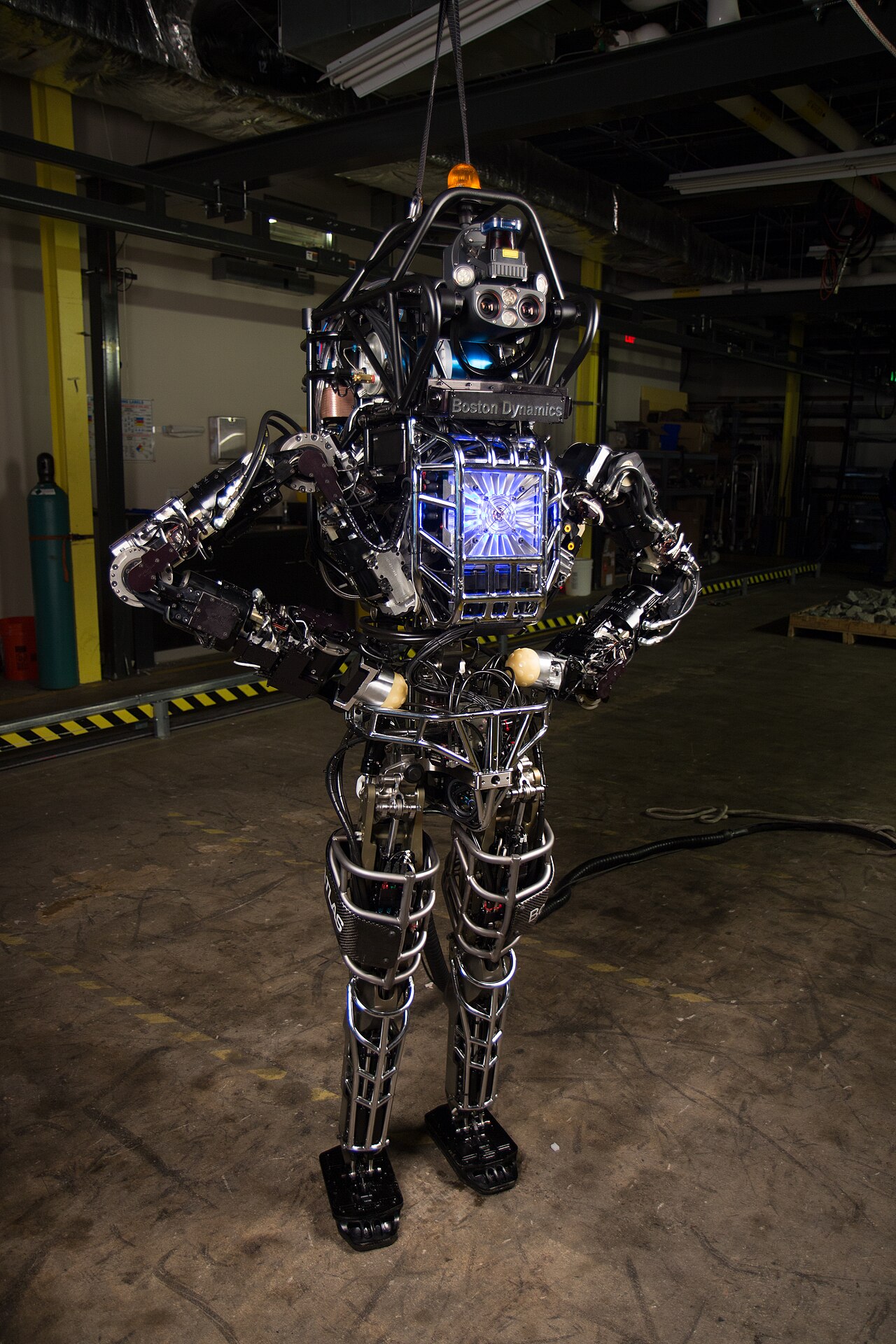
A humanoid robot on a World Cup stage would be less a robotics milestone than a cultural one. If Atlas or a similar system appears around a global sports event, the point is not proving full autonomy. The point is putting embodied AI in front of an audience that may never read a robotics paper, watch a factory demo or follow the humanoid investment cycle.
That distinction matters. Public spectacle can create the impression that robots are ready for everyday deployment, even when most systems still depend on careful scripting, supervision, controlled environments and extensive safety planning. A stadium walk is a media event. It is not the same as a robot working an eight-hour shift in an unpredictable warehouse.
Still, spectacle has power. Sports events are global trust machines. They introduce technologies to mass audiences in a context of excitement, national identity and shared attention. If humanoid robotics wants to move from laboratory curiosity to mainstream expectation, there are few stages larger than football.
Spectacle Is A Robotics Strategy
Boston Dynamics has long understood the value of staged demonstrations. Its videos changed how millions of people imagined robot movement, balance and agility. The company did not only show engineering progress. It created a visual language for robotics: machines that could run, jump, dance, recover and appear almost athletic.
The difference now is that humanoid robotics is tied to a much larger AI investment story. Investors are not only funding machines that move well. They are funding the idea that foundation models, simulation, teleoperation, vision systems and better actuators can eventually produce robots that generalize across tasks.
That makes a sports-stage appearance strategically useful. It can attract customers, partners and talent. It can reassure investors that the technology has cultural momentum. It can also create pressure to clarify what is real autonomy, what is remote operation and what is choreographed product theater.
The Public Sees A Robot, Engineers See A System
A humanoid robot is easy to anthropomorphize because it resembles a person. But engineers see a stack: batteries, actuators, perception models, control loops, balance systems, thermal constraints, safety protocols and a constant stream of edge cases. The more public the setting, the more every layer matters.
A stadium environment is not a factory cell. It has crowds, uneven lighting, unpredictable human movement, broadcast equipment, security perimeters and public-relations risk. Even a simple walk or ceremonial appearance requires careful operational planning.
That is why the most meaningful question may not be whether the robot can perform one impressive action. It is how many human operators, rehearsals, constraints and safety systems are required to make that action look effortless.
The Safety Question Follows The Spotlight
As robots move into public venues, safety standards become central. Crowd proximity, emergency stops, liability, data capture and human-robot interaction have to be designed before the robot ever walks near spectators.
Public demonstrations can be useful precisely because they force companies to confront these questions. A robot in a lab can fail privately. A robot in a stadium fails publicly, under cameras, with reputational consequences. That pressure can improve discipline if companies treat it seriously.
But it can also distort expectations. The public may see a polished appearance and assume the robot is ready for hospitals, homes, schools or airports. That is where companies need careful communication. A demonstration should invite curiosity without implying deployment readiness.
Humanoids Need A Deployment Ladder
The most credible path for humanoids is not jumping from stage appearances to general household use. It is a ladder: controlled demos, supervised pilots, structured industrial tasks, narrow commercial deployments and only then more open environments.
Factories, warehouses and inspection routes are more realistic early markets because tasks can be bounded and safety procedures already exist. Public venues are different. They are useful for visibility, but not necessarily for proving commercial readiness.
For investors, the key is not whether a robot can perform for a crowd. It is whether the same platform can reduce labor bottlenecks, improve safety or increase productivity in a repeatable customer setting.
The World Cup Would Change The Narrative
A World Cup appearance would signal that humanoid robotics has entered mainstream culture. It would place the technology beside sponsors, broadcasters, athletes and fans, not just venture investors and engineers. That kind of visibility can accelerate both enthusiasm and scrutiny.
Topics: Atlas, humanoid robots, World Cup, embodied AI