Technology
AI Data Centers Have A Water Disclosure Problem
The AI infrastructure boom is raising new questions about water use, cooling systems, and local accountability. As data centers expand, water transparency may become as important as power procurement.
By Patrick T ·
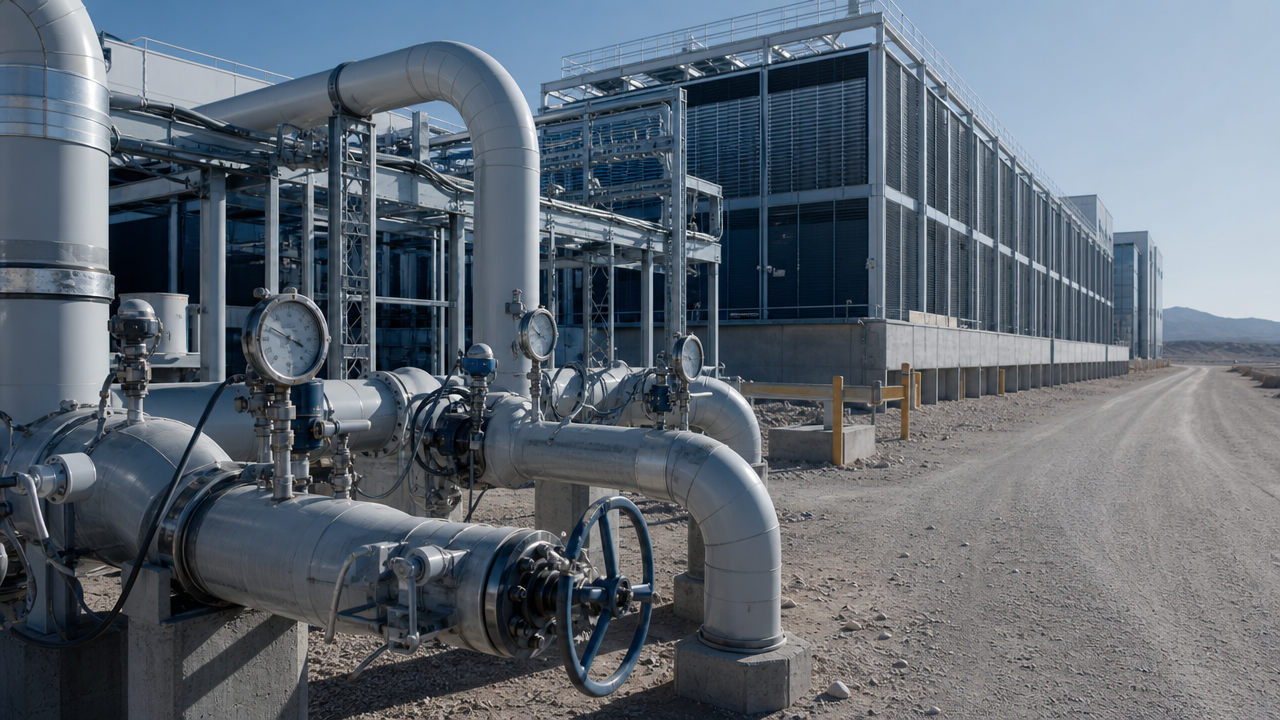
AI data centers have a water disclosure problem, and it is becoming harder for the industry to treat that problem as a footnote. The public conversation around artificial intelligence has focused on chips, power, model capability and the grid. But as AI clusters grow denser, water use is moving from sustainability report appendix to local political issue.
The stakes are immediate because data centers are built in real places. A facility can be strategically important to an AI company and still compete with nearby households, farms, utilities and industrial users for water. That makes the next phase of AI infrastructure not only a technical buildout, but a civic negotiation.
For communities, the question is simple: how much water will the facility use, where will it come from, how will consumption change during heat waves and what happens in drought years? For companies, the question is whether they can answer clearly before opposition forms.
The AI Buildout Is Becoming Local
AI infrastructure is often described at national scale: gigawatts of power, billions in capital expenditure, thousands of GPUs, strategic competition with China. But permits are local. Water stress is local. Traffic, construction, tax incentives and utility upgrades are local. That means a national AI strategy can still run into county-level resistance.
This is the part of the AI boom that does not show up in model benchmarks. A data center needs land, substations, fiber, backup systems, cooling equipment and long-term relationships with local authorities. If a project is seen as extracting local resources without clear local benefit, it becomes politically fragile.
Companies have learned to talk about renewable power procurement. They will now have to learn to talk about water with the same precision. A vague commitment to efficiency will not be enough in regions where residents already worry about aquifers, drought or rising utility costs.
Cooling Is Part Of The Compute Stack
High-density AI servers generate heat that must be removed reliably. Air cooling, evaporative cooling, liquid cooling and heat reuse each carry different water, energy, cost and maintenance tradeoffs. A cooling decision is therefore a compute decision, a water decision and a community decision at the same time.
The technical choices are becoming more complex. Liquid cooling can improve performance for dense racks, but it changes facility design and maintenance. Evaporative systems can reduce energy use in some environments, but they may increase water consumption. Air cooling is familiar, but it can struggle as rack power rises.
The industry tends to describe these tradeoffs as engineering matters. They are also disclosure matters. If a company tells investors it can scale AI capacity quickly, investors should know whether cooling and water access are assumptions, risks or already-secured resources.
Water Risk Is Not One Number
Aggregate water consumption can hide the real issue. A gallon used in a water-rich region is not the same as a gallon used in a stressed basin during peak summer demand. Facility-level context matters: source water, seasonality, drought exposure, discharge, recycling and local utility capacity.
That is why broad sustainability metrics can feel insufficient. A company may reduce corporate water intensity while still creating friction in one location. Local communities care less about global averages than about what happens to their wells, rates and emergency reserves.
The same logic applies to investors. A data-center portfolio with strong aggregate efficiency may still carry permitting or reputational risk if specific projects sit in water-sensitive regions. Site selection is becoming part of AI risk analysis.
Investors Need Local Metrics
The next layer of AI infrastructure disclosure should include facility-level water intensity, source water, seasonal stress, cooling method and community agreements. Aggregate sustainability reports are not enough when the risk is site-specific.
That disclosure does not have to be anti-growth. In fact, better disclosure can help serious builders. If a data-center operator can show recycled water use, low-stress sourcing, heat reuse or credible community benefits, it can separate itself from companies that treat infrastructure as a black box.
The companies that move early on transparency may also reduce project delays. Local governments are more likely to approve facilities when they can explain the tradeoffs to residents. Silence creates suspicion; clear data creates room for negotiation.
The AI Industry Needs A Social License
AI companies often argue that data centers are essential to economic competitiveness, scientific discovery and national security. That may be true. But essential infrastructure still needs a social license. Power plants, transmission lines, mines and factories all face this reality. AI data centers are joining that list.
Topics: AI data centers, water use, cooling, infrastructure