Research
AI Networking Is Becoming The New Accelerator
As training clusters scale toward hundreds of thousands of accelerators, networking is becoming as strategic as the chips themselves. The frontier model race now depends on fabrics that keep GPUs fed, synchronized, and efficient.
By Michael G ·

The AI hardware story is usually told through accelerators. GPUs, TPUs, custom ASICs, and memory packages get the headlines because they are visible symbols of compute power. But as frontier training clusters scale, the network connecting those chips is becoming just as important.
A modern training run is not one chip thinking alone. It is thousands, tens of thousands, or eventually hundreds of thousands of accelerators exchanging data under intense timing constraints. If the network jitters, stalls, or fails to balance traffic, expensive chips sit idle. At frontier scale, idle chips are not a nuisance. They are burned capital.
The Cluster Is The Computer
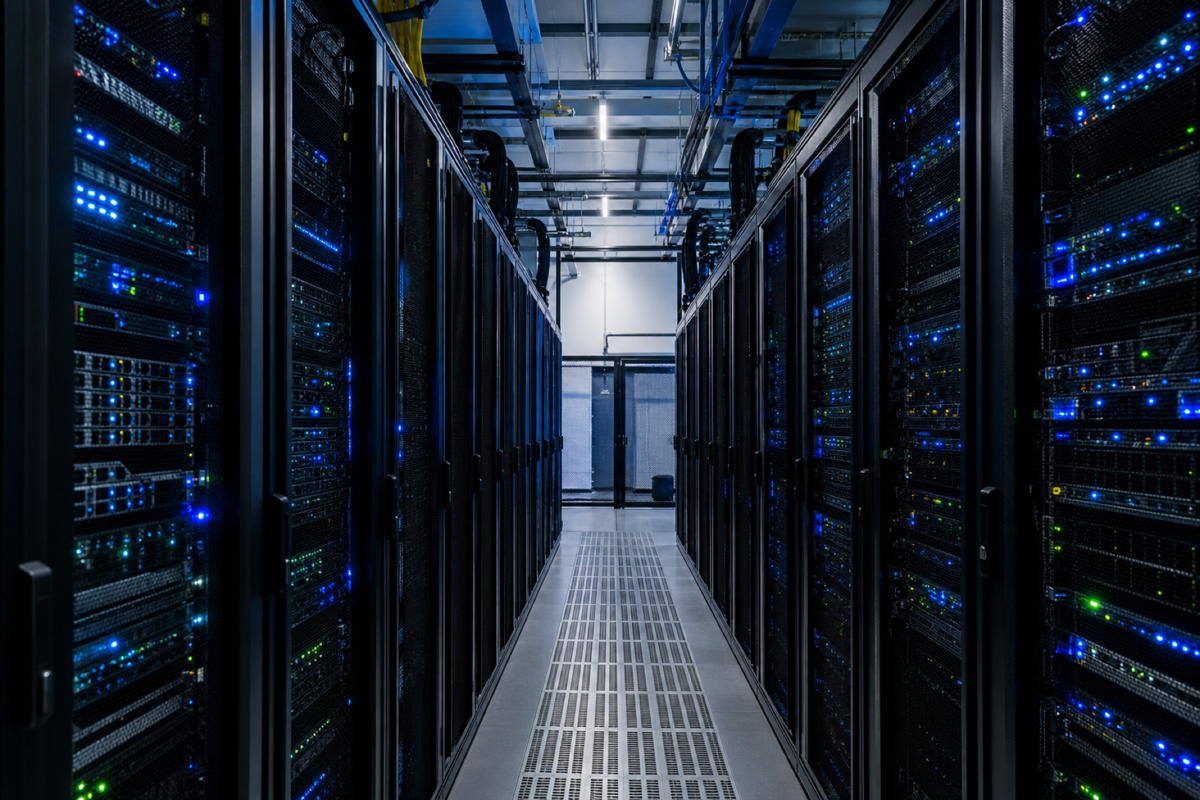
The phrase 'AI factory' is useful because it shifts attention from individual servers to coordinated production systems. A cluster has to ingest data, move gradients, synchronize jobs, handle failures, isolate tenants, and maintain predictable performance across workloads that can run for weeks.
This is why recent research on high-speed networking for giga-scale AI factories matters. The technical details can sound narrow: load balancing, bisection bandwidth, low jitter, link failures, multipath routing. But those details determine whether a model run finishes efficiently or becomes an infrastructure autopsy.
Networking Becomes A Strategic Moat
Nvidia's Spectrum-X work shows why networking is moving into the strategic layer. The company is not only selling accelerators. It is selling more of the system required to make accelerators useful at scale: NICs, switches, software, reference architectures, and operational knowledge.
That has competitive consequences. If a networking stack is tightly optimized for a chip platform, buyers may find it harder to mix and match components. The moat is not only CUDA or model software. It is the full-stack promise that the factory will run.
Failure Is A First-Class Workload
Large clusters fail constantly in small ways. Links flap, hosts misbehave, components degrade, tenants collide, and jobs create traffic patterns that standard data-center assumptions did not anticipate. AI networking has to react quickly enough that those failures do not cascade into major training disruption.
The research lesson is blunt: predictable performance matters as much as peak bandwidth. A fast network that becomes unstable under real training conditions can be worse than a slightly slower network with strong isolation and recovery. Frontier AI rewards consistency.
This also changes how investors should read infrastructure announcements. A company that says it has acquired a large GPU cluster has not finished the story. The real question is whether it has the networking, storage, cooling, power, and operations to keep that cluster productive.
The Hidden Architecture Of Capability
Model capability is often discussed as if it emerges from algorithms and scale alone. In practice, capability emerges from the hidden architecture that lets scale work: memory, networking, software, power, cooling, and people who know how to debug all of it at 3 a.m.
Topics: AI networking, Spectrum-X, AI infrastructure, frontier models