Technology
AMD Agrees to Acquire Fei-Fei Li's World Labs for $8.2 Billion
AMD's all-stock acquisition of World Labs brings spatial-intelligence research into a chip company competing with Nvidia. The deal shows hardware road maps are increasingly being shaped by the models they need to run.
By Michael G ·

SANTA CLARA, California. AMD has agreed to acquire World Labs, the spatial-intelligence company led by AI researcher Fei-Fei Li, in an all-stock transaction valued at approximately $8.2 billion. The deal would place a frontier model laboratory inside one of Nvidia's largest hardware competitors and tie future accelerator design more closely to physical-world AI workloads.
World Labs develops systems intended to understand and generate three-dimensional environments, an area relevant to robotics, simulation, design and interactive media. AMD said the team will help it shape hardware, software and systems around emerging model requirements rather than treating workloads as fixed targets that arrive after a chip road map is complete.
The companies expect the acquisition to close by the end of 2026, subject to regulatory review and customary conditions. AMD disclosed that the purchase price will be paid in common shares, which limits the immediate cash cost while transferring valuation risk to existing shareholders.
Fei-Fei Li is expected to join AMD as an executive vice president and chief scientist. Her role gives the transaction strategic weight beyond acquiring intellectual property: AMD is bringing a prominent model researcher into the group responsible for deciding which computational problems its future platforms should optimize.
From Announcement To Operation
The acquisition reflects a shift in the chip market. Accelerator vendors once competed primarily through silicon performance and software compatibility. As model architectures diversify, hardware companies increasingly need direct visibility into training methods, simulation, memory behavior and the way agents interact with images and physical environments.
Spatial models can be demanding because they combine large visual representations, geometry, temporal consistency and interactive generation. Those workloads may reward different balances of memory capacity, bandwidth, networking and specialized computation than text generation does. World Labs gives AMD an internal customer capable of exposing bottlenecks early.
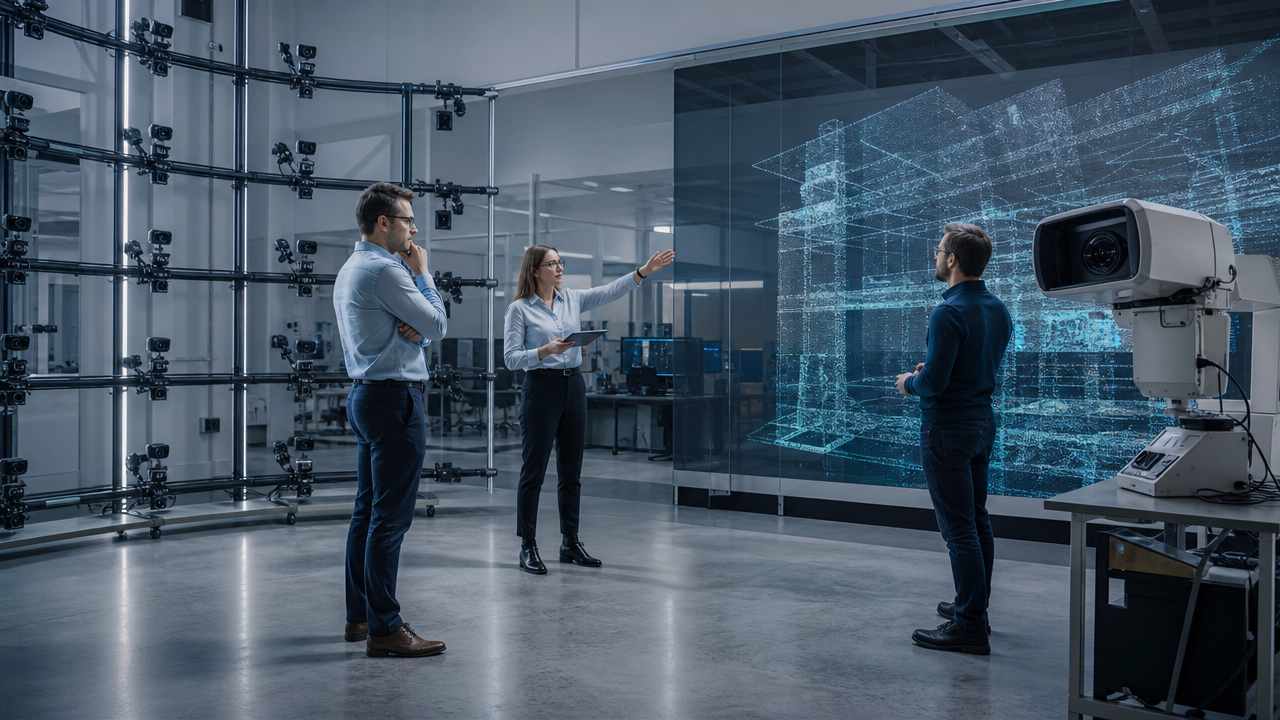
The strategic comparison is Nvidia, which has built model, simulation and robotics software around its accelerators. AMD has promoted a more open ecosystem, but openness is useful only when developers can assemble reliable tools without spending months repairing compatibility gaps. A model team inside AMD can help find those gaps before external customers do.
The price also shows how scarce leading research teams have become. World Labs was founded around a particular scientific thesis, yet AMD is paying an amount comparable with major public software acquisitions. The value rests on the assumption that spatial intelligence will become an important workload and that owning expertise will improve hardware sales or platform adoption.
Distribution can matter as much as model capability. A company that already controls the workspace, customer account or developer platform can place an agent beside information and tools that would take a new entrant years to assemble. That convenience also raises the cost of a mistake because the system is closer to files, payments, communications and business records.
Engineering evidence matters more than a polished demonstration. Throughput, utilization, energy use, failure recovery and performance under changing conditions determine whether a technical claim survives contact with production.
Enterprise buyers should separate a product demonstration from an operating model. They need to know which actions require approval, how permissions are inherited, whether every tool call is logged and what happens when a provider changes a model beneath an existing workflow. The answers determine whether a pilot becomes infrastructure or remains a controlled experiment.
AMD does not operate alone. Its practical effect depends on suppliers, customers, regulators, researchers and the people expected to review or live with the result. A change at one layer can move cost or risk into another rather than eliminate it, so the analysis has to follow the entire chain of authority and dependency.
Organizations connected to World Labs have incentives to emphasize speed, capability and market reach. Those incentives do not make their claims false, but they increase the value of transparent methods and outside testing. A useful disclosure explains the comparison, the operating conditions and the cases that did not work, not only the strongest result from a prepared demonstration.
Accountability must remain attached to a person or institution. Systems associated with Fei-Fei Li can recommend, rank, summarize or act, but they cannot carry legal and moral responsibility in the way an organization can. A deployment needs a named owner for approval, monitoring and incident response, with authority to pause the system and require a design change.
The Evidence That Matters Next
The first technical evidence should be visible in road maps and software releases. Investors should watch whether World Labs models receive optimized support across AMD accelerators, whether improvements reach outside developers and whether the acquisition produces reusable capabilities rather than a showcase running on privileged internal systems.
Regulators may examine whether the combination restricts access to World Labs technology or ties important models to AMD hardware. The companies are presenting the deal as support for an open ecosystem, which creates a measurable commitment: model interfaces, tools and research artifacts should remain usable beyond one vendor's stack.
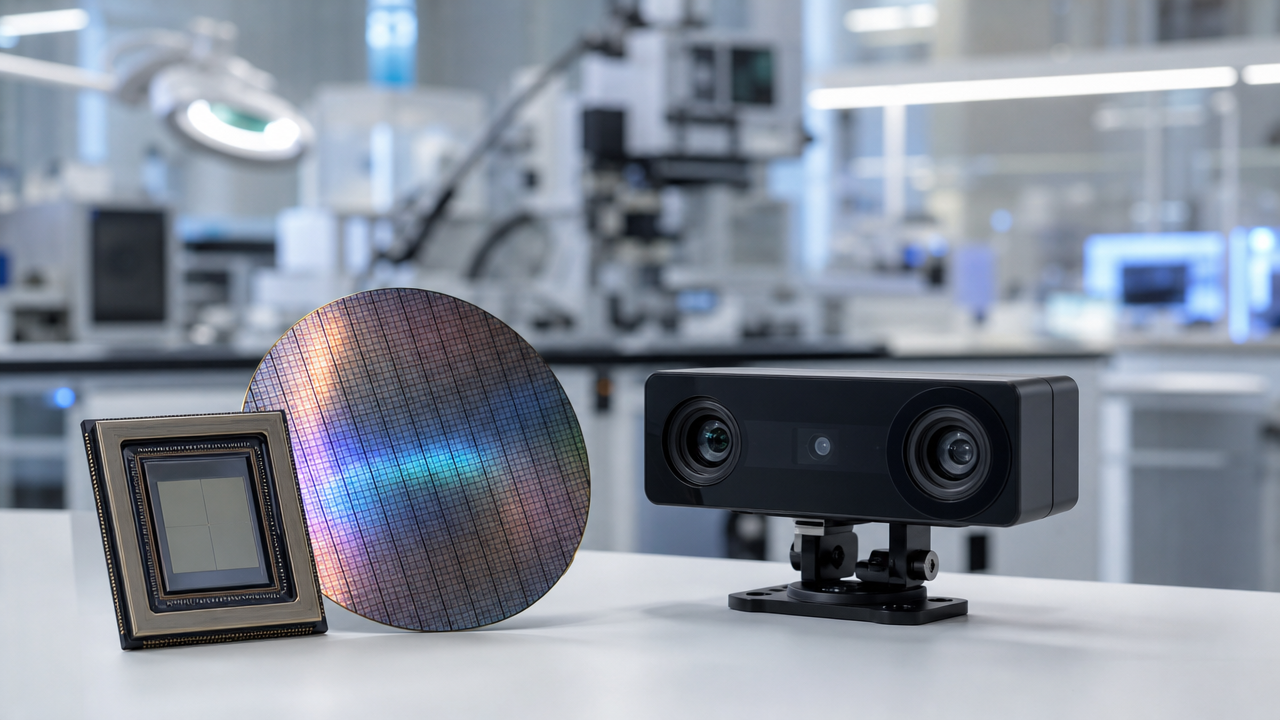
Integration risk is substantial because research laboratories and semiconductor companies operate on different clocks. A model team may change architecture in months, while a high-end chip requires years of design and manufacturing preparation. The benefit will come from translating research direction into robust design signals without freezing experimentation around a hardware schedule.
AMD is betting that the next infrastructure contest will be shaped by systems that reason about spaces, machines and movement, not only documents and code. The deal will look prescient if World Labs helps AMD design a platform that others choose to build on. It will look expensive if the research remains impressive but commercially isolated.
World Labs gives AMD a way to test hardware against models that are not yet common in customer benchmarks. Spatial systems can stress video memory, geometry operations and communication in ways that language workloads do not. Early access to those patterns may influence packaging and interconnect choices several generations ahead.
The transaction also puts AMD in a delicate position with independent model developers. They may welcome stronger tools but worry that an internal laboratory receives earlier support or privileged optimization. Clear access policies will matter if AMD wants the acquisition to expand its ecosystem rather than divide it.
Fei-Fei Li's scientific reputation will attract attention, but integration should not turn the laboratory into a marketing function. World Labs needs room to publish, recruit researchers and pursue uncertain ideas. AMD needs usable engineering signals. The structure of incentives between those goals will determine whether the talent stays.
An all-stock price transfers part of the risk, yet dilution remains real. Shareholders should watch the final share count, retention grants and any performance conditions, not only the announced enterprise value. A large acquisition can look cash-efficient while still requiring substantial future compensation and infrastructure spending.
Physical AI is a broad label that covers robotics, simulation, digital twins and generated worlds. AMD should eventually identify which markets justify the investment and how World Labs technology reaches them. A research demo is not a distribution channel, and each industry has different safety and integration requirements.
The most convincing outcome would be a feedback loop: models expose bottlenecks, hardware addresses them, software makes the improvement available and outside developers confirm the result. Missing any one step would leave the acquisition strategically interesting but commercially incomplete.
The cost of integration is easy to underestimate. A product may work in a provider's own environment while customers still have to reconcile identity systems, retention rules, regional hosting and older software that was never designed for autonomous activity. Those details decide how quickly a new capability reaches ordinary employees.
Adoption will also vary by role. Developers and analysts can often inspect intermediate work, while employees in sales, finance or operations may receive a polished output without seeing how it was assembled. Product design has to make evidence and uncertainty visible to people who are not model specialists.
A reliable service needs an escalation path that is useful at the moment of failure. A generic support queue is not enough when an automated process has changed a customer record, sent a message or interrupted a workflow. Providers should define urgent recovery channels before asking customers to delegate consequential work.
The competitive question is whether the feature creates a durable workflow or a temporary novelty. Usage may surge after launch, but retention will depend on consistency, integrations and the amount of supervision required. A product that saves five minutes and creates ten minutes of checking has not improved productivity.
Timing will shape the outcome as much as capability. Organizations evaluating AMD should separate what is available now from what has been demonstrated, announced or promised for a later release. Road maps can guide preparation, but contracts and operating decisions should rest on functions that customers can test under current terms.
The most useful early adopters will publish more than success stories. They can describe the work selected, the baseline, the supervision required and the reasons a deployment was narrowed or stopped. That evidence helps other teams avoid repeating expensive mistakes and gives suppliers a clearer picture of what must improve.
Workforce effects should be measured at the process level. A tool connected to World Labs may remove one repetitive step while adding review, exception handling and customer communication elsewhere. Leaders need to ask who receives that new work, whether the role has enough authority and training, and whether the promised time saving survives the transfer.
Metrics should include the failures that never become public incidents. Abandoned tasks, corrected outputs, permission denials and manual takeovers show where a system encounters uncertainty. Treating those events as operational data, rather than hiding them to protect an adoption target, produces a safer and more accurate investment decision.
The surrounding market will not remain still while Fei-Fei Li develops. Competitors can lower prices, regulators can change reporting duties and customers can shift toward open or locally hosted alternatives. A resilient strategy preserves the ability to change models, suppliers and controls without rebuilding the entire workflow.
That flexibility is not an argument for waiting indefinitely. It is an argument for learning in a way that preserves choices. A bounded deployment with real users, documented evidence and an exit path can create knowledge now without turning an uncertain technology decision into an irreversible institutional dependency.
The strongest deployment path is bounded and reversible. Teams can begin with tasks whose correct result is inspectable, compare performance with the existing process and widen authority only after monitoring and rollback have worked under representative load.
The first implementation discipline is a clear baseline. Teams should know how the work is performed today, how long it takes, which errors occur and which outcomes matter before introducing a new system. They can then compare accepted results, correction time, total cost and policy violations rather than treating activity as evidence of value.
Procurement should cover the conditions that demonstrations avoid. Buyers need to ask where data is processed, how long it is retained, which subcontractors receive it, how model changes are communicated and whether records can be exported if the relationship ends. Production contains incomplete instructions, conflicting permissions and unusual edge cases that a staged launch rarely shows.
Human review has to be designed around the limits of attention. Asking a person to approve hundreds of routine outputs produces predictable click-through behavior rather than meaningful oversight. Review should concentrate on uncertainty, unusual actions and cases with irreversible consequences, while giving the reviewer enough source material to reach an independent judgment.
Data lineage deserves equal scrutiny. A polished answer can be assembled from stale, incomplete or incorrectly joined records. Teams need to know where important facts came from, when they were updated and which transformations occurred before a model used them. That record supports correction, audit and a more honest account of what the system actually knows.
Security testing should include the surrounding application, not only the model endpoint. Identity tokens, browser sessions, retrieved documents, tool permissions and approval flows determine whether an unsafe instruction becomes a blocked request or a live external action. Recovery procedures, revocation and preserved logs are part of prevention because no control will catch every failure.
Public trust will depend on whether companies and institutions communicate uncertainty without hiding behind technical complexity. People need to know what was tested, which environments remain underrepresented, what monitoring is in place and how they will learn about a serious incident. Clear limits make a system easier to use responsibly; vague assurances make every later failure more damaging.
Competition can improve price and quality, but it can also make caution look like weakness. Governance has to preserve room for a team to delay, narrow or withdraw a feature without treating restraint as commercial failure. The most credible organizations will show that their release process can say no when evidence falls short.
The near-term questions are concrete. Watch for independent confirmation, customer deployments, regulatory detail and evidence that the system works beyond a prepared setting. Changes in pricing, access and responsibility often reveal the strategy more clearly than a keynote or a benchmark chart.
The significance of amd agrees to acquire fei-fei li's world labs for $8.2 billion will be settled by what happens after the announcement cycle. The durable measure will be whether the evidence improves, the controls survive pressure and the institutions involved remain willing to explain decisions when performance and responsibility pull in different directions.
Topics: AMD, World Labs, Fei-Fei Li, spatial intelligence, physical AI