Technology
Amazon Adds Two Million More Nvidia GPUs to AWS Buildout Through 2028
Amazon and Nvidia have expanded their computing partnership, adding two million Nvidia GPUs to Amazon Web Services data centers in 2027 and 2028. The move follows a prior commitment of more than one million GPUs made five months earlier, bringing Amazon's total order to roughly three million chips.
By Patrick T ·
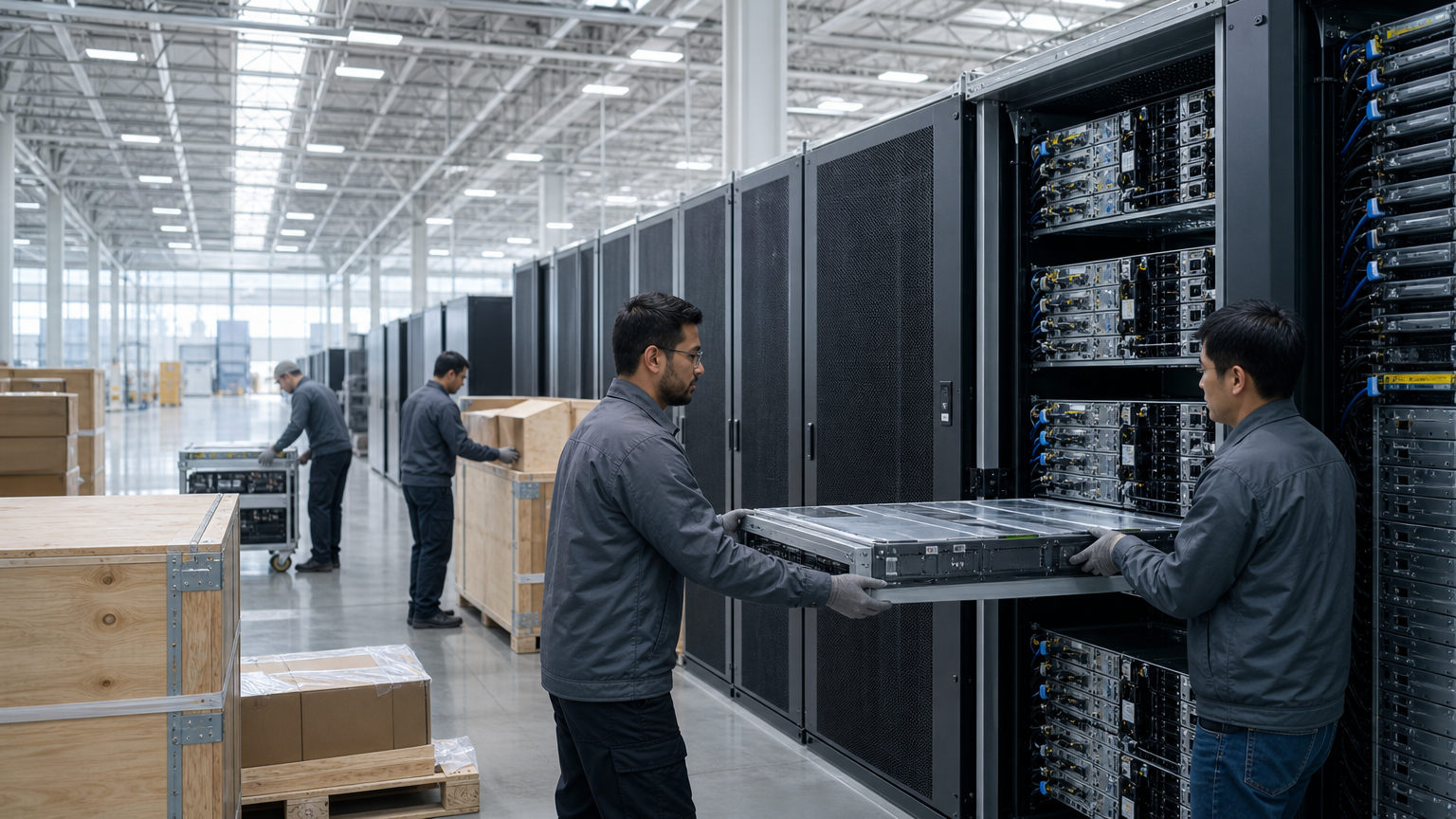
Amazon and Nvidia have expanded their computing partnership, with Amazon committing to install two million additional Nvidia graphics processing units across Amazon Web Services data centers in 2027 and 2028, according to announcement from the two companies. The commitment builds on an agreement reached five months earlier, in which Amazon agreed to deploy more than one million Nvidia GPUs, bringing the combined order to roughly three million chips. A TechCrunch report described the expanded deal as a tripling of Amazon's original Nvidia order, attributing the pace of growth to surging demand for AI computing capacity across cloud customers.
The expanded order, which the companies described as an extension of an existing relationship rather than a separate new engagement, will bring three successive generations of Nvidia data center hardware into AWS facilities over the next two years: Blackwell Ultra, the newer Rubin platform, and Rubin Ultra. Financial terms of the agreement were not disclosed, leaving the scale of the investment to be inferred from unit counts alone. Amazon and Nvidia also did not specify how the two million GPUs would be divided among the three chip generations, nor did they lay out a region by region deployment timeline for the 2027 and 2028 window covered by the agreement. TechCrunch report provides the primary public record for that part of the account.
Nvidia said the partnership extends beyond raw chip suply, with networking hardware, CPUs, systems software, open model releases and robotics products also being integrated across AWS as part of the arangement. The company framed the deal as part of a broader push to embed its full technology stack, rather than individual GPUs alone, into cloud providers' infrastructure. Nvidia did not provide a breakdown of how much of the expanded order is tied to networking or software licensing versus GPU hardware itself.
Compute Strategy
The scale of the Nvidia order does not signal an end to Amazon's parallel chip development. Amazon has continued building out its own Trainium and Graviton processors, which the company positions as lower cost alternatives for specific training and inference workloads rather than direct substitutes for Nvidia's highest end silicon. AWS has consistently framed its custom silicon strategy as a way to give customers pricing and performance options across its cloud, and the continued investment in AWS Trainium alongside a tripled Nvidia commitment suggests Amazon is expanding total capacity on multiple fronts rather than shifting entirely toward one chip architecture. Amazon Web Services supplies additional technical context for evaluating the claim.
On the software side, AWS will offer Nvidia's Nemotron family of models through Amazon Bedrock and SageMaker, giving customers building applications on those platforms direct access to Nvidia's open model lineup alongside AWS's existing catalog of foundation models. Making Nemotron available through Bedrock effectively ties Nvidia's model strategy to Amazon's managed AI services, though neither company detailed pricing or usage terms for the integration, and it remains unclear how Nemotron availability will be phased in relative to the GPU deployment schedule.
Earnings and Demand Signals
The expanded order arives alongside Nvidia's latest quarterly results, in which the company reported $96.2 billion in sales, including $89 billion attributed to its data center business. Nvidia disclosed $279 billion in supply and manufacturing commitments tied to future chip production, a figure the company presented as evidence of sustained order backlogs from cloud providers and other large customers. Nvidia did not break out how much of that $279 billion figure is tied specifically to the Amazon agreement, and neither company has confirmed what portion of the expanded GPU order counts toward Nvidia's previously disclosed backlog. For institutional context, AWS Trainium explains the relevant system or standard.
Analysts and reporters covering the announcement, including the TechCrunch report on the deal, have framed the tripling of Amazon's Nvidia order as a signal of continued demand growth for AI training and inference infrastructure, though that framing reflects external interpretation rather than a specific demand figure disclosed by either company. Amazon has not published its own projection of AI workload growth to justify the scale of the new order, and the companies' joint statement focused on deployment timing rather than the underlying demand assumptions driving it.

Beyond data center compute, Amazon said it plans to use Nvidia's physical AI stack in warehouse robotics, an area where Nvidia has been promoting simulation and training tools built on platforms like Nvidia Omniverse for developing and testing robotic systems before physical deployment. Neither company specified which Amazon fulfillment operations would be involved first or on what timeline robotics deployments tied to the partnership would begin, and Amazon has not said how this robotics work relates operationally to its existing warehouse automation programs. Amazon Bedrock offers a separate reference point for the implementation question.
For AWS customers, the practical effect of the expanded order will depend on how quickly the additional GPU capacity translates into available instance types, since announced chip commitments and actual data center readiness, including power, cooling and networking buildout, do not move on the same timeline. Multi year hardware commitments of this size also cary execution risk on both sides, from chip suply and manufacturing constraints at Nvidia to facility construction schedules at AWS, and neither company addressed how contingencies in either area might affect the 2027 and 2028 deployment window laid out in the announcement.
The absence of disclosed financial terms leaves open questions about how the expanded order affects Amazon's capital spending plans relative to its existing infrastructure budget, a detail investors are likely to press for in future earnings calls from both companies. Until Amazon or Nvidia provide more granular figures, the two million GPU commitment stands as a scale marker for the partnership rather than a fully specified build plan, with deployment pacing, chip mix and cost details still to be clarified as the 2027 rollout approaches. The unresolved issue can be assessed against guidance from Nvidia Omniverse.
Topics: Amazon, Nvidia, AWS, AI infrastructure, GPUs, cloud computing, data centers