Technology
Nvidia Extends Its AI Infrastructure Advantage Beyond GPUs to Complete Rack Systems
Nvidia's competitive position is expanding from individual accelerators into tightly integrated compute, memory, networking and storage systems. As AI campuses reach gigawatt scale, coordinating data movement and power efficiency may matter as much as the GPU itself.
By Patrick T ·
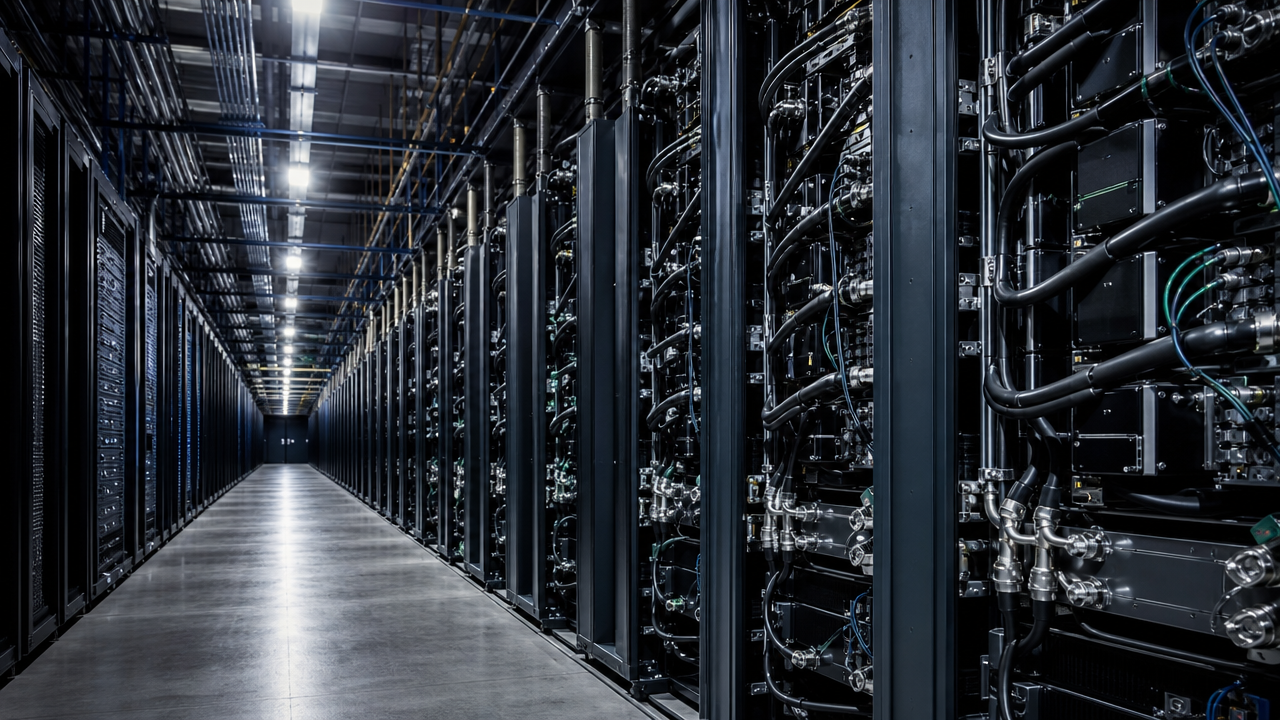
Nvidia is broadening its AI infrastructure advantage from the accelerator at the center of a server to the complete system that keeps thousands of accelerators working together. Its Vera Rubin platform combines GPUs with CPUs, networking, storage and specialized components designed as a coordinated rack architecture. The change matters because the hardest problem at the largest AI campuses is no longer obtaining a fast chip in isolation. It is moving model state and training data through an enormous system without leaving costly processors waiting or wasting power.
The strategy arrives as Amazon, Google and other hyperscalers increase investment in their own accelerators. Custom silicon gives cloud operators leverage over cost and supply, weakening the assumption that every advanced workload must run on a standard Nvidia GPU. TechCrunch's analysis argues that the competitive response is visible around the chip: Nvidia is selling more of the memory, interconnect, networking and orchestration layer needed to turn component performance into usable cluster performance.
Vera Rubin makes that systems argument explicit. The architecture pairs Rubin GPUs with Vera CPUs and integrated rack-scale infrastructure. A model whose parameters, activations and cache do not fit on one device must continually exchange data across processors and nodes. Every transfer introduces latency and consumes energy. The system designer's job is to keep the expensive compute engines supplied with the right data while minimizing movement that adds cost without advancing the workload.
The Bottleneck Moves Outside the GPU
At smaller scale, buyers can compare accelerators using familiar measures and configure servers around them. At megascale, local component comparisons become less decisive. Network topology, failure recovery, storage throughput, scheduling and memory placement determine how much theoretical performance reaches an application. A cluster can own excellent GPUs and still deliver poor economics if communication stalls them or if software cannot allocate workloads efficiently. That is why tokens per watt and useful work per rack are becoming more important than a single peak number.
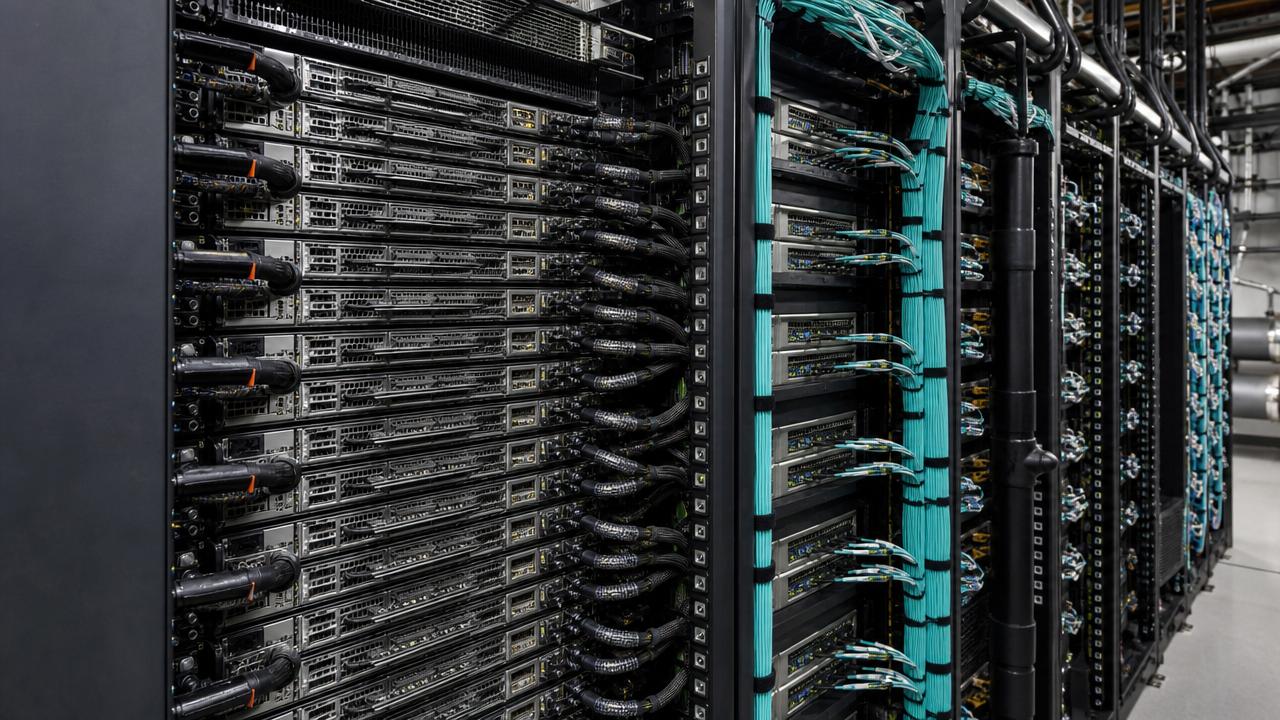
Memory illustrates the shift. As models and context windows grow, systems need more high-bandwidth memory near compute and larger pools of data available across the cluster. Suppliers such as Micron have benefited because accelerator demand pulls memory demand with it. The operating challenge is delivering the correct data at the right time. Vera's CPU role is partly orchestration, coordinating work when no single server can hold the complete state required by a large job.
Networking is equally central. NVLink and related fabric technologies allow accelerators to communicate at bandwidth and latency levels that ordinary data-center networks cannot match. Tight integration can produce more predictable performance because the hardware and software are designed together. It also creates dependency. A customer that builds around one vendor's rack, fabric and management software cannot swap an accelerator as easily as it could in a more modular server.
That dependency is not automatically a bad decision. Enterprises routinely choose integrated platforms because the cost of engineering every interface exceeds the savings from component flexibility. Frontier AI deployments have compressed schedules and scarce specialized talent. A validated rack can reduce integration risk and reach production faster. The tradeoff appears later in pricing negotiations, upgrade cycles and the ability to adopt a rival chip without rebuilding software and operations around it.
Software Turns Integration Into a Moat
CUDA remains a large part of Nvidia's advantage because developers and infrastructure teams have spent years building code, libraries and operating practices around it. The platform supports more than kernel execution. It connects profilers, communication libraries, model frameworks and deployment tooling. Hardware competitors can produce capable accelerators, but customers also evaluate the engineering work required to port and validate workloads. That migration cost gives Nvidia room to extend from chips into complete systems.
Custom hyperscaler chips remain credible pressure. Google's TPU program demonstrates that a cloud provider can build a mature accelerator service optimized for its own infrastructure and selected workloads. Amazon has followed a similar route. These systems do not need to replace Nvidia everywhere to change the market. They can capture high-volume internal jobs, establish alternative software ecosystems and give large buyers a reference price when negotiating for external GPUs.

Nvidia's response is to make the unit of competition larger. If buyers compare only accelerator performance, alternatives can attack one component. If the comparison includes rack throughput, time to deploy, network behavior, storage integration and software support, a challenger must match an ecosystem. That strategy resembles enterprise platform businesses that protect a core product by owning adjacent layers. It can sustain margins while demand grows, but it also raises antitrust and customer-concentration questions if too much of the stack depends on one supplier.
Operations will decide whether the platform promise holds. Dense racks create demanding cooling and power requirements. A failure in a network switch, cable or management component can affect far more compute than a failed card in a small server. Operators need telemetry that identifies degradation before jobs fail, spare capacity for maintenance and scheduling systems that can move work without losing expensive training progress. Integration must improve those tasks, not merely make procurement simpler.
The Customer Test Is Useful Work per Dollar
Buyers should evaluate the complete cost of a workload, including acquisition, power, networking, engineering time, downtime and the useful life of the platform. Nvidia can justify a premium if the system reaches service faster and keeps accelerators busier. Rivals can win if their lower component cost survives the expense of porting and operating at scale. Neither outcome can be read from a launch specification. It requires measured application performance in the customer's own environment.
Capacity planning also becomes a software problem. Training jobs, interactive inference and batch workloads place different demands on memory and networking. A platform that schedules them intelligently can improve utilization without adding chips. Operators should examine whether management tools expose enough information to tune those decisions or hide them behind a vendor-controlled layer. Simplicity is valuable until the system behaves unexpectedly and engineers cannot see why.
Open standards could moderate lock-in if they make model formats, management interfaces and network control more portable. Hardware-specific optimization will still matter because the largest workloads are sensitive to small efficiency gains. The realistic goal is not perfect interchangeability. It is preserving enough portability that a customer can place new workloads on another platform without rebuilding its entire data and deployment pipeline.
Supply resilience is another reason buyers may avoid a single architecture even when it benchmarks best. A complete Nvidia rack depends on a broader bill of materials and specialized manufacturing capacity. Concentration can simplify support while making disruptions more consequential. Large customers are likely to maintain alternative accelerator programs partly as insurance, accepting some software duplication to preserve negotiating leverage and continuity.
The systems approach may also move competition toward service organizations. Deploying dense racks requires expertise in cooling, power, fabric design and reliability. Nvidia and its partners can package reference designs, but every site has different constraints. Vendors that help customers reach stable operation quickly can capture value beyond component sales. That service layer provides feedback for the next hardware generation and makes the platform relationship harder to unwind.
Procurement teams should require workload-level evidence before extending a platform choice across an entire estate. Training, retrieval, coding agents and high-volume inference can favor different memory and latency profiles. A rack that excels on one may be unnecessarily expensive for another. Mixed infrastructure increases operational work, but it can prevent a premium architecture from becoming the default for tasks that do not benefit from its strongest features.
Financial planners should also model the cost of the next upgrade. Integrated systems can improve current utilization while making a partial refresh difficult if CPUs, fabrics and accelerators advance on different schedules. The expected life of software and networking may be longer than the GPU cycle. Contract terms, resale options and backward compatibility will determine whether customers can preserve those layers or must replace a larger portion of the rack to adopt a new accelerator.
The next phase of AI infrastructure competition will therefore look less like a chip benchmark and more like an industrial systems contest. Nvidia is betting that its accumulated expertise across software, networking and rack design will remain valuable even when customers have more accelerator choices, including the Google Cloud TPU platform. The unresolved question is whether integration continues to lower total operating cost or becomes a form of lock-in whose price rises faster than its benefit. Customers will answer that question one deployed cluster at a time.
Topics: Nvidia, Vera Rubin, AI infrastructure, data centers, networking