Robotics
Researchers Develop Motion Planner That Lets Autonomous Vehicle Passengers Adjust Ride Behavior in Real Time
A new motion planning system enables passengers to request changes to speed, acceleration and turn smoothness during autonomous driving while maintaining safety constraints. The approach addresses challenges in natural language interpretation, motion sickness prevention and regulatory certification.
By Michael G ·
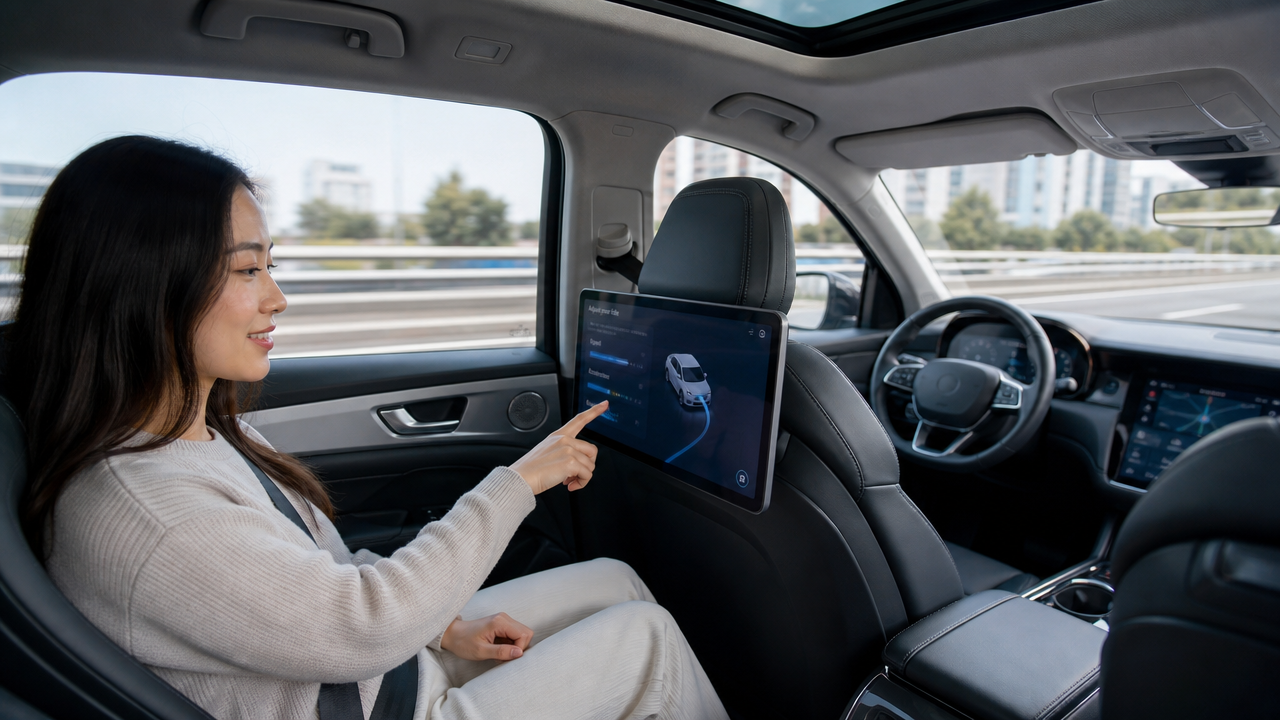
Researchers have developed a motion planner that allows autonomous vehicle passengers to adjust ride behavior in real time by specifying preferences for speed, acceleration and turn smoothness, according to an IEEE Spectrum report on the system. The approach creates a new layer of control between passenger input and the vehicle's safety-critical systems, allowing riders to customize their experience without bypassing the hard constraints that keep autonomous driving safe. The work addresses a practical problem in autonomous vehicle deployment: passengers experience rides differently, and a planning system optimized for efficiency or fuel economy may not suit someone prone to motion sickness or simply preferring a more conservative driving style.
The system operates within well-defined safety boundaries set by the vehicle's autonomous driving stack. A passenger might request a smoother turn by asking the vehicle to ease into curves or prefer faster acceleration by saying speed up gradually. Rather than giving passengers direct control over steering or braking, the planner interprets these natural language preferences and adjusts the motion plan's parameters within constraints that prevent unsafe behavior. The challenge lies in bridging the gap between informal, often ambiguous passenger requests and precise numerical parameters that govern acceleration rates, lateral jerk during turns and speed profiles. Hard safety constraints remain inviolable: the vehicle will not exceed speed limits, will not reduce following distances below safe thresholds and will not execute maneuvers that violate traffic rules regardless of passenger preference. IEEE Spectrum report documents the reporting behind this account.
Motion sickness in autonomous vehicles emerges from sustained or jerky accelerations and unexpected changes in direction. Passengers in traditional vehicles can anticipate motion through driving cues they observe, but in fully autonomous vehicles, this predictability disappears. A planner that allows passengers to request gentler acceleration ramps or smoother turning trajectories can reduce discomfort. The IEEE Spectrum coverage indicates the system accepts preference input across multiple dimensions simultaneously, allowing passengers to balance competing goals such as ride smoothness versus travel time. One passenger might accept slightly longer trip duration in exchange for reduced lateral acceleration, while another prioritizes speed over comfort.
From Demonstration to Validated Performance
A distinction exists between demonstrating that a system works in controlled conditions and proving it performs reliably across diverse real world driving scenarios. The reported research shows the planner functioning in test environments, but whether it has been validated across different road geometries, traffic densities and weather conditions remains unclear from available reporting. The system must handle edge cases where passenger preferences conflict with traffic flow, such as a request for maximum smoothness in heavy congestion where smoother driving might create unsafe gaps. The research presumably addresses natural language ambiguity by constraining the vocabulary passengers can use or by training language models to map diverse phrasings onto a standardized preference space, but the specifics of how this interpretation layer functions in deployment have not been detailed. IEEE Spectrum offers useful technical background for evaluating the claim.
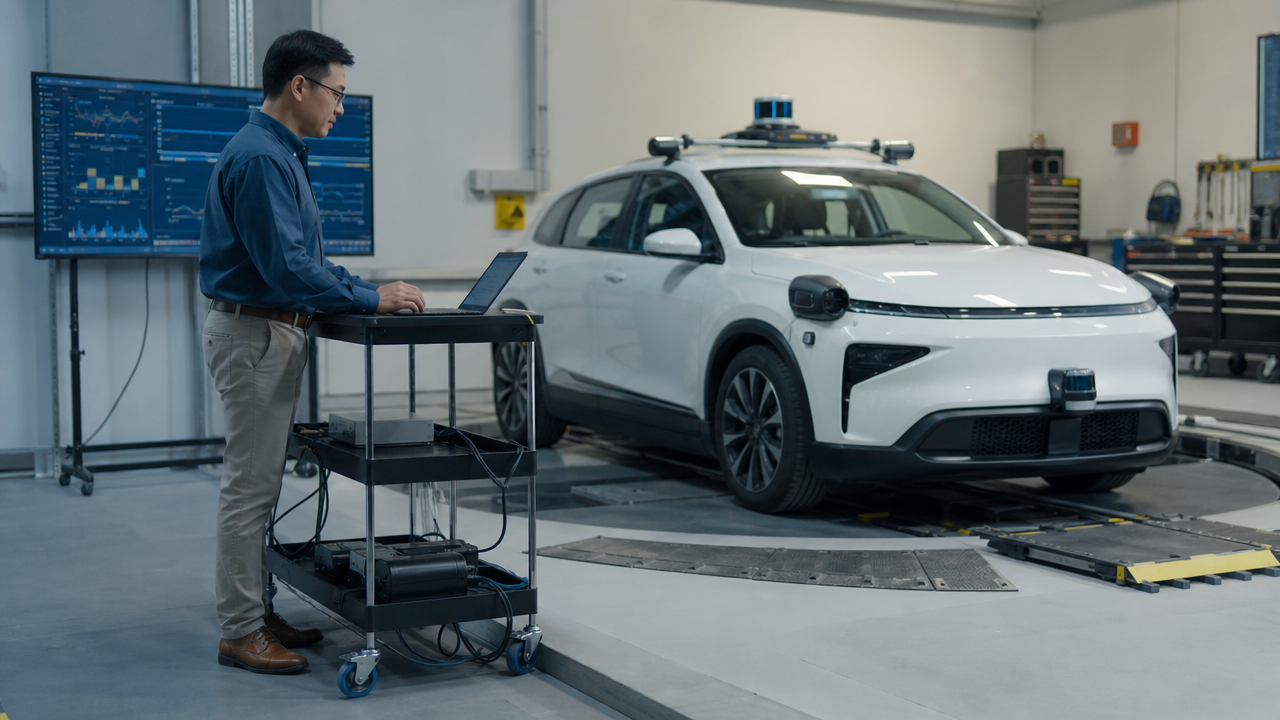
The handoff between manual and autonomous control presents another design challenge. If a passenger has customized the vehicle's motion profile to their preferences and the system requires manual takeover during an emergency, does the vehicle revert to default parameters or maintain the passenger's settings? How quickly can a human driver reassert control if the customized motion planner has configured the vehicle to behave unpredictably compared to standard autonomous operation? These questions matter for both safety certification and driver acceptance. Regulators must verify that every combination of passenger preferences produces safe behavior, and autonomous systems under SAE driving automation levels require demonstrating performance across defined operational design domains.
Regulatory Certification and Deployment Constraints
A preference responsive motion planner adds complexity to the certification process because it effectively creates multiple behavioral variants of the same vehicle platform. The reported system presumably restricts preferences to non safety critical parameters: a passenger cannot reduce the vehicle's collision avoidance response or disable lane keeping, but they can influence how aggressively the vehicle accelerates or how tightly it corners within the bounds of safe operation. The robotics and autonomous vehicle industries have long struggled with a central question: how much behavioral flexibility can safety critical systems tolerate? Traditional robots operating in factories follow fixed, pre programmed paths because deviation introduces risk.
Research into autonomous systems and frameworks for certified autonomous operation has been exploring how to accommodate human preferences without sacrificing safety guarantees, though consensus on acceptable tradeoffs remains emerging. From a practical deployment perspective, this research addresses a real constraint in autonomous vehicle adoption: passengers are not a homogeneous group. Some experience motion sickness; others tolerate aggressive driving; still others prioritize predictability and smooth acceleration above all else. A fleet operator or ride sharing service deploying autonomous vehicles at scale needs vehicles that serve diverse passengers without requiring hardware or software reconfiguration, and the IEEE Robotics and Automation Society and related organizations have been developing frameworks to address these challenges.

The current state of the research represents a prototype with demonstrated capability in controlled settings. Whether the system scales to production deployment, handles the full spectrum of passenger requests without ambiguity and satisfies regulatory requirements for certified autonomous operation remains to be established. The underlying engineering is sound: constraining passenger input within mathematically defined safety regions is a well established control theory technique. The open questions center on implementation details and real world performance across diverse conditions, passengers and regulatory jurisdictions. A preference responsive motion planner offers one solution to the challenge of serving diverse passengers, though its effectiveness depends critically on how well the natural language interface captures rider intent and how robustly the underlying system maintains safety guarantees under all preference combinations. The final point can be checked against IEEE Robotics and Automation Society.
Topics: autonomous vehicles, robotics, human-machine interaction, motion planning, transportation