Research
Anthropic Introduces a Verification Program for AI in Life Sciences
Anthropic is launching a verification program for life-sciences uses of Claude, focusing on evidence, reproducibility and safeguards as agents enter research workflows.
By Michael G ·
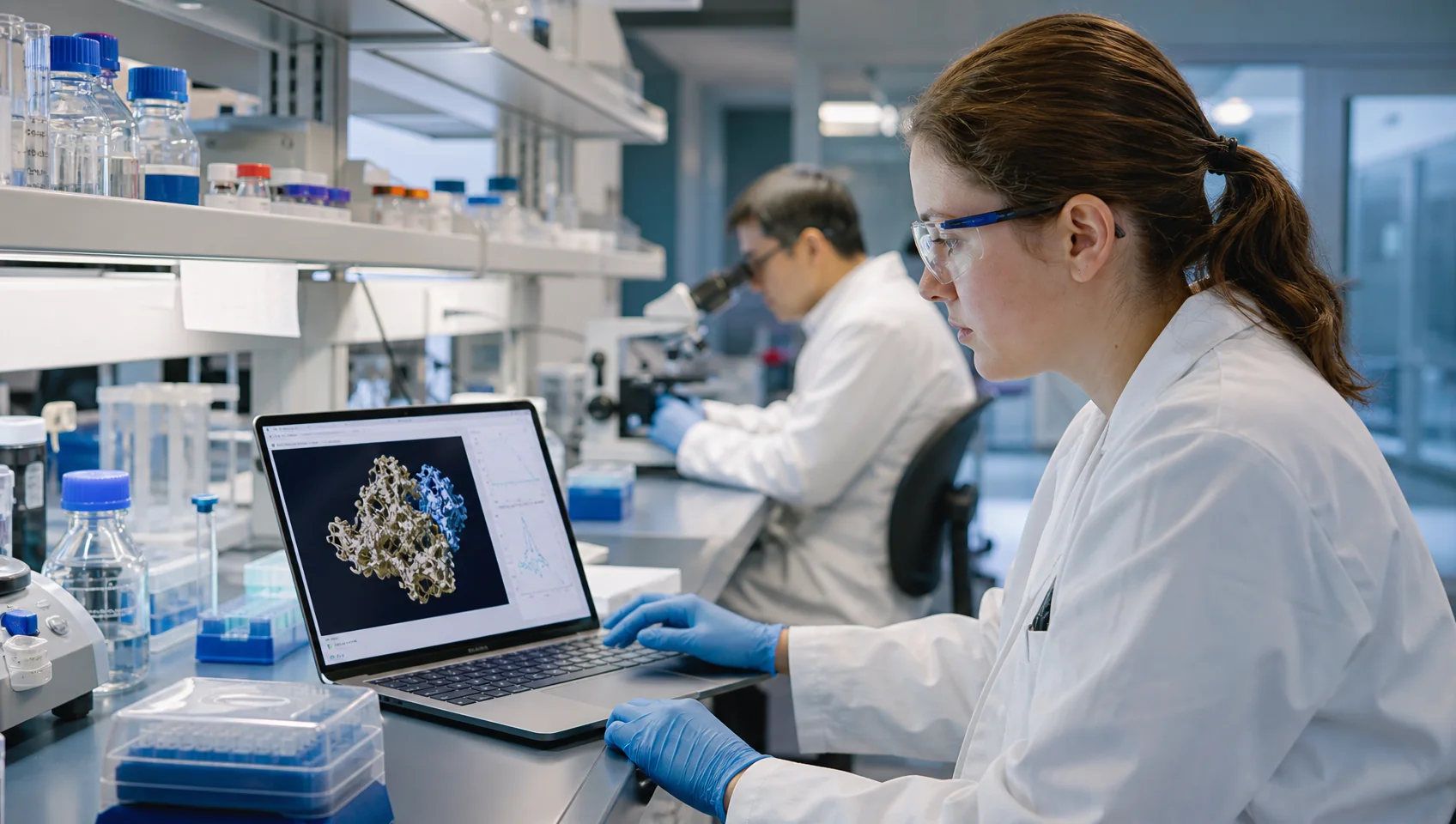
Anthropic's Life Sciences Verification Program. Anthropic is launching a verification program for life-sciences uses of Claude, focusing on evidence, reproducibility and safeguards as agents enter research workflows. The development emerged in Anthropic's program announcement, placing a concrete decision, release or disclosure behind a debate that had often been discussed in broader terms.
Life-sciences agents may search literature, propose experiments, analyze data and draft protocols. Each step can accelerate work while also carrying errors into the next stage.
What Changed
Verification should preserve provenance from source paper to generated claim and from analysis code to result. Reproducibility is especially important when an output influences an experiment or clinical decision.
The immediate consequence is operational. Companies, policymakers and technical teams now have to translate the announcement into budgets, controls and measurable outcomes. That process usually exposes the distance between a product claim and a system that can be trusted under real workloads.

A research result becomes useful when outside teams can inspect the method, reproduce the evaluation and understand where performance breaks. Papers with Code helps expose benchmark context, while the National Academies' reproducibility resources explain why transparent methods matter as automated systems take a larger role in scientific work.
The program will need independent participation and clear exclusions for dangerous work. Safety controls must distinguish legitimate research from requests that lower barriers to biological misuse.
The Next Test
The next evidence will come from implementation rather than promises. Useful reporting should track who receives access, what safeguards are mandatory, how failures are disclosed and whether customers or the public can independently verify the claimed result.
That distinction matters because AI markets move quickly from announcement to assumption. Once a capability is treated as inevitable, procurement and policy can race ahead of the evidence. A disciplined response keeps the opportunity visible without treating uncertainty as an inconvenience.
Anthropic's Life Sciences Verification Program will ultimately be judged by what changes outside the launch cycle: the work completed, the risks reduced, the costs absorbed and the people who retain authority when the system is wrong. Those are slower measurements, but they are the ones that determine whether this development lasts.
Topics: Anthropic, life sciences, verification, research