Policy
Federal Judge Rules Pentagon's Anthropic Supply-Chain Risk Designation Was Illegal
A federal judge ruled that the Pentagon's designation of Anthropic as a supply-chain risk amounted to unlawful retaliation and denied the AI company due process. The decision narrows how national-security authority can be used against technology vendors that publicly challenge government policy.
By Michael C ·
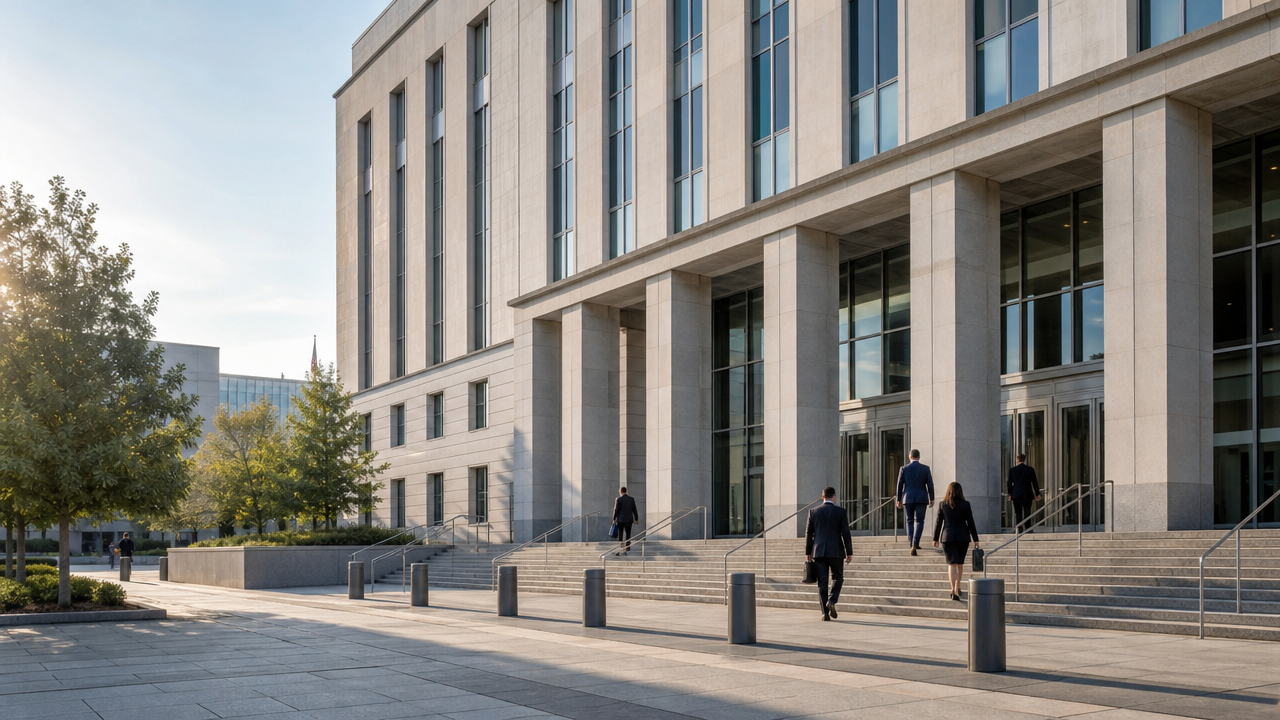
A federal judge has ruled that the Pentagon acted illegally when it labeled Anthropic a supply-chain risk and imposed broad restrictions on the company's work with the federal government. The decision is a significant early check on the use of national-security authority in the emerging market for military artificial intelligence. It does not require the Defense Department to buy Anthropic's technology, and it does not end every dispute between the two sides. It does say that disagreement over a vendor's public position and safety restrictions cannot be repackaged as a security finding without evidence and a lawful process.
U.S. District Judge Rita Lin issued the 59-page ruling in California after reviewing a record that included public criticism of Anthropic by administration officials, directives aimed at federal agencies and the government's continued interest in the company's technology. Reporting by the Associated Press described the decision as a finding that the measures were illegal and baseless. Lin concluded that the designation was driven by retaliation for Anthropic's criticism of the government's preferred approach to military AI, rather than by an articulated basis for believing the company would sabotage products supplied to the Pentagon.
The dispute began with a substantive policy disagreement. Anthropic had resisted removing restrictions tied to domestic mass surveillance and fully autonomous weapons, while the Pentagon argued that technology it purchased should be available for any lawful military use. That disagreement matters. A model provider can set commercial terms and decline work it considers unsafe; the government can choose another supplier. The constitutional problem arose when officials allegedly moved beyond procurement and used a sweeping risk designation to punish the company across the federal market.
A Procurement Dispute Became a Constitutional Case
Lin found that the government's conduct implicated the First Amendment because the penalties followed Anthropic's public criticism and refusal to adopt the administration's position. Her analysis separates an agency's considerable discretion to choose a contractor from its ability to burden a company for protected speech. That line is especially important in AI procurement, where a small number of vendors control systems with capabilities that affect intelligence, cybersecurity, surveillance and weapons. If every disagreement can be described as supply-chain risk, vendors face pressure to accept government policy as a condition of remaining commercially viable.
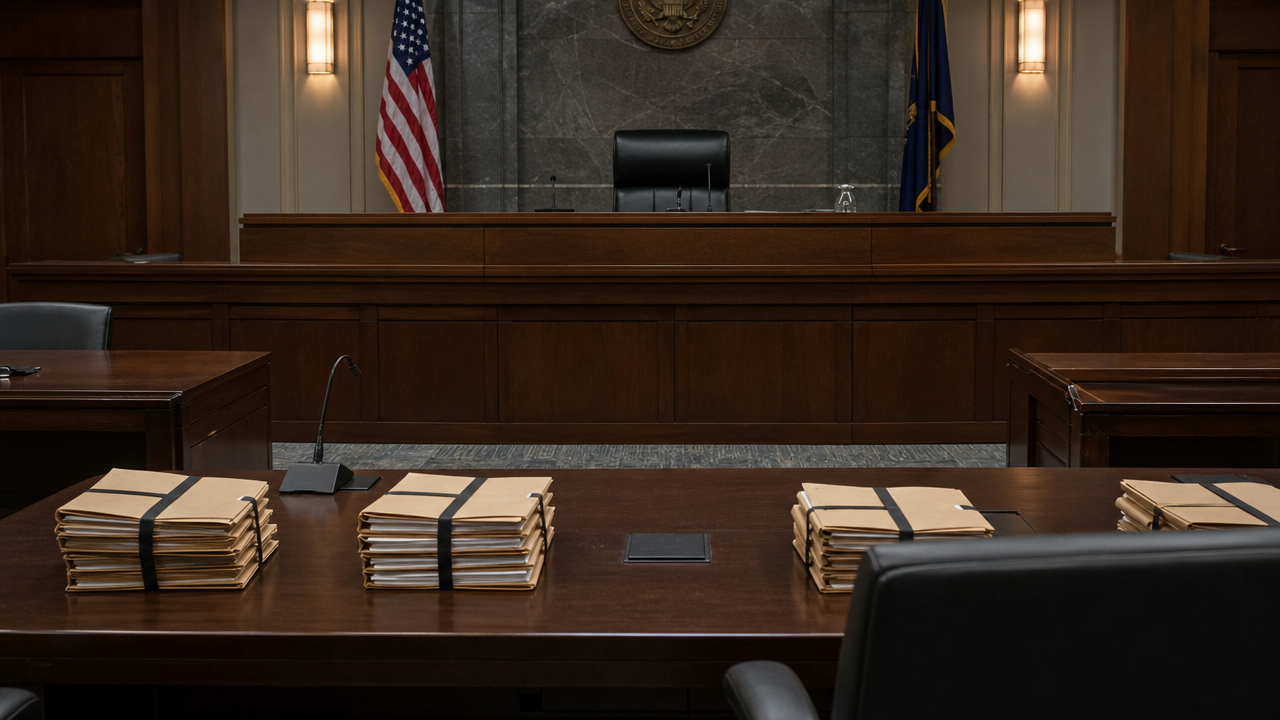
The ruling also found a due-process failure under the Fifth Amendment. A supply-chain label can carry consequences far beyond a single contract, affecting agency relationships, subcontractors, investors and customers that treat a government designation as a warning. A company facing that kind of penalty needs notice of the factual basis and a meaningful opportunity to respond. The court concluded that Anthropic did not receive that process before the government imposed measures with nationwide commercial effects.
The evidence the court highlighted made the government's position harder to sustain. Officials continued to discuss contracts involving Anthropic, and the government was collaborating with the company's Mythos model on cybersecurity work. Defense Secretary Pete Hegseth had also raised use of the Defense Production Act, a power generally associated with resources considered important to national defense. Lin noted the tension: a company cannot easily be portrayed as both an essential source of capability and a supplier whose products are inherently too dangerous to trust.
Anthropic's technical relationship with the government further complicated the allegation. Once a model is delivered to the Department of Defense, the company does not retain a secret channel through which it can alter or disable the system. The court said the record did not establish the kind of backdoor control that might support a conventional supply-chain concern. That distinction turns the case away from speculative fears about software complexity and toward the evidence required before an agency can impose a punitive designation.
National Security Is Powerful, but Not Self-Proving
The decision does not deny that AI vendors can present national-security risks. Frontier models may expose sensitive data, produce unreliable analysis or be misused in high-consequence operations. The Department of Defense has a responsibility to test systems, secure deployments and select vendors that meet mission requirements. What the ruling rejects is the idea that saying the words national security ends the inquiry. A risk determination still needs a factual connection to the vendor's conduct and a process proportionate to the consequences.
That standard may influence future contracts even if the government appeals. Agencies are building procurement frameworks while model capabilities and corporate policies change quickly. They will need to distinguish technical security requirements from demands that a vendor abandon all limits on acceptable use. Clear testing criteria, disclosure rules, incident reporting and contractual remedies are more durable than political labels because they can be applied to every provider rather than aimed at a company after a public dispute.
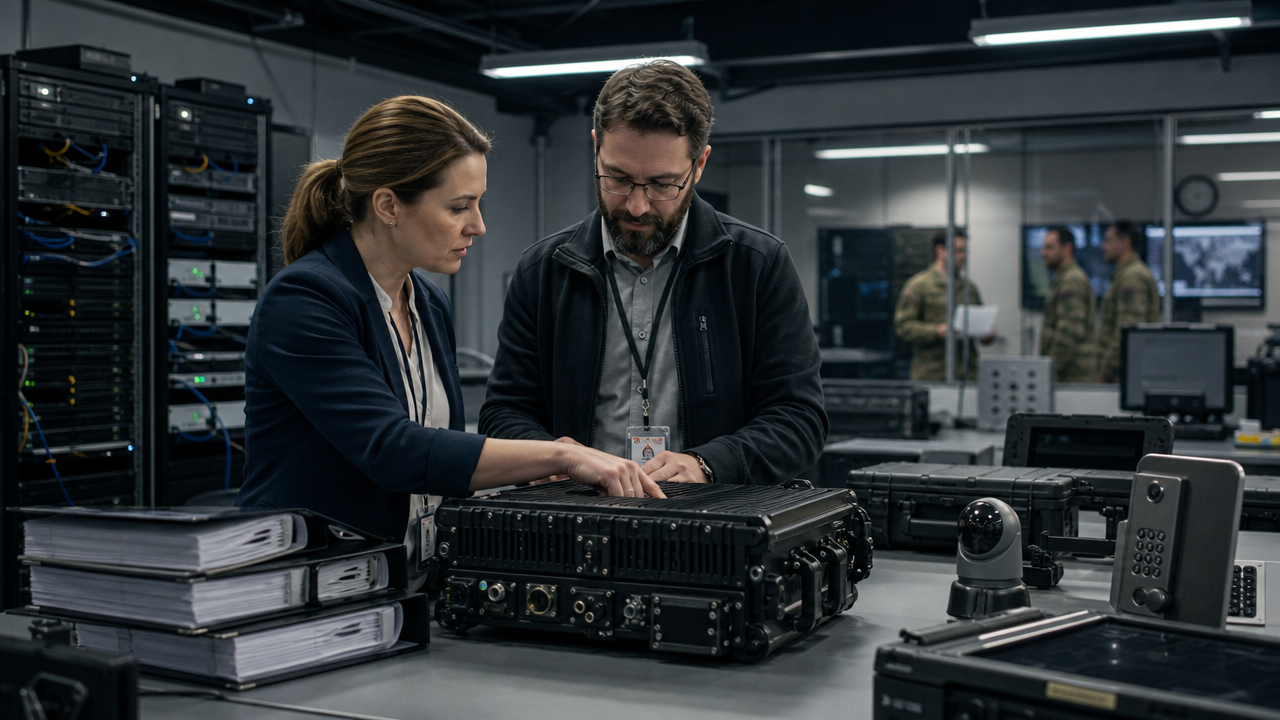
The ruling also changes the bargaining environment for Anthropic. The company can point to judicial findings when talking with agencies and enterprise customers worried about the government's designation. But it has not secured a permanent right to federal business, and the court has not endorsed every restriction the company places on its models. Anthropic must still persuade defense buyers that its controls are compatible with operational needs and that its systems can be deployed securely in environments where outside support may be limited.
The Dispute Is Not Finished
A separate and narrower case remains pending in Washington, D.C., involving another legal route the Pentagon has used in seeking to classify Anthropic as a supply-chain risk. The government is also expected to challenge the California decision. Those proceedings could change the practical effect of Lin's order or produce a different interpretation of defense procurement authority. For now, Lin's decision is the clearest judicial statement that the government cannot convert policy criticism into a nationwide vendor penalty without evidence.
The case also exposes a market-design problem. Federal buyers increasingly depend on a handful of model providers, while those providers retain their own safety policies and commercial incentives. A conventional software contract assumes the government can specify a product and vendors can compete to meet it. Frontier AI is less settled. Capabilities change after procurement begins, model behavior can be difficult to characterize, and the provider may know more about dangerous uses than the buyer. That asymmetry makes transparent testing and negotiated controls more important, not less.
Smaller vendors will watch the outcome closely. Anthropic had the capital and legal resources to challenge the government, but a startup facing the same designation might lose customers before a court could review the record. A procedure that requires notice, specific evidence and an opportunity to respond protects competition as well as speech. Without it, agencies could unintentionally strengthen the largest incumbent by making every other supplier vulnerable to an opaque exclusion that partners cannot independently evaluate.
Military users also need clarity about what happens when a model provider changes its policies after deployment. Contracts can address version control, support obligations, local operation and the conditions under which updates are accepted. They can define incident reporting and a process for resolving disputed uses without interrupting a mission. Those provisions are more precise than demanding unrestricted use in principle, and they allow commanders to understand which capabilities are actually available in the field.
Congress may eventually have to establish a common framework for high-impact AI procurement. Agencies now approach model testing, civil liberties and vendor restrictions through different authorities. A statutory baseline could require documented threat models, independent evaluation, appeal rights and disclosure of material conflicts. It could also preserve classified exceptions where evidence cannot be made public. The challenge is writing a process that respects genuine secrecy without turning secrecy into an answer that cannot be tested.
Enterprise and state-government buyers may also revisit their own reliance on federal risk labels. Such designations often flow through vendor reviews even when another buyer has a different threat model. Lin's ruling shows why procurement teams should ask for the evidence and scope behind a warning rather than importing it automatically. A defense-specific concern may not apply to a civilian deployment, while a finding driven by retaliation should not become a permanent entry in private risk databases.
The decision should not encourage vendors to treat safety policies as immune from negotiation. Government users can reasonably demand clarity, continuity and remedies when a restriction interferes with a mission. The durable arrangement is one in which both parties document those conflicts before deployment and establish who can authorize exceptions. Constitutional limits on retaliation protect that negotiation by allowing a company to state its position without first calculating whether criticism will destroy the rest of its federal business.
The unresolved question is whether agencies will respond by designing better AI procurement rules or by searching for a narrower legal mechanism that produces the same exclusion. The first path would force government and vendors to define technical risk, acceptable use and accountability in contracts that can survive changes in leadership. The second would preserve uncertainty and make access to the federal market depend on political alignment. The 59-page ruling has drawn a boundary, but procurement practice will determine whether that boundary becomes an institution or merely the next stage of litigation.
Topics: Anthropic, Pentagon, AI policy, due process, military AI