Analysis
How AI Grew So Fast: The Decade That Changed Everything
From a research curiosity to a $390 billion industry in under ten years — the story of artificial intelligence's extraordinary ascent, the forces that accelerated it, and what comes next.
By Patrick T ·
On November 30, 2022, OpenAI released a chatbot. Within five days, it had one million users. Within two months, it had one hundred million — making ChatGPT the fastest-growing consumer application in recorded history, surpassing TikTok, Instagram, and every platform that came before it. The speed was not just a product milestone. It was a signal that something fundamental had shifted in the relationship between humans and machines.
But the ChatGPT moment did not arrive from nowhere. It was the visible surface of a decade-long transformation — a compounding of research breakthroughs, capital flows, compute availability, and competitive pressure that had been building since at least 2012, when a neural network called AlexNet won an image recognition competition by a margin so large that the AI research community effectively reorganized itself around deep learning overnight.
The Decade That Built the Foundation
The modern AI era is often dated to the 2012 ImageNet breakthrough, when Geoffrey Hinton's team at the University of Toronto demonstrated that deep convolutional neural networks could recognize images with error rates that classical computer vision could not approach. The result was not just a better algorithm — it was proof that scale worked. More data, more compute, more layers: the formula was simple, and it generalized.
By 2017, Google researchers had published the Transformer architecture in a paper titled 'Attention Is All You Need.' The Transformer became the foundation for virtually every major language model that followed — GPT, BERT, T5, PaLM, Gemini, Claude. It was a design that scaled elegantly: the more parameters you trained, the more capable the model became, with no obvious ceiling in sight.
OpenAI released GPT-1 in 2018 with 117 million parameters. GPT-2 followed in 2019 with 1.5 billion — a 12-fold increase — and was initially withheld from public release because OpenAI worried about misuse. GPT-3, released in 2020 with 175 billion parameters, was the first model that made the general public pay attention. GPT-4, released in March 2023, was estimated to have over one trillion parameters. The scaling curve was not slowing.
The Capital Avalanche
The research breakthroughs attracted capital at a pace that the venture industry had never seen. According to Stanford University's 2025 AI Index Report, corporate AI investment reached $252.3 billion in 2024 — a figure that represents more than a thirteenfold increase from 2014. Private investment alone climbed 44.5% year-over-year. The sector has absorbed more capital in the last three years than it did in the previous three decades combined.
The generative AI subsector has been particularly dramatic. Private investment in generative AI reached $33.9 billion in 2024, up 18.7% from 2023 and over 8.5 times higher than 2022 levels. The sector now represents more than 20% of all AI-related private investment globally. For context, the entire global venture capital market in 2019 was approximately $300 billion — generative AI alone is now consuming more than 10% of that.
The United States has dominated this capital deployment. U.S. private AI investment hit $109.1 billion in 2024, nearly twelve times higher than China's $9.3 billion and twenty-four times the United Kingdom's $4.5 billion. The gap in generative AI is even more pronounced: U.S. investment exceeded the combined total of China and the European Union plus the U.K. by $25.4 billion.
The Adoption Inflection
Investment statistics describe supply. Adoption statistics describe demand. And the demand numbers are, if anything, more striking than the funding figures. In 2023, 55% of organizations surveyed by McKinsey reported using AI in at least one business function. By 2024, that figure had jumped to 78%. The number of respondents reporting generative AI use in at least one business function more than doubled in a single year — from 33% to 71%.
Enterprise spending on generative AI tells the same story. Companies spent $37 billion on generative AI in 2025, up from $11.5 billion in 2024 — a 3.2x year-over-year increase, according to Menlo Ventures. Deloitte's 2026 State of AI in the Enterprise report found that worker access to AI rose by 50% in 2025 alone, and that the number of companies with 40% or more of their AI projects in production is set to double in the coming year.

Why Did It Happen So Fast?
The speed of AI's growth is not accidental. It is the product of several forces converging simultaneously, in a way that created a self-reinforcing cycle that has proved extremely difficult to slow.
The first force was compute. The same GPU hardware that Nvidia originally designed for video games turned out to be extraordinarily well-suited for training neural networks. As GPU performance improved on Moore's Law-adjacent curves, the cost of training a given model fell dramatically. A model that would have cost $10 million to train in 2018 could be trained for $100,000 by 2023. This cost reduction democratized experimentation and accelerated the pace of iteration.
The second force was data. The internet had been accumulating human-generated text, images, code, and video for decades. Large language models discovered that this data — scraped, cleaned, and fed into transformer architectures at scale — was sufficient to produce remarkably capable systems. The training data problem, which had seemed intractable in earlier AI eras, turned out to have been solved by the internet itself.
The third force was competition. Once it became clear that scale worked, every major technology company — Google, Microsoft, Meta, Amazon, Apple — began racing to build or acquire AI capabilities. This competition drove investment, accelerated hiring, and created a talent market that pulled researchers out of academia and into industry at an unprecedented rate. The competitive pressure also shortened development cycles: companies that might have spent three years on a product release began shipping in months.
The Benchmark Compression
One of the most striking indicators of AI's pace is the compression of benchmark timelines. Tasks that researchers estimated would take AI systems a decade to master were being solved in two or three years. The Bar Exam, once considered a meaningful test of legal reasoning, was passed by GPT-4 at the 90th percentile in 2023. Medical licensing exams, graduate-level mathematics, competitive programming — each fell faster than the previous prediction.
This benchmark compression created a peculiar dynamic: the goalposts kept moving. Each time AI systems reached a previously defined threshold of human-level performance, researchers would identify a harder benchmark and declare that the previous one was not a true test of intelligence. The result was a continuous cycle of achievement and redefinition that made it difficult to assess how much progress had actually been made — and how much remained.
The Infrastructure Bet
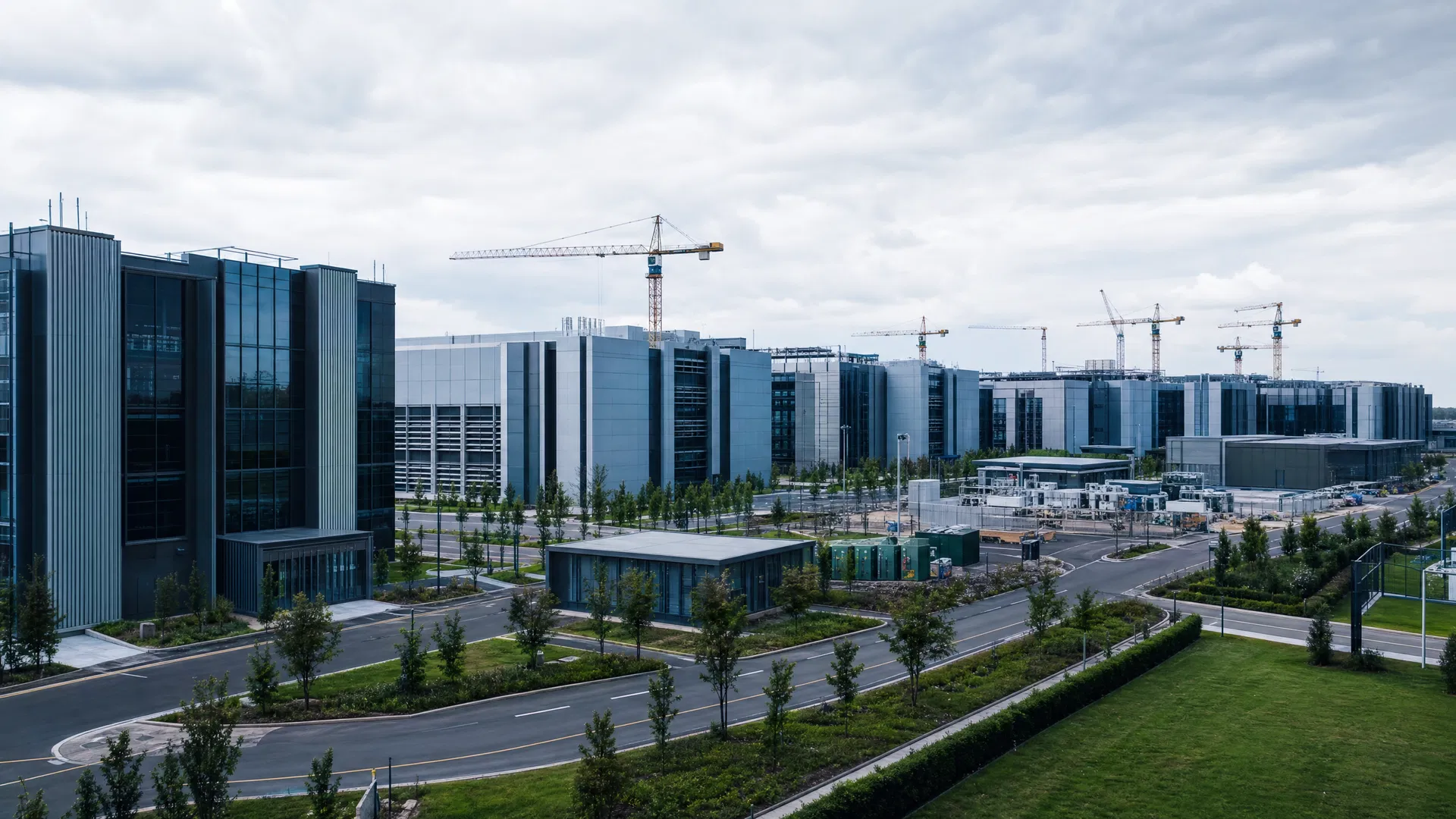
The most concrete expression of the AI growth story is the infrastructure being built to support it. In 2026, the hyperscalers — Microsoft, Google, Amazon, and Meta — have collectively committed to spending between $300 billion and $400 billion on AI infrastructure in the current fiscal year alone. Microsoft has announced $80 billion in data center investment. Google has committed $75 billion. Meta has raised its AI capital expenditure guidance to between $125 billion and $145 billion.
These are not speculative investments. They are responses to measurable demand. Cloud AI revenue has been growing at rates that justify the capital deployment, and the hyperscalers are competing for a market that analysts at Gartner estimate will reach nearly $1.5 trillion in total worldwide AI spending in 2025, growing to over $2 trillion in 2026 and $3.3 trillion by 2028.
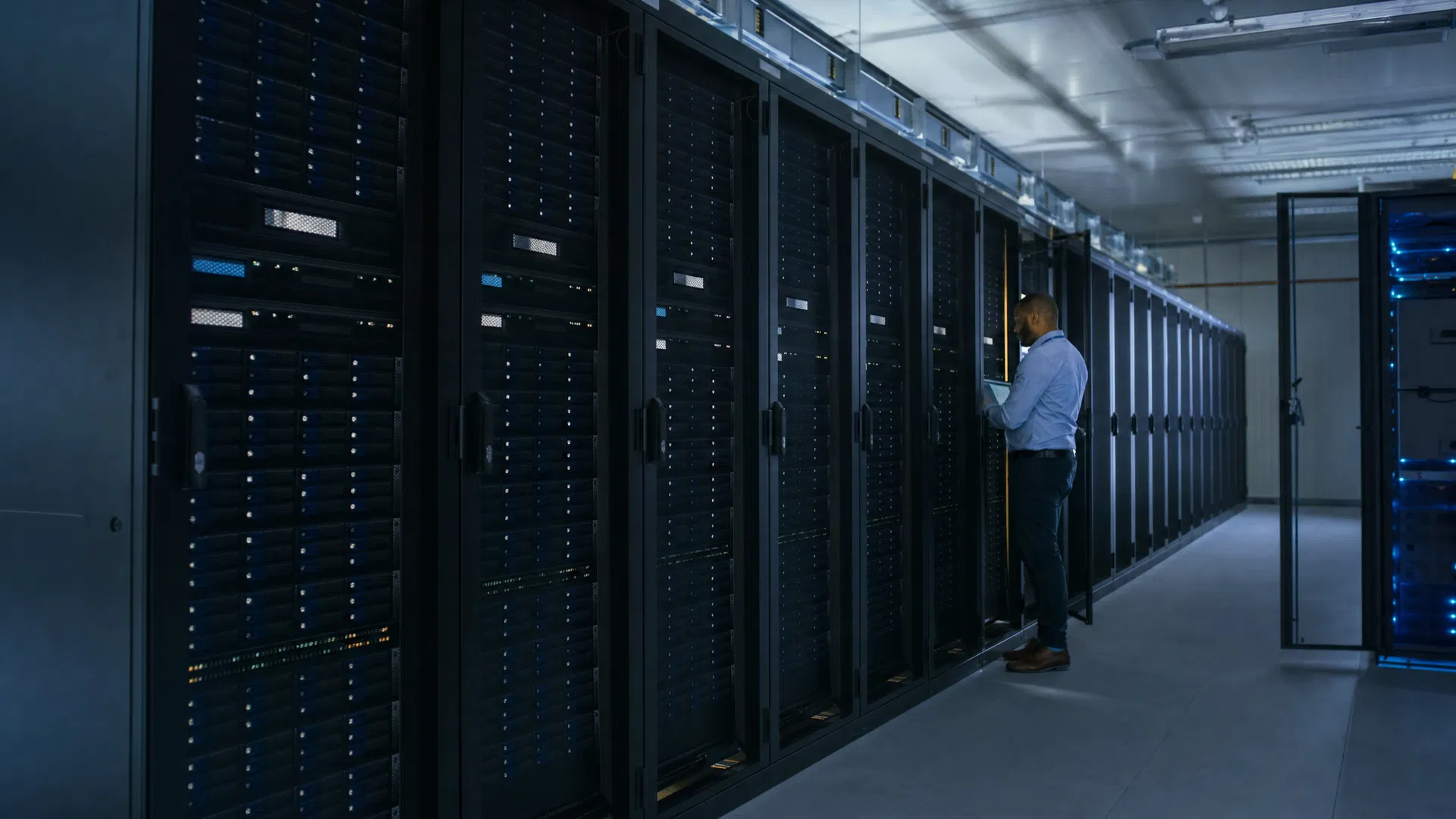
The physical scale of this buildout is difficult to comprehend. A single modern AI training cluster can consume 100 megawatts of power — enough to supply a city of 80,000 homes. Microsoft's planned data center campus in Wisconsin will cover more than 1,000 acres. The energy demands of AI have become a significant factor in national grid planning, driving renewed interest in nuclear power and prompting utilities to accelerate infrastructure upgrades that had been deferred for decades.
What Comes Next
The trajectory of AI growth raises a question that is simultaneously technical, economic, and philosophical: can this pace be sustained? The honest answer is that nobody knows. The scaling laws that have driven progress for a decade may be approaching limits that require qualitatively different approaches. The data available for training is finite, and the most capable models are already consuming essentially all of it. The compute required to train frontier models is doubling roughly every six months, and the cost is growing accordingly.
At the same time, the economic incentives to continue are more powerful than they have ever been. The companies that have invested most heavily in AI are now generating returns that justify further investment. The competitive dynamics are self-reinforcing. And the geopolitical dimension — with the United States and China both treating AI leadership as a matter of national security — adds a layer of pressure that transcends normal market logic.
What is certain is that the decade between 2012 and 2022 produced something that the previous sixty years of AI research had not: a technology that ordinary people could use, that businesses could deploy at scale, and that governments could not ignore. The decade that follows will determine whether that technology fulfills the most optimistic projections, produces the risks that critics fear, or — most likely — does something that nobody predicted at all.
The fastest-growing technology in human history is still accelerating. The only consensus among those who study it most closely is that the story is nowhere near its end.