Analysis
Alibaba raises $10.2 billion via share placement to accelerate AI and chip development
Alibaba announced a $10.2 billion share placement on August 24, 2026, triggering a sharp sell-off as investors weighed the dilution against the company's strategic pivot toward artificial intelligence. The placement underscores mounting pressure on Chinese tech giants to compete in AI while facing domestic constraints on advanced semiconductors.
By Elvin C ·
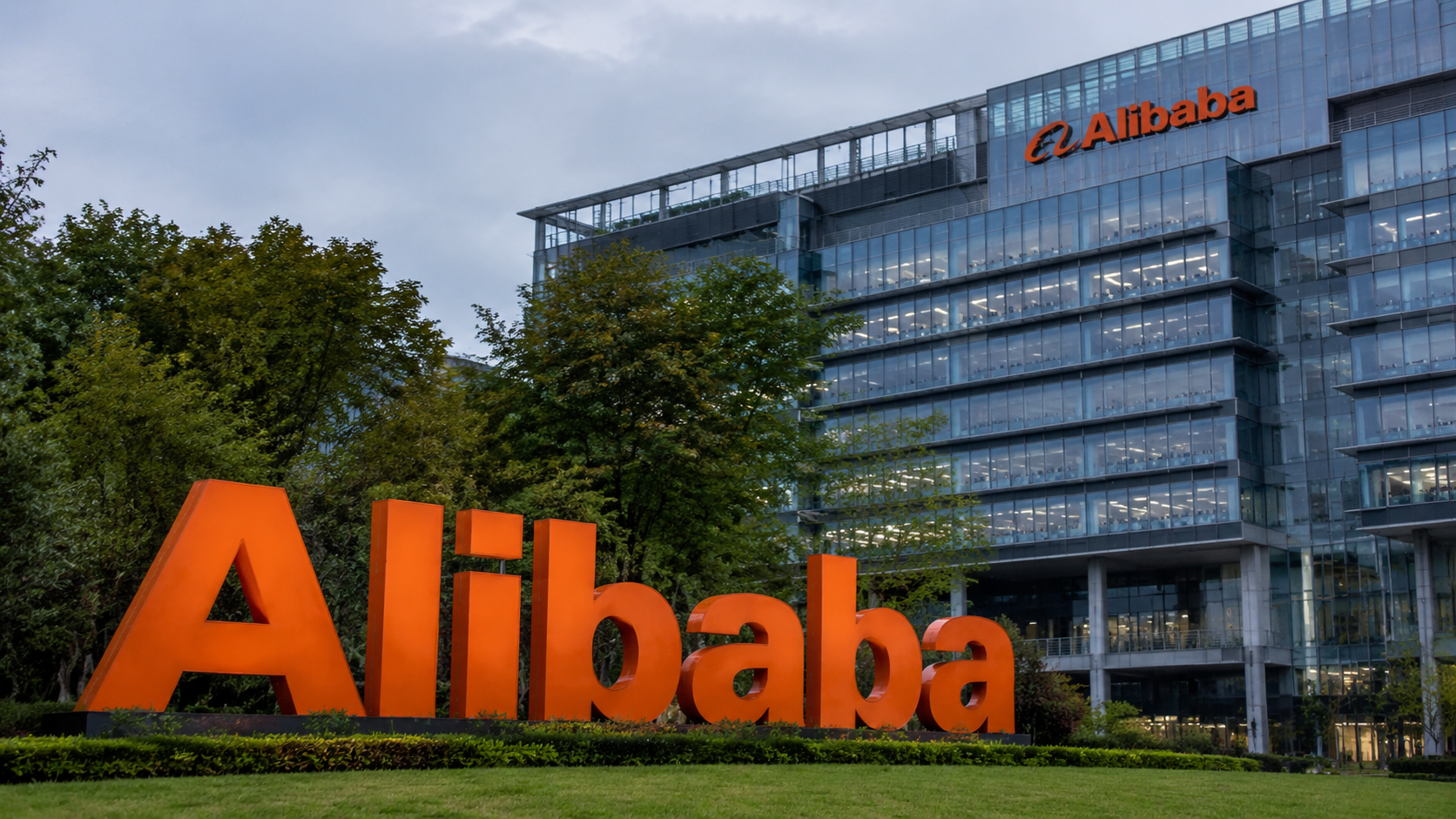
Alibaba Group announced a $10.2 billion share placement early Monday, signaling aggressive acceleration of its artificial intelligence and semiconductor ambitions at a moment when China's technology leaders face intensifying competition and structural constraints. According to a CNBC report, the e-commerce and cloud computing giant's shares fell sharply on the news, a market reaction that reveals investor ambivalence about the scale of capital required to compete in AI and the near-term dilution costs of such ambitions. The placement represents one of the largest capital raises by a Chinese tech company in recent years, yet its announcement triggered the kind of sell-first-ask-questions-later response that often signals deeper concerns about capital efficiency and return on investment.
The company has outlined plans to deploy the capital across AI model development, cloud computing infrastructure, and domestic semiconductor capabilities. Alibaba Cloud, the group's cloud services division, stands to absorb a significant portion of the funding as the company races to build larger language models and inference capacity competitive with offerings from OpenAI, Google, and increasingly, local rivals like Baidu and ByteDance. The allocation to chip development reflects a deeper strategic anxiety: China's restricted access to advanced semiconductors from NVIDIA and other foreign suppliers has forced domestic technology companies to pursue in-house design and manufacturing partnerships. Whether Alibaba can materially narrow the gap between homegrown chips and cutting-edge foreign alternatives remains an open engineering and manufacturing question. CNBC report documents the reporting behind this account.
From a capital structure standpoint, the mathematics are straightforward but sobering. A $10.2 billion raise on Alibaba's market capitalization represents meaningful dilution, particularly if the company is simultaneously returning capital to shareholders through dividends or buybacks. The share price decline following the announcement suggests that the market is pricing in not only the dilution itself but also skepticism about the returns on such large-scale AI infrastructure investment. Technology companies have historically struggled to monetize AI capabilities at the scale required to justify infrastructure spending in the $10 billion range. Alibaba Cloud serves thousands of corporate customers in China and internationally, generating strong cash flows from its core operations, but the company faces pressure to demonstrate that incremental AI spending translates into either higher margins on existing services or entirely new revenue streams. That translation has proven elusive for many technology incumbents. Alibaba Group offers useful technical background for evaluating the claim.
Competitive pressure and domestic constraints

Alibaba's decision to raise $10.2 billion arrives in a competitive environment where the cost of building and deploying large language models has exploded while the monetization path remains uncertain. Chinese technology companies operate under additional constraints: U.S. export controls limit access to the most advanced processors, forcing domestic players to rely on less capable semiconductors or to invest heavily in alternative architectures and optimization techniques. This structural disadvantage means that Alibaba and its peers must spend more capital to achieve equivalent capabilities compared to U.S. counterparts. The company is also competing for talent and computing resources with state-backed initiatives and well-capitalized private competitors, each pursuing overlapping AI strategies. The operational tradeoff is also reflected in Alibaba Cloud.
Hong Kong Exchanges and Clearing facilitated the share placement, which was structured as a private offering to a limited investor base. The mechanics of the raise are important: Alibaba chose a placement rather than a public offering, which typically signals confidence in finding large institutional buyers willing to absorb blocks of shares without a formal roadshow or underwriter syndication process. The fact that such buyers materialized despite the subsequent share-price decline suggests either that the offering was priced at a discount sufficient to attract value-focused investors or that long-term believers in Alibaba's cloud and AI strategy moved to participate despite near-term dilution concerns.
Capital intensity and strategic durability

The deeper strategic question is whether Alibaba's core business generates sufficient free cash flow to sustain this level of AI and infrastructure investment without chronic shareholder dilution. Enterprise AI has moved from speculative research to operational reality at many organizations, driving legitimate demand for compute, models, and analytics services. Alibaba Cloud serves thousands of corporate customers across its installed base, representing a ready market for AI-enhanced offerings. The company can theoretically leverage its cloud customer relationships to achieve faster adoption of new AI capabilities than pure-play model companies without distribution infrastructure. But the industry-wide pattern suggests that capital efficiency in AI remains elusive: companies invest heavily upfront with the expectation of returns that may materialize years later, if at all.
Investors will scrutinize Alibaba's quarterly earnings and capital expenditure disclosures in the months ahead for evidence that the company is deploying this capital efficiently and that cloud computing revenue is accelerating as a result of AI investments. The company's financial transparency on segment-level returns and the specific metrics tracking AI model adoption and monetization will become critical to validating the raise. A prolonged period of elevated spending without corresponding revenue acceleration would likely trigger additional share-price pressure and potential credit rating concern from agencies monitoring capital structure stability.
The $10.2 billion placement is ultimately a statement of intent: Alibaba is committing substantial capital to a technology transition that is real but whose economic returns remain unproven at scale. The share sell-off reflects justified market skepticism about capital efficiency and near-term dilution. Whether Alibaba is positioned to convert this investment into durable competitive advantage will depend on execution, market adoption, and the company's ability to maintain margin discipline across its existing profitable operations even as capital flows into higher-risk future capabilities. The final point can be checked against cloud computing.
Topics: Alibaba, AI investment, capital markets, technology, China