Ethics
Samsung Health Assistant Beta Brings AI Wellness Advice To U.S. Users
Samsung launched Health Assistant in beta for eligible U.S. users, tying Samsung Health data to AI-generated wellness guidance while stressing that the product is not medical advice.
By Michael C ·
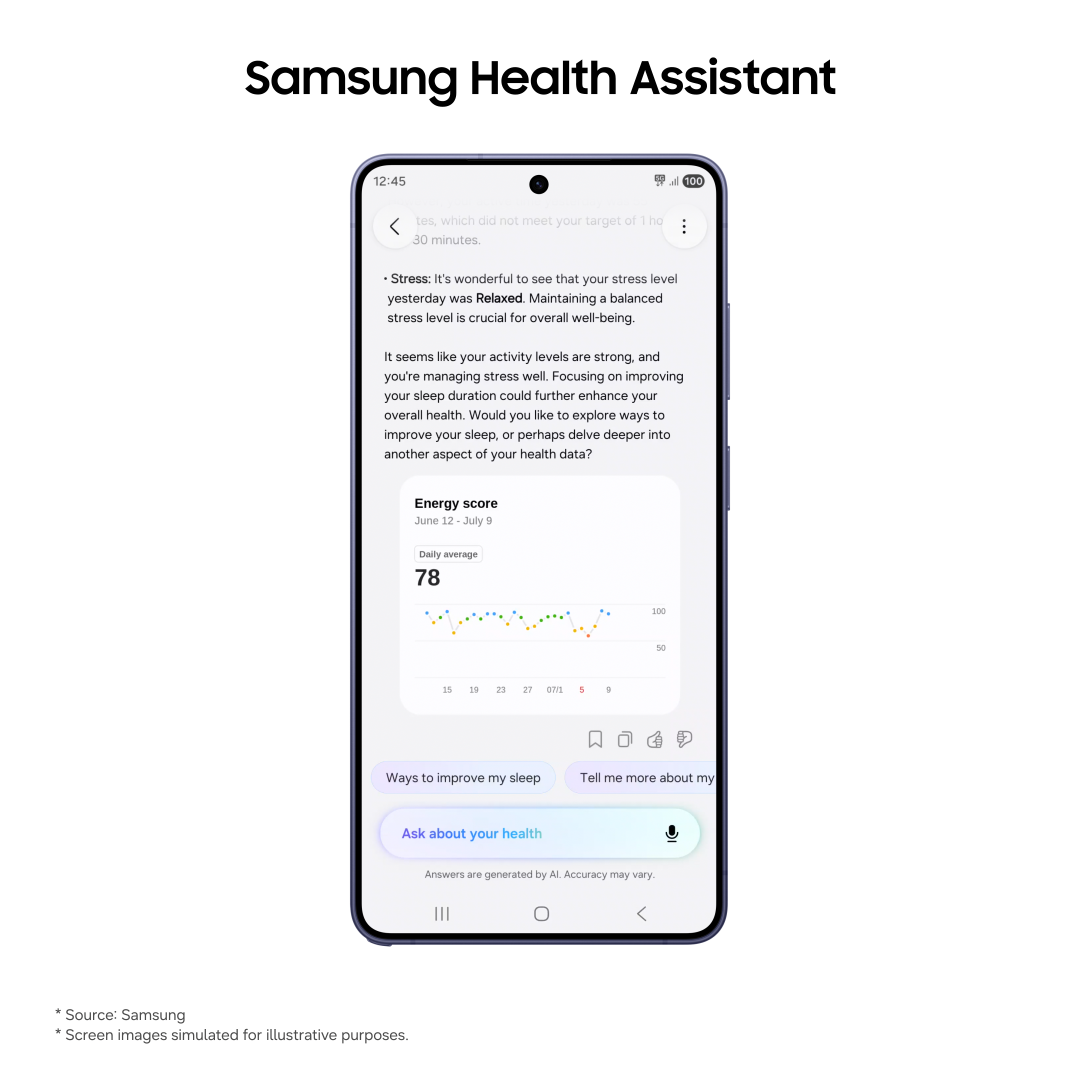
Samsung has launched Health Assistant in beta for eligible U.S. users, bringing generative AI more directly into the personal wellness data that millions of people already collect through phones, watches, and rings. The company said on July 21 that the feature is integrated with Samsung Health and can connect information across sleep, activity, nutrition, mindfulness, and vitals. It is designed to let users ask questions about their health data and receive personalized guidance. Samsung also states clearly that Health Assistant will not give medical advice, diagnostic recommendations, or treatment recommendations.
That disclaimer is not legal boilerplate. It defines the boundary between consumer wellness and healthcare. A wearable can tell a user that sleep, heart rate, activity, and stress signals appear related. It should not tell a user that they have a disease or that they should change medication. The more fluent the assistant becomes, the more important that boundary is. A confident explanation can feel like clinical judgment even when the product is not regulated or validated as a medical device.
Samsung says recommendations are validated by physicians and certified health coaches, and that the system draws on Samsung Health's knowledge base. That is a useful assurance, but it does not remove the need for independent scrutiny. Personalized wellness advice can affect exercise, sleep, diet, stress management, and medical follow-up. Even when a product avoids diagnosis, it can still influence behavior in ways that matter for vulnerable users.
The data context is unusually sensitive. Samsung says Health Assistant can use the Personal Data Engine as context for future capabilities, including schedule and preference signals. That could make recommendations more useful. It also raises ordinary privacy questions in a more intimate setting. Health data, calendar patterns, daily habits, sleep records, and stress signals reveal more than product preferences. Users need clear controls over what is used, what is stored, what can be deleted, and whether any data reaches third parties.
Samsung's acquisition of Xealth gives the story a second layer. Samsung says the deal can connect user-consented wellness insights with care teams securely and at scale. That is a powerful direction if handled carefully. It could help people turn passive data into better conversations with clinicians. It could also blur the line between consumer tracking and healthcare infrastructure if consent flows, data sharing, and clinical accountability are not plain.
The feature also shows how consumer AI is moving into vertical products. A general chatbot can answer a fitness question. A health assistant connected to a wearable ecosystem can interpret daily patterns and act inside a product people already use. That makes the advice more relevant, but it also makes mistakes harder to notice because they arrive in a trusted context. The design problem is not only accuracy. It is disclosure, calibration, and refusal when the question crosses into medical territory.
Samsung is not alone in this direction. Apple, Google, Fitbit, Oura, Whoop, and medical technology companies are all trying to turn passive tracking into actionable guidance. The competitive advantage will depend on sensor quality, longitudinal data, user trust, and integration with clinical systems. The regulatory exposure will grow if these products make more specific claims or become part of care pathways.
For users, the safest reading is practical. Health Assistant may help people understand patterns they would otherwise ignore. It should not replace a clinician, and Samsung says it will not. The risk is that a product built to sound helpful may become more persuasive than its evidence supports. Good design will make uncertainty visible rather than hide it behind polished conversational language.
For Samsung, the launch is a bet that AI can make wearables more valuable by turning data into context. The company has the hardware footprint to make that bet credible. The public-interest test is whether it can make the advice useful without letting a wellness assistant become an unlicensed medical voice in a user's pocket.
Topics: Samsung, Health Assistant, AI health, wearables