Ethics
OpenAI Launches ChatGPT Health For U.S. Users As Medical AI Moves Into Personal Data
OpenAI made ChatGPT Health available to U.S. adults, bringing connected health information into ChatGPT and raising fresh questions about medical advice, privacy controls, and clinical accountability.
By Michael C ·
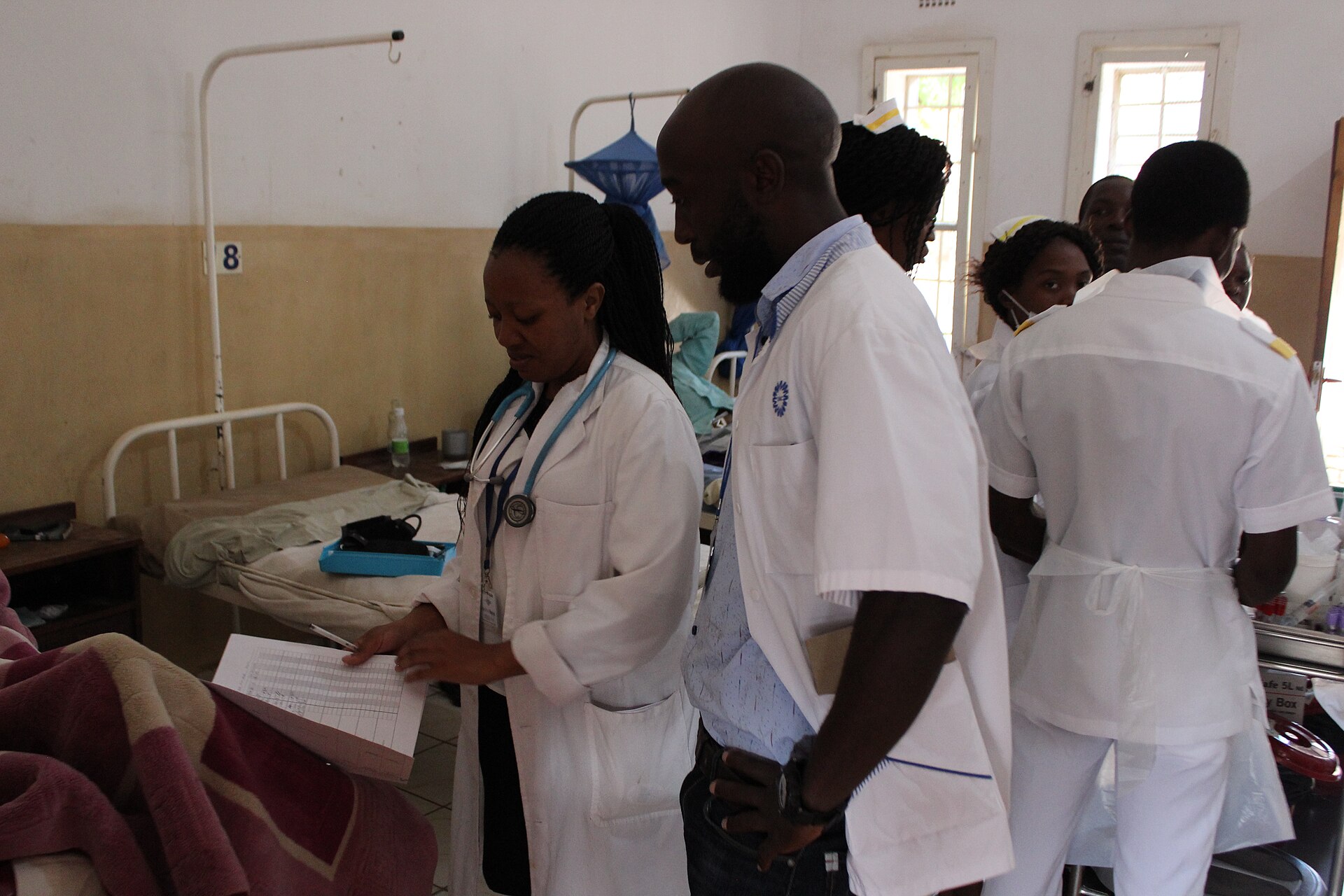
OpenAI has moved ChatGPT deeper into consumer health, launching ChatGPT Health for U.S. users over 18 across all plans and allowing people to connect personal health information so the chatbot can help them understand and navigate health questions. The company announced the rollout on July 23, saying the feature can draw from user-approved health context, including connected apps and wearable data, while giving users tools to review, update, and manage what ChatGPT knows. It is a product launch, but it is also a governance test. Health is the area where a helpful answer can quickly become a high-stakes instruction, and where convenience depends on whether users understand what data they are sharing and what the system is not qualified to decide.
TechCrunch reported that the broader release follows an earlier dedicated health hub test and comes as health-related ChatGPT usage has grown from 230 million to 300 million weekly queries, according to figures OpenAI gave the outlet. The same report noted that the launch arrived a day after a Florida pastor sued OpenAI over an allegedly dangerous medical suggestion. OpenAI has not conceded the claim, and the case should be treated as an allegation unless it is tested in court. The timing still underlines why this product category attracts scrutiny. When a general-purpose assistant becomes a place where people ask about symptoms, medication, and care decisions, the boundary between information and advice has to be explicit.
OpenAI says the feature can connect with services such as Apple Health, Function, and MyFitnessPal, which gives the assistant a more specific view of a person's activity, labs, diet, and other records than a standalone prompt would provide. That can make answers more useful, but it also raises the cost of misunderstanding. A chatbot that knows a user's resting heart rate, sleep trends, or lab markers can sound more authoritative than a generic search result. The product therefore has to do more than answer. It has to point back to the limits of the data, ask when information is missing, and keep a low threshold for telling users to consult a clinician.
The privacy question is separate from the medical-quality question. A user may consent to connect health data because it makes a conversation easier, but consent is meaningful only if the controls are understandable and reversible. OpenAI says Health in ChatGPT is built with privacy, security, and control, and says users can manage relevant health details. The real test will be whether people can tell which information shaped an answer, whether they can remove stale or wrong details, and whether sensitive records are isolated from unrelated product personalization or model-improvement flows.
Clinicians will also read the launch through the history of digital health regulation. In the United States, HIPAA governs covered entities and business associates, not every consumer health app or general technology service. The Federal Trade Commission has separately enforced rules around health-app data sharing and breach notification. That split matters because a consumer may assume all health data receives the same legal treatment once it becomes medical in nature. In practice, the protections depend on the service, the relationship, and the way data is collected and used.

The strongest argument for ChatGPT Health is access. People already search symptoms, compare lab results, and try to understand confusing discharge notes. A conversational system that can read user-provided context and explain it in plain language could reduce friction and help patients ask better questions. It could also help caregivers organize information that is scattered across portals and apps. Those are real benefits, especially for users who find health systems hard to navigate.
The risk is overconfidence. The Mayo Clinic and other medical institutions routinely warn patients that online information should not replace professional care. AI makes that warning harder to operationalize because it can produce a direct, personalized answer in a calm voice. A health assistant must therefore preserve uncertainty in the language of the answer itself. It should not bury the caveat at the bottom of a page or rely on a one-time disclaimer.
The launch also changes the burden on product design. In ordinary ChatGPT use, a user may understand that the system is helping with writing, research, or planning. In health, the same chat surface can contain a symptom description, a wearable trend, a lab value, and a question that sounds casual but carries medical risk. The answer has to slow the user down when the situation warrants it. That means surfacing emergency signs, asking about missing context, and making the handoff to professional care feel like part of the answer rather than a legal disclaimer.
OpenAI's own framing puts control in the user's hands, but user control is not a single toggle. It includes knowing what has been connected, what has been remembered, what can be deleted, and whether the assistant is drawing from a current record or from something the user said weeks earlier. Health information becomes stale quickly. A medication changes, a lab result is superseded, a diagnosis is ruled out, or a wearable records a misleading week because the user was sick. A useful assistant has to distinguish durable health context from temporary signals.
There is also a clinical workflow question. If ChatGPT Health becomes a place where users prepare for appointments, summarize symptoms, and organize records, physicians may begin receiving better-prepared patients. They may also begin receiving AI-shaped summaries that hide uncertainty or emphasize the wrong details. That can save time or create new work, depending on how transparent the assistant is about what it inferred and what it merely repeated. A patient-facing product can still affect the clinician's day even if the clinician never logs into it.
The company is entering a market where trust is built slowly. Digital health products often win attention with convenience and lose it through unclear data practices, brittle recommendations, or exaggerated claims. OpenAI has an advantage because many people already know how to use ChatGPT. It also has a disadvantage because ChatGPT's broad competence can make users forget that health is not one domain. Dermatology, medication safety, mental health, chronic disease management, pregnancy, and emergency triage all carry different evidence standards and risk thresholds.
A careful implementation would treat escalation as a core feature. The assistant should be able to say that a question is outside its role, that a symptom pattern should be assessed urgently, or that a lab value cannot be interpreted without age, sex, medication, history, and clinical context. It should also be able to explain why it is asking follow-up questions. That sort of friction may make the product feel less magical, but it is what separates a health aid from a confident guessing machine.
The insurance and employer context will also matter. OpenAI is launching to U.S. consumers, not announcing a payer or employer benefit product in this rollout. Still, users will naturally ask whether health data connected to a general assistant can ever influence insurance, advertising, employment, or other decisions. The safest answer for any product in this category is not only a policy promise. It is a user experience that shows boundaries clearly and lets people verify them before they connect sensitive sources.
The broader AI industry will watch this launch because health is a credibility test for domain-specific assistants. If OpenAI can make health conversations more organized without drifting into unsafe advice, the model could extend to other regulated or semi-regulated domains. If it struggles, regulators and competitors will treat that as evidence that general assistants need tighter limits before they are placed near consequential decisions. The stakes therefore reach beyond one feature page.
For users, the practical approach is conservative. Connect only information that meaningfully improves the use case, check the controls before relying on the assistant, and treat answers as preparation for medical conversations rather than replacements for them. The product can still be valuable under that standard. A good health assistant does not need to diagnose. It can help a person explain symptoms, list medications, understand paperwork, compare questions for a clinician, and notice when they do not have enough information to decide.
OpenAI will also have to manage how the feature behaves when users ask for certainty that medicine cannot provide. Many health questions are probabilistic. A symptom can have several causes. A normal value can be reassuring in one context and incomplete in another. A chatbot trained to be helpful may be tempted to organize uncertainty into a clean answer. In health, clean answers can be misleading if they remove the uncertainty that should drive the next question or the next appointment.
The connected-app layer makes that problem sharper because numbers carry authority. A step count, glucose trend, sleep score, weight change, or lab result can look objective, but it still needs interpretation. Devices can be wrong, incomplete, or measuring a proxy. People can change routines for reasons the data does not capture. A health assistant should therefore explain what a number can and cannot show. It should not treat every chart as a clinical signal.
Family use will be another pressure point. Caregivers often help parents, children, spouses, and relatives navigate health paperwork. A personal assistant that can organize records may become useful in those settings, but shared care creates consent problems. One person's account may contain another person's information. Notes may include details a patient did not intend to share widely. OpenAI's controls will need to be clear enough for ordinary households, not only for privacy professionals.
The launch also tests how OpenAI handles corrections. In health, a corrected answer is not only a better answer. It is a record of what changed. If the system updates its understanding of a user's condition, the user should be able to see that shift and know whether future answers will rely on the new information. Quietly changing context may be convenient in a writing tool. In medical conversations, silent context changes can create confusion.
The company can reduce risk by making the assistant's uncertainty visible in ordinary language. Instead of saying only that users should consult a professional, it can say which parts of the answer are general education, which parts depend on the user's connected data, and which parts require clinical judgment. That sort of clarity is not a barrier to adoption. It is the reason a health feature can be trusted by people who need help but do not want a chatbot pretending to be a doctor.
For OpenAI, this launch extends a broader push into domain-specific ChatGPT experiences. Health is a large consumer market, but it is less forgiving than writing help or travel planning. The company can make the feature useful only if it treats medical context as evidence that needs careful handling, not as a prompt enhancer. The first question for users is simple: does the assistant help them understand their health better while making clear when the next step belongs to a professional. If the answer is yes, ChatGPT Health could become a practical front door to personal medical information. If not, it will become another example of an AI product entering a sensitive domain faster than trust can be earned.
Topics: OpenAI, ChatGPT Health, medical AI, privacy