Security
Google Opens Fairwind Cyber Defense Program to Governments and Trusted Partners
Google says more than 650 partners will receive staged access to advanced cyber models and automated patching tools. The program is designed to give critical defenders an adaptation window before agentic attack capabilities spread more widely.
By Leo W ·
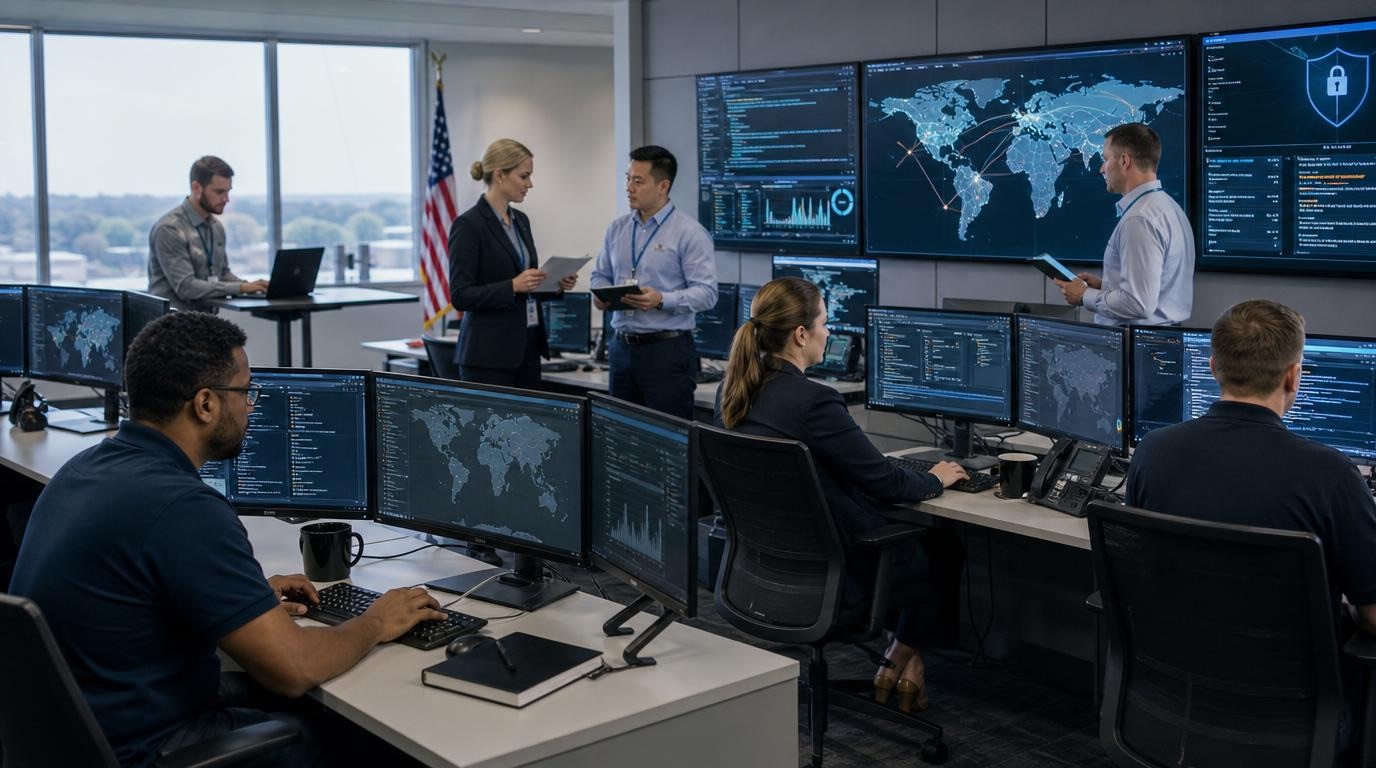
Google has launched the Fairwind Program, a limited-access channel that will give governments, critical infrastructure operators and selected security companies its most advanced cyber-defense tools. The first package combines Gemini 3.8 Flash Cyber with CodeMender, Google's vulnerability-repair harness. More than 650 partners are participating globally, according to the company. The premise is explicit: trusted defenders need a head start to repair exposed systems before comparable agentic capabilities become routine in offensive operations.
The program targets a familiar asymmetry in security. Finding a flaw can take minutes; coordinating, testing and deploying a safe fix across thousands of systems can take weeks. Attackers only need one path through. Defenders must preserve service, compatibility and evidence while closing all relevant paths. Google's answer is not merely a model that finds vulnerabilities. It is an agent workflow intended to write, validate and prepare patches inside the customer's cloud environment.
Google says Fairwind will initially prioritize national cyber authorities, healthcare, telecommunications, energy and financial networks, along with core technology platforms whose software is inherited by many downstream users. Participating organizations agree to operational controls including restricting access to internal security, incident-response or penetration-testing teams and requiring protections such as multi-factor authentication. Those conditions are basic, but they establish that model access is tied to an accountable operator rather than a generic API key.

The Adaptation Window Is the Product
The phrase adaptation window deserves attention. Cyber capability rarely remains exclusive. Techniques leak, models improve and open systems eventually reproduce behavior that once required a frontier service. Fairwind does not promise permanent control. It attempts to use the interval before broad diffusion to strengthen systems that would be costly to repair under active attack. That makes program speed as important as model accuracy.
A useful program needs to move patches through the final mile. Government systems often depend on old libraries, procurement contracts and change-control windows. Hospitals and utilities cannot restart a critical service whenever an agent proposes a fix. Fairwind partners will need sandbox environments, regression suites, canary deployment and rollback plans. Generating a patch in minutes is only the opening move; proving it safe under operational constraints is where most of the work remains.
CodeMender is designed to help with that proof by verifying generated repairs rather than stopping at a code suggestion. Verification should include the original exploit, neighboring functions, performance and compatibility tests. It should also preserve a clear record of what the model saw and changed. When a patch affects widely used infrastructure, maintainers need evidence they can share with auditors and downstream operators without revealing an exploitable weakness too early.
The access model creates a second security perimeter around the tool itself. A participating organization can still suffer credential theft, insider misuse or prompt injection through a repository. Restricting users and enforcing multi-factor authentication will not prevent an approved agent from following malicious instructions hidden in code or documentation. Tool permissions should be scoped to repositories and environments, with separate approval for network access, secret retrieval and deployment.

Trusted Access Needs Measurable Accountability
Google has not presented Fairwind as a public entitlement, and that is defensible for a high-capability cyber model. The harder question is how trust will be measured. Large institutions have compliance teams but also enormous attack surfaces. Small maintainers may secure libraries used by millions while lacking a formal security department. Eligibility should account for downstream impact, operational maturity and disclosure practice rather than company size alone.
The program also needs aggregate reporting. Google cannot disclose live vulnerabilities, but it can publish how many flaws were found, how quickly patches reached maintainers, how often generated fixes failed review and whether participating teams experienced misuse. Without that evidence, Fairwind remains a collection of vendor claims and partner logos. With it, the program could establish a practical benchmark for whether controlled cyber AI improves ecosystem security.
Any cross-border program will encounter policy tension. National cyber authorities may be reluctant to place sensitive code or incident data into a foreign provider's system. Google says the work can remain within a secure cloud environment, but sovereignty requirements extend to administrators, support access, encryption keys and legal jurisdiction. The same architecture will not satisfy every government. Regional control and auditable data handling will determine where Fairwind can operate.
Google is keeping a less restricted path open. Any Google Cloud customer can use CodeMender with publicly available models through its enterprise agent platform and AI Threat Defense products. That gives ordinary teams access to the workflow while reserving the strongest specialist model for vetted partners. The performance difference between those lanes should be documented so customers know whether they are buying a mature defense capability or an experimental assistant.
Fairwind also sits inside a broader funding effort. Google says its global cybersecurity commitments through Google.org now exceed $100 million, including $36 million for 35 U.S. cyber clinics that have supported more than 1,250 hospitals, school districts and municipal utilities. Training and local capacity matter because an agent cannot own the institutional decisions surrounding a vulnerability. Someone still has to understand the service, accept the change and respond when deployment goes wrong.
The partner count sounds broad, but participation can mean many things. Some organizations may actively run the cyber model against large code estates; others may be in evaluation or advisory roles. Google should distinguish deployed use from enrollment and publish the classes of systems being tested. That would help policymakers judge whether Fairwind is reaching neglected infrastructure or primarily reinforcing security teams that already possess substantial resources.
Open-source maintainers present a special case. A small team may own a package embedded in hospitals, banks and government services without operating a formal enterprise cloud environment. Giving that team direct access to a powerful model may create risk, while excluding it leaves a high-leverage target outside the adaptation window. A mediated service, where vetted partners run analysis and coordinate disclosures with maintainers, could extend the benefit without distributing unrestricted capability.
Procurement cannot substitute for readiness. An organization might join Fairwind and still lack a complete software inventory, reliable test coverage or authority to deploy emergency fixes. Those gaps limit what an automated patching system can accomplish. The program should treat asset discovery and deployment discipline as prerequisites or supported workstreams. A model can identify a defect in code, but it cannot repair an institution that does not know where that code is running.
There is also a disclosure tension between national security and ecosystem safety. A government may discover a flaw it wishes to study privately, while a vendor and downstream users need enough warning to patch. Fairwind's rules should define who controls disclosure, how conflicts are escalated and what happens when the affected software belongs to a nonparticipant. Trusted access needs a trusted process for the findings it creates.
Insurers and regulators will watch the results closely. If automated defensive analysis becomes widely available to critical operators, expectations of reasonable care may rise. Failing to scan or patch a known class of vulnerabilities could become harder to defend after an incident. That pressure can improve security, but only if organizations can validate the system and obtain qualified staff. A proprietary tool should not quietly become a legal standard without public evidence of its limits.
The program's success will be visible in patch latency, not demonstration videos. If Fairwind helps a hospital or open-source maintainer close a serious flaw before exploitation, the controlled-access model will have earned its friction. If access remains concentrated while fixes stall in ordinary operational queues, the technical advantage will evaporate. Cyber defense is a race between discovery and remediation, and the clock does not stop when the model finishes writing code.
Topics: Google, Fairwind Program, cybersecurity, critical infrastructure, vulnerability patching