Research
The Quantum Leap: What Quantum Computing Will Do for AI
IBM and Google have cracked fault-tolerant quantum computing in May 2026. Here is what that means for artificial intelligence, drug discovery, and the future of encryption.
By Elvin C ·
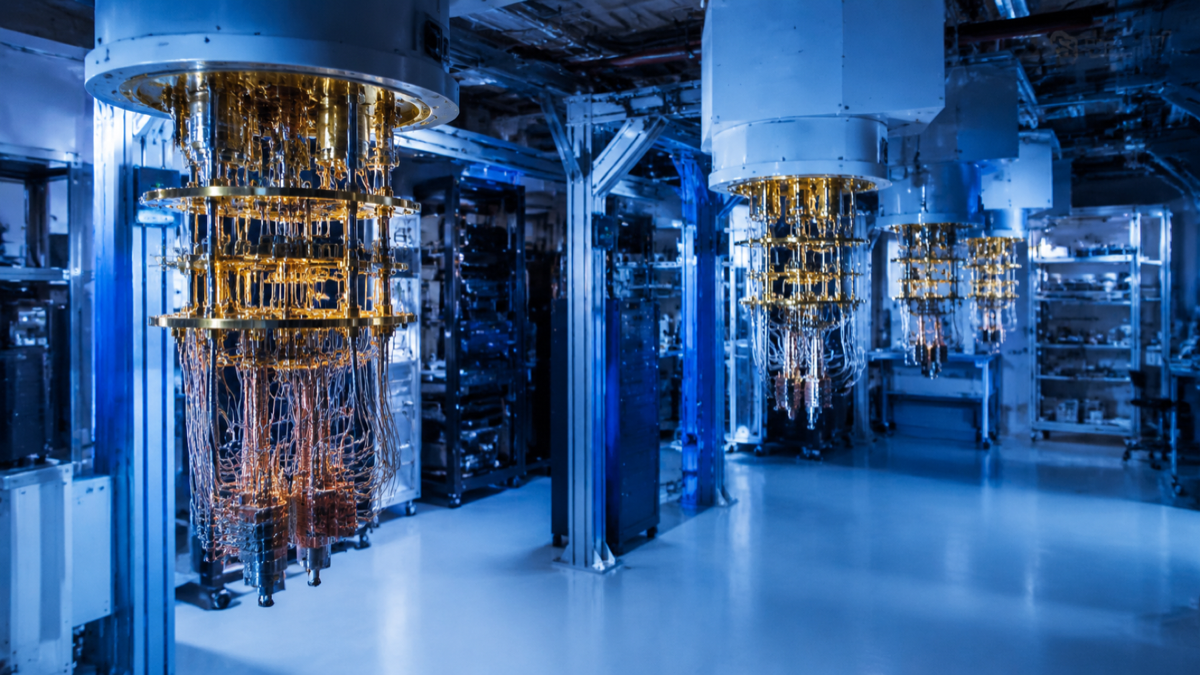
For nearly two decades, quantum computing was the technology that was always ten years away. A field of extraordinary promise and perpetual disappointment, it attracted billions in investment while delivering results that remained confined to the laboratory. That era may now be over.
In May 2026, IBM and Google independently announced milestones that researchers are calling the beginning of the Fault-Tolerant Quantum Computing (FTQC) era. IBM demonstrated a modular system connecting four of its Flamingo processors into a unified 4,000-qubit fabric. Google proved that increasing the number of physical qubits in a surface code could actually decrease the overall error rate — a result that had been theorised for years but never demonstrated at scale. Together, the two announcements signal that the quantum wall has finally crumbled.
The implications for artificial intelligence are profound, though not always in the ways that are most commonly discussed.
The Qubit Problem, Solved
To understand why this matters, it helps to understand the central engineering challenge that has held quantum computing back. Quantum bits, or qubits, are extraordinarily fragile. They are disrupted by heat, vibration, cosmic rays, and electromagnetic interference. The standard solution has been redundancy: spreading information across many physical qubits to create a single reliable logical qubit. Until recently, that ratio was roughly 1,000 physical qubits per logical qubit — meaning a system needed to be enormous just to perform a simple reliable calculation.
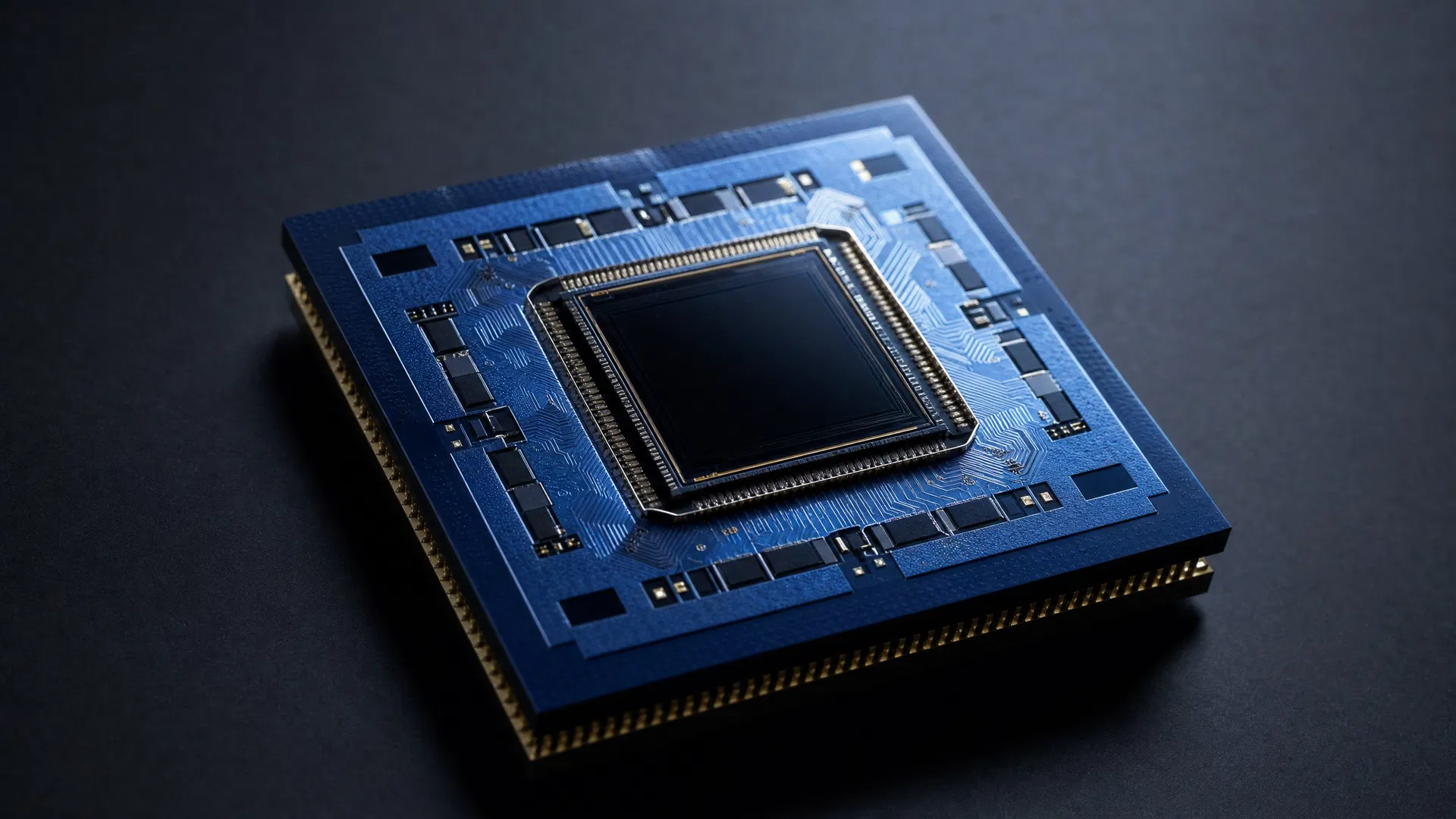
The 2026 breakthrough, enabled by a new class of error-correcting mathematics called qLDPC codes, has reduced that overhead dramatically. IBM's Condor processor, with 1,121 physical qubits, can now maintain dozens of stable logical qubits capable of running deep algorithms without crashing. The ratio has dropped from 1,000:1 to roughly 100:1 — a ten-fold improvement that changes the economics of the entire field.
AI Is Already Accelerating Quantum
In a striking reversal of the expected narrative, artificial intelligence has become a key tool in building better quantum computers — not the other way around.
The clearest example came in March 2026, when researchers at Oratomic — a startup co-founded by former Google Quantum AI scientists — published a paper describing how they used OpenEvolve, an open-source tool harnessing large language models including Google Gemini and Anthropic Claude, to optimise the algorithms at the heart of their quantum system. The AI combined past scientific results in novel ways, exploring thousands of different approaches in a process the researchers described as analogous to natural selection.
The result was extraordinary. The initial performance of the team's key algorithms was, in the words of co-author Robert Huang, 'about 1,000 times worse' than required. After AI-assisted optimisation, the qubit count required to run the algorithm was reduced by a factor of 100. 'Without the AI, we would have tried a few ideas, seen that they didn't work, and decided the whole thing was not possible,' Huang told TIME magazine. 'I didn't expect you would find anything useful.'
Google and IBM are now deploying small language models to monitor and calibrate the pulse sequences of their qubits in real time, predicting noise before it disrupts calculations and adjusting the system to compensate. The feedback loop is tightening: AI makes better quantum computers, and quantum computers will eventually make better AI.
What Quantum Will Do for AI
The most significant near-term impact of quantum computing on AI is not in training large language models — that remains a classical computing problem for the foreseeable future. The impact is in specific, high-value tasks where quantum algorithms offer provable advantages over classical approaches.
A paper published in April 2026 by researchers at the California Institute of Technology demonstrated what they called 'quantum oracle sketching' — a framework that allows a quantum computer to process massive classical datasets in a way that is exponentially more memory-efficient than any classical machine. The researchers proved that a quantum processor with 300 logical qubits can outperform a classical machine built from every atom in the observable universe for certain classification and dimensionality reduction tasks. They validated the approach on real-world datasets including movie review sentiment analysis and single-cell RNA sequencing, achieving four to six orders of magnitude reduction in memory requirements using fewer than 60 logical qubits.
For AI researchers, the practical implication is this: quantum computers will not replace the GPU clusters that train foundation models. But they will unlock capabilities that are simply impossible with classical hardware — particularly in scientific domains where the underlying phenomena are inherently quantum.
Drug Discovery: The Clearest Use Case
The application that researchers most consistently identify as the first major quantum advantage is drug discovery. Classical supercomputers, even with the most powerful H100 and H200 GPU clusters available today, cannot perfectly simulate the behaviour of a single caffeine molecule. The complexity is exponential: every additional atom multiplies the computational cost. Quantum computers solve this by using the same mathematics that nature uses.
In January 2026, researchers published results from QuADD — a quantum-assisted drug design system — showing that quantum computing could generate drug-like molecules with superior properties compared to purely AI-based approaches. IBM's healthcare division is now running hybrid quantum-classical workflows to simulate protein folding and enzyme behaviour at a level of accuracy that was previously unachievable.
The energy sector is watching closely. Quantum simulation of nitrogen fixation — the process by which bacteria pull nitrogen from the air at room temperature — could unlock a synthetic pathway that eliminates the need for the Haber-Bosch process, which currently consumes approximately 2% of global energy production. If quantum computers can model that biological process accurately enough to replicate it industrially, the implications for global energy consumption and food production are enormous.
The Security Reckoning
The same capabilities that make quantum computers valuable for AI and drug discovery make them dangerous for cybersecurity. The encryption protocols that secure the internet — RSA-2048, elliptic curve cryptography — rely on the assumption that factoring large numbers is computationally intractable. A sufficiently powerful quantum computer running Shor's algorithm would break that assumption in days rather than the billions of years required by classical machines.
The 2026 breakthroughs have accelerated the timeline. Google announced in March 2026 that it was moving its post-quantum cryptography migration deadline forward to 2029 — six years ahead of the NIST deadline of 2035. Cloudflare, which secures a significant fraction of internet traffic, announced it was 'accelerating' its own deadline to 2029 as well. 'It's a real shock,' Bas Westerbaan, a cybersecurity researcher at Cloudflare, told TIME. 'We'll need to speed up our efforts considerably.'
The threat is not merely theoretical. Adversaries are already executing what security researchers call 'harvest now, decrypt later' attacks — collecting encrypted data today with the intention of decrypting it once quantum computers become powerful enough. Classified communications, financial records, and sensitive personal data collected in 2026 could be exposed in 2029 or 2030. The G7 Quantum Roadmap, adopted in early 2026, has mandated Post-Quantum Cryptography (PQC) standards across member nations by 2030.
The Timeline to Utility Scale
The G7 roadmap outlines a three-stage timeline that has now been widely adopted by industry analysts. The current moment — 2026 — is described as the 'Quantum Utility' phase: quantum systems can outperform classical supercomputers in specific simulations of nature, particularly catalyst behaviour and materials science. The second phase, projected for 2028, is the 'Cryptographic Warning': systems will reach the capacity to threaten legacy encryption, though not yet at the scale required for a practical attack. The third phase, from 2030 to 2033, is the 'Fault-Tolerant Era': IBM targets 2,000 or more logical qubits capable of one billion gates, which is when a general-purpose quantum computer becomes a realistic tool for a broad range of problems.
For AI specifically, the most significant transition will come in the third phase, when quantum processors can be used as co-processors alongside classical GPU clusters — handling the parts of AI workloads that involve quantum-mechanical simulation while classical hardware handles the pattern-matching and language tasks that remain its domain.
What Comes Next
The 2026 IBM-Google breakthrough is not the arrival of the quantum computer that science fiction imagined. It is something more modest and more consequential: the proof that fault-tolerant quantum computing is an engineering problem, not a physics problem. The physics is solved. The engineering is underway.
For the AI industry, the implications will unfold gradually. In the near term, quantum computers will accelerate specific scientific research — drug discovery, materials science, climate modelling — that feeds back into AI training datasets and model capabilities. In the medium term, quantum-enhanced machine learning algorithms will enable AI systems to process scientific data at a scale and accuracy that is impossible with classical hardware. In the long term, the combination of quantum simulation and AI reasoning may produce the kind of scientific acceleration that researchers like Sam Altman and Dario Amodei have been promising for years.
The world is not yet prepared for what comes next. But for the first time, the timeline is no longer theoretical.