Research
Google Launches WeatherNext 3 With Hourly Satellite-Based Forecasts
WeatherNext 3 uses live satellite observations to produce hourly global forecasts at resolutions as fine as five kilometers, expanding AI weather data across Search, Maps, Gemini and Google Cloud.
By Patrick T ·
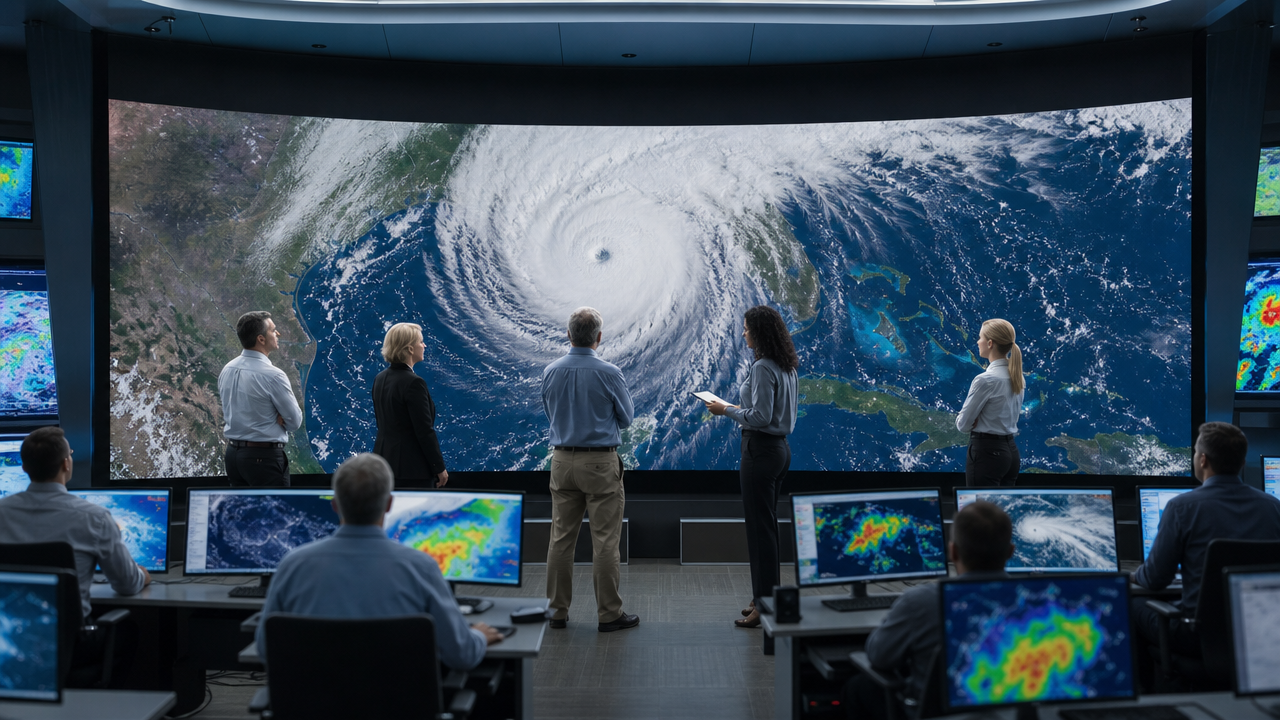
Google has launched WeatherNext 3, an AI forecasting system that ingests live geostationary satellite observations and produces a new global forecast every hour. The model resolves some surface variables at five kilometers, a fivefold improvement over the 25-kilometer grid and six-hour cycle of WeatherNext 2, and is being integrated into Search, Gemini, Maps, Google Maps Platform and Cloud.
The update targets a persistent weakness in AI weather models. Many learn from analyses produced by numerical weather-prediction systems, which provide a coherent view of the atmosphere but can arrive with a delay. Fast-developing rain, surface temperature and local storms may change before the next analysis is available. Direct satellite input gives WeatherNext 3 a fresher picture of conditions as they evolve.
A Forecast Every Hour
WeatherNext 3 combines hourly satellite mosaics with historical analysis in a Functional Generative Network mesh transformer. It generates dense atmospheric fields, cyclone tracks and forecasts at specific station coordinates. Google says temperature and moisture can be represented at five-kilometer resolution, other surface variables at 10 kilometers and atmospheric winds at 25 kilometers.
Resolution is not merely visual polish. Coastlines, mountains, valleys and cities create weather differences over short distances. A 25-kilometer cell can blur those effects into one average. Finer grids give farmers, energy operators and emergency planners more relevant local information, provided the model remains calibrated and does not imply precision beyond what the observations support.
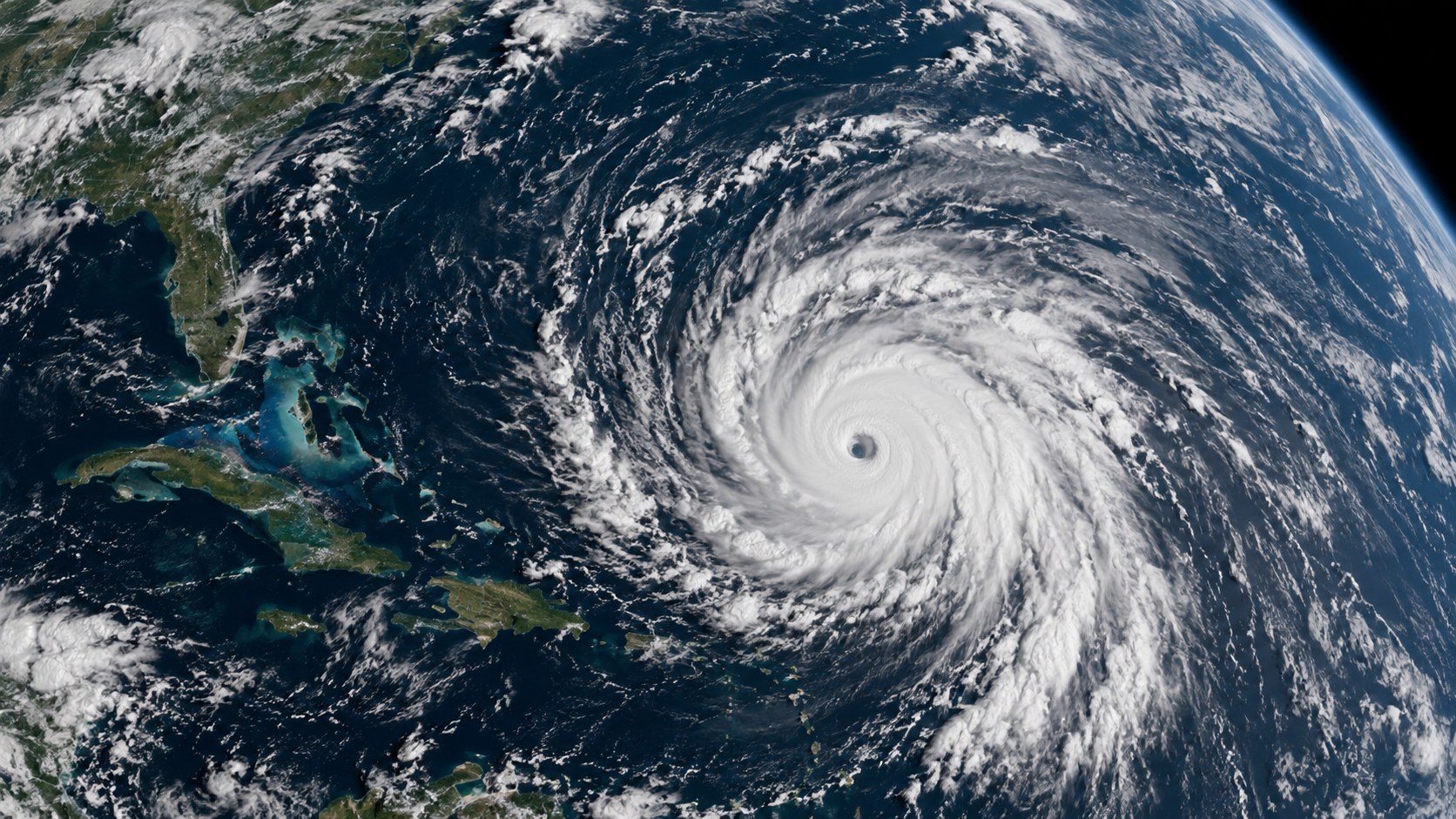
Google cites independent live evaluations by Brightband in calling WeatherNext 3 its most accurate global model. Continuous evaluation is valuable because weather provides a new ground truth every day. Users should still examine skill by region, variable and lead time. A global average can hide weak precipitation forecasts in the places where accurate warnings matter most.
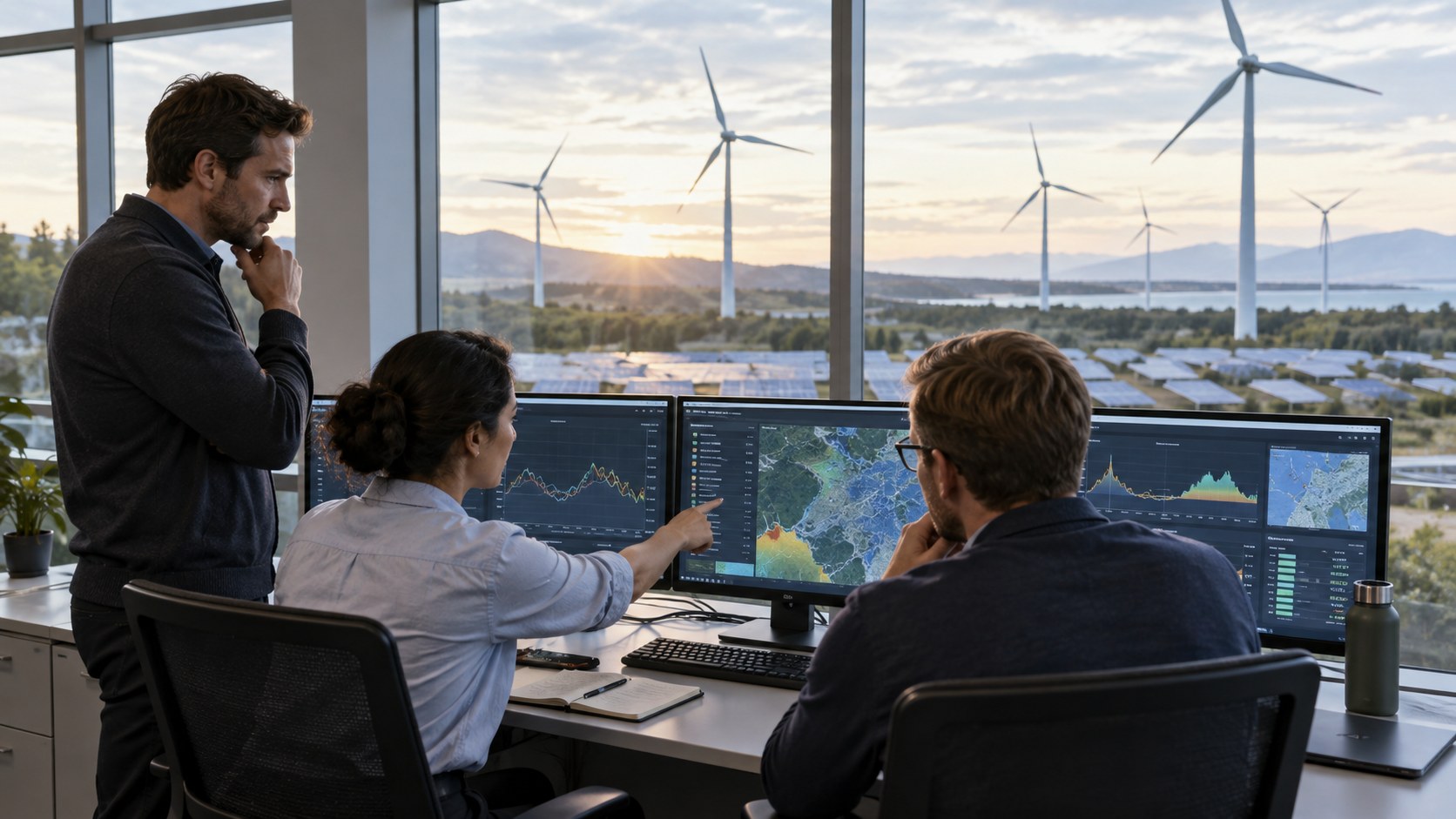
The system also predicts clean-energy variables, including wind and solar conditions. Renewable operators need probabilistic forecasts to schedule generation, storage and backup supply. Better updates can reduce balancing costs, but market decisions require uncertainty bands rather than one deterministic path. The best model is not the one that sounds certain; it is the one whose confidence matches reality.
Distribution Changes the Stakes
WeatherNext 3 is not staying inside a research portal. Integration into everyday Google products means its forecasts can influence travel, farming and emergency decisions at enormous scale. Distribution makes small biases consequential. Google needs clear provenance, graceful fallback when observations fail and interfaces that communicate uncertainty to people who never read a model card.
Cloud access creates another audience. Companies can use WeatherNext data in logistics, insurance, agriculture and energy systems without operating their own forecasting infrastructure. That lowers the technical barrier, but it can also concentrate dependence on one provider. Critical users should preserve comparison with national meteorological services and define what happens if the API or model changes.
The World Meteorological Organization has encouraged broader use of AI while emphasizing that national services remain responsible for authoritative warnings. AI models can generate forecasts quickly, but public agencies combine them with radar, local observations, forecaster judgment and established communication channels. A consumer app should not be mistaken for an official evacuation order.
Access could be especially valuable in regions that lack the supercomputers required for high-resolution numerical models. Google points to Latin America, Africa and Asia-Pacific as places where finer global forecasts may close part of that gap. The benefit will depend on whether local agencies can obtain the data reliably, evaluate regional performance and communicate it in languages and formats communities use.
AI Joins, Rather Than Replaces, Physics
Forecasters will need tools that explain why successive hourly runs changed. A model that shifts a storm track should show whether new satellite observations drove the revision and how confidence moved. Without that context, users may overreact to normal forecast variation or ignore an important signal after seeing several earlier updates change direction.
Historical evaluation must account for the quality of observations available at the time. Reconstructing a forecast with later-corrected data can make performance look better than a true real-time system. Google’s live evaluation approach is therefore important: it records what the model knew before the weather occurred. Independent archives will help researchers verify those comparisons over full seasons.
The rivalry between AI and numerical forecasting is often overstated. Traditional models encode physical equations and produce rich atmospheric states. Machine-learning systems can learn patterns and generate ensembles at far lower computational cost. The European Centre for Medium-Range Weather Forecasts already operates AI forecasting alongside conventional systems. Operational centers are likely to combine approaches, using disagreement to identify uncertainty and improve resilience.
WeatherNext 3’s scientific paper will be important for understanding architecture, training data, compute requirements and failure modes. Reproducibility may be limited if the model depends on proprietary data or infrastructure. Independent meteorologists need enough detail to evaluate whether gains persist outside Google’s chosen tests and during rare extremes.
Extreme events are the hardest and most important cases because there are fewer historical examples. A model can improve average temperature error while missing a rapidly intensifying cyclone or localized flood. Evaluation should therefore report tail behavior, warning lead time and reliability under changing climate conditions, not only aggregate accuracy.
WeatherNext 3 represents a substantial engineering step: fresher observations, finer spatial detail, hourly updates and distribution across products people already use. Its public value will depend on disciplined presentation and independent validation. A forecast is not useful because an AI produced it. It is useful when people understand its uncertainty, combine it with local evidence and make a better decision before the weather arrives.
Topics: Google DeepMind, WeatherNext 3, weather forecasting, climate, satellite data