Research
Hong Kong's Black-Rain Research Shows AI Weather Forecasting Needs Local Judgment
New research on Hong Kong black-rain events suggests AI weather models can spot severe rainfall signals earlier. The operational challenge is turning those signals into trusted public warnings.
By Michael G ·
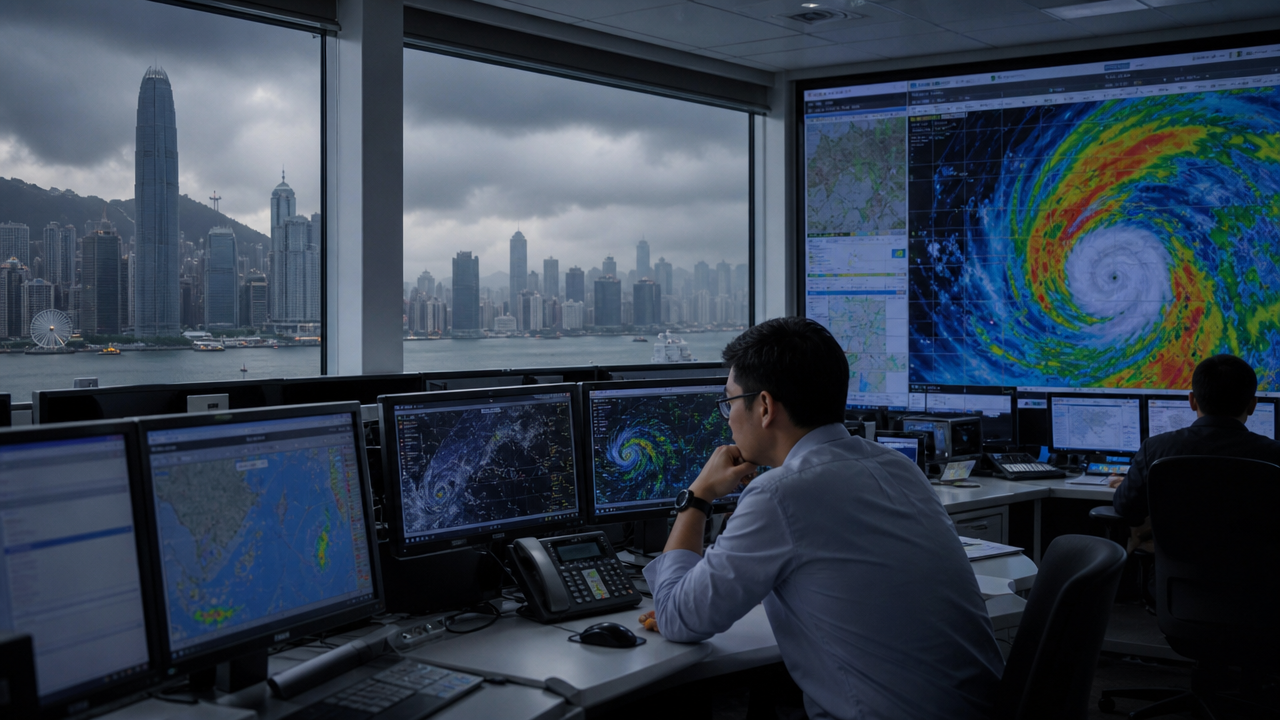
AI weather forecasting is moving from research novelty to public-safety infrastructure. A recent study of Hong Kong black-rain events suggests AI models can capture some severe rainfall signals with useful lead time, but the work also shows why local judgment remains essential.
Hong Kong is a hard environment for weather prediction because small geographic differences can have large consequences. Hillsides, dense urban drainage, transport corridors, and coastal weather systems turn a forecast into a city-management problem.
The Model Is Only One Layer
Global AI systems can process enormous atmospheric patterns quickly, but severe local rain requires radar, ground observations, hydrology, and human forecasters who understand how warnings change behavior. A faster model does not automatically produce a better public alert.
That is where hybrid forecasting matters. Another recent comparison of AI and physics-based models argues that the strongest path is not replacement but combination. AI can flag risk cheaply; physical models and local experts can test whether the signal should become policy action.
Warnings Are A Product Interface
The real test is what happens after a model detects risk. Schools, hospitals, rail operators, construction sites, and low-lying neighborhoods need different information at different times. Forecasting systems therefore need product design, not just scientific accuracy.
Topics: AI weather, Hong Kong Observatory, black rain, public safety