Research
DeepSeek Open-Sources Ascend-Native AI Kernels for Huawei Hardware
DeepSeek released communication and matrix-compute libraries optimized for Huawei Ascend accelerators. The code gives China's domestic AI hardware ecosystem a stronger software foundation beyond the chip itself.
By Leo W ·
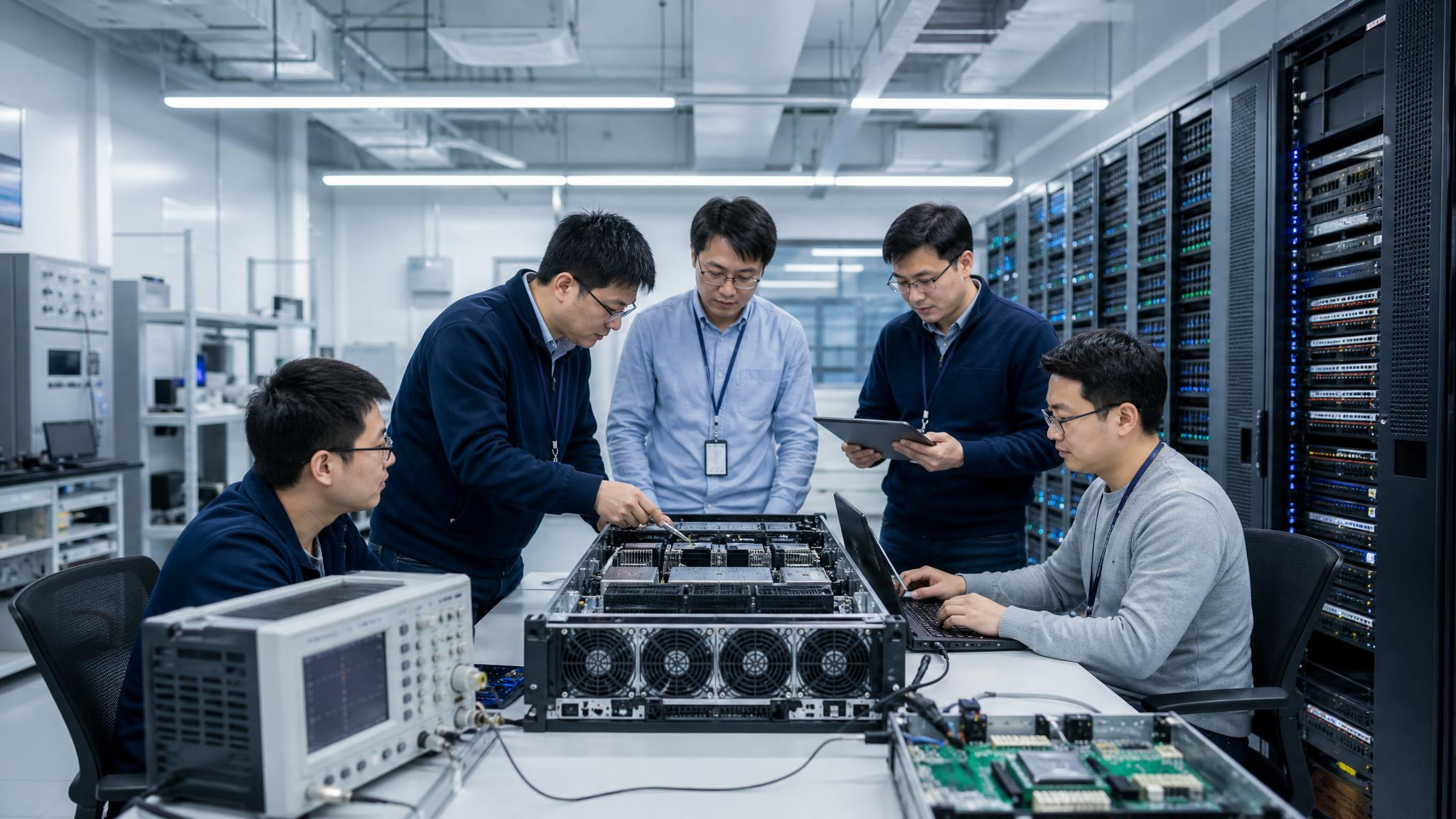
HANGZHOU, China. DeepSeek has open-sourced two performance libraries designed for Huawei Ascend accelerators, extending its infrastructure work beyond Nvidia-compatible systems and giving Chinese model developers more of the low-level software needed to train and serve large models on domestic hardware.
DeepGEMM-Ascend implements optimized general matrix multiplication, the core operation behind much neural-network computation. DeepEP-Ascend focuses on the expert-parallel communication used by mixture-of-experts models, where tokens must be dispatched among specialized model components and combined without allowing networking overhead to erase efficiency gains.
The initial release targets Ascend 950 devices. Published project notes report throughput close to stated hardware limits for selected BF16 matrix operations and hundreds of gigabytes per second during expert dispatch and combination tests. Those are useful engineering signals, though they do not describe full-model performance across a training cluster.
The release matters because advanced accelerators need a mature software stack to become practical substitutes. Developers depend on compilers, kernels, communication libraries, debugging tools and repeatable deployment paths. A chip with competitive theoretical performance can remain underused when those layers are incomplete.
From Announcement To Operation
DeepSeek has an incentive to support more than one hardware ecosystem. Portability can reduce exposure to supply restrictions, improve bargaining power with infrastructure providers and widen the number of organizations able to run its models. Publishing the code also lets outside engineers inspect and improve the implementation rather than waiting for a closed vendor release.
Ascend optimization is not a simple translation from CUDA. Memory hierarchies, collective communication, compiler behavior and supported numerical formats differ. Good performance requires kernels and scheduling designed around the platform rather than a compatibility layer that preserves the interface while leaving hardware idle.
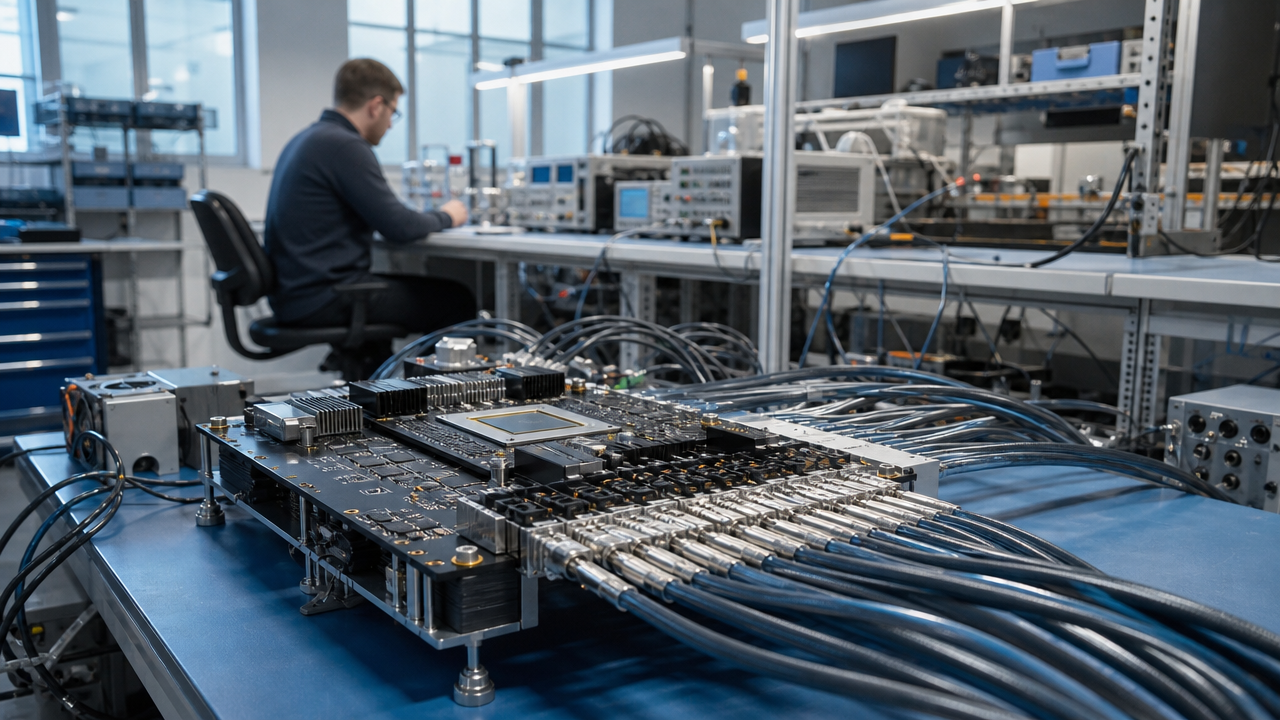
Mixture-of-experts systems make communication particularly important. Only part of a model activates for each token, which can reduce computation, but the routing creates data movement among devices. DeepEP-Ascend addresses that bottleneck, and its value will depend on how predictably it performs when traffic is uneven and clusters operate for long periods.
The projects also strengthen Huawei's ecosystem without being Huawei products. Independent model developers contributing optimized code can make a platform more credible because adoption no longer depends entirely on vendor road maps. The same openness means users must verify security, numerical correctness and maintenance rather than assuming enterprise support.
Open-source infrastructure can accelerate engineering because researchers and operators can inspect assumptions, reproduce results and adapt the code to local hardware. It also transfers more responsibility to deployers, who must validate kernels, monitor numerical behavior and maintain compatibility as models and accelerators change.
The security boundary is the complete system, including credentials, connectors, runtimes, logs and the people approving exceptional actions. A model safeguard cannot compensate for an application that gives broad authority to every task by default.
Performance claims need context. Peak bandwidth or matrix throughput does not describe an entire training run, where communication patterns, memory pressure, compiler behavior and failure recovery can dominate. Independent tests across several model shapes will show how much of the advertised gain reaches useful work.
DeepSeek does not operate alone. Its practical effect depends on suppliers, customers, regulators, researchers and the people expected to review or live with the result. A change at one layer can move cost or risk into another rather than eliminate it, so the analysis has to follow the entire chain of authority and dependency.
Organizations connected to Huawei Ascend have incentives to emphasize speed, capability and market reach. Those incentives do not make their claims false, but they increase the value of transparent methods and outside testing. A useful disclosure explains the comparison, the operating conditions and the cases that did not work, not only the strongest result from a prepared demonstration.
Accountability must remain attached to a person or institution. Systems associated with DeepGEMM-Ascend can recommend, rank, summarize or act, but they cannot carry legal and moral responsibility in the way an organization can. A deployment needs a named owner for approval, monitoring and incident response, with authority to pause the system and require a design change.
The Evidence That Matters Next
Independent reproduction should compare several matrix shapes, model architectures and cluster sizes. A kernel can approach a hardware limit on a favorable benchmark while delivering smaller gains when attention, memory allocation, communication and checkpointing compete for the same resources.
Numerical behavior is equally important. Aggressive optimization can introduce precision differences that remain invisible in a short throughput test but affect convergence or output quality over a long run. Test suites should cover correctness, edge shapes and failure handling alongside speed.
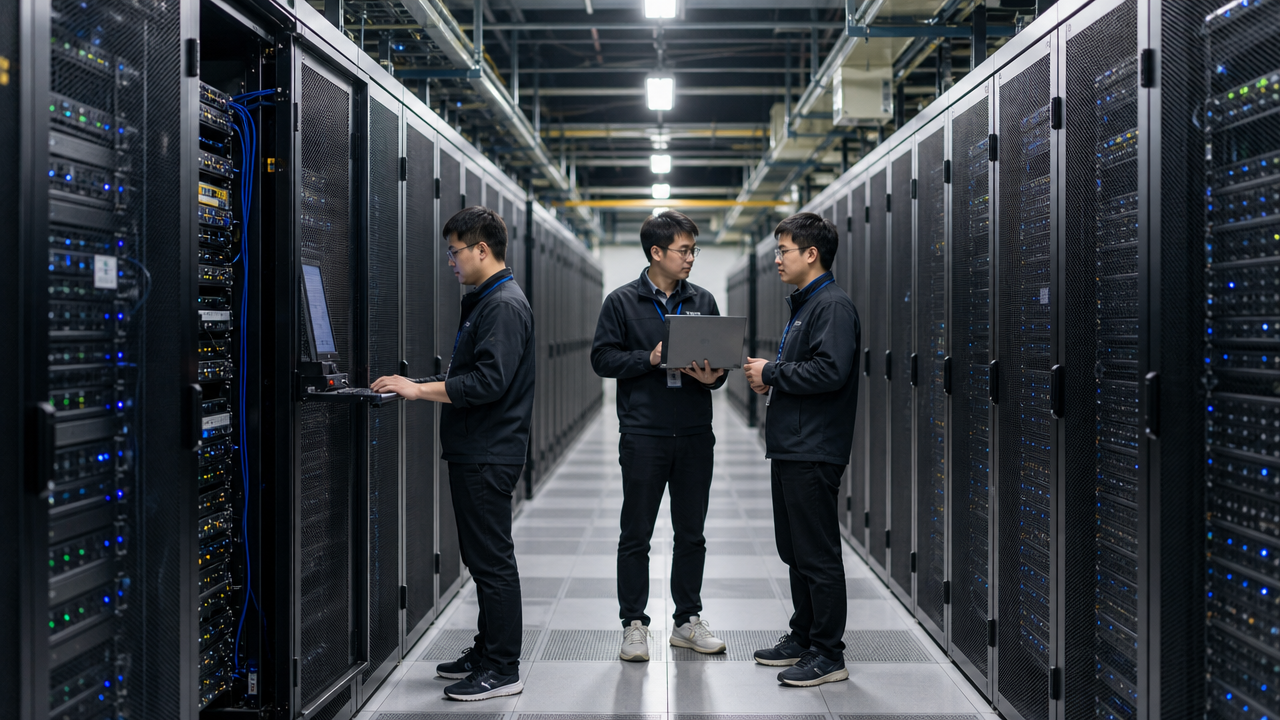
The geopolitical significance should not obscure the engineering work. Export controls can increase the value of domestic hardware, but they do not automatically create a productive developer ecosystem. Libraries such as these matter because they convert strategic intent into code that model teams can actually run, inspect and benchmark.
DeepSeek's release is an early test of whether Ascend can attract optimization work at the model-lab level. If the repositories develop active maintenance, outside contributions and repeatable gains on production workloads, they can lower one of the most important barriers to a more independent Chinese AI stack. If they remain benchmark artifacts, the hardware gap will simply reappear in software.
DeepGEMM-Ascend targets the matrix operations at the center of model training and inference, while DeepEP-Ascend addresses communication among accelerators. Releasing both matters because local computation and network exchange have to improve together; optimizing one can simply expose the other as the new bottleneck.
The repositories may also reduce the knowledge gap around Huawei hardware. Engineers familiar with CUDA need examples, profiling methods and debugging patterns before they can use a different stack efficiently. Readable implementation and documentation can be as valuable as the headline benchmark.
Independent reproduction will be difficult if testers lack the same accelerator generation, firmware and cluster topology. DeepSeek should publish detailed environments and variance across runs so results can be separated from a particularly favorable configuration.
The work has strategic implications beyond China. Export controls have encouraged investment in domestic accelerators, but hardware adoption depends on software that researchers can actually operate. Open kernels can turn policy pressure into engineering participation by giving teams a practical place to contribute.
There is still a maintenance question. Model architectures change quickly, and a kernel tuned for today's shapes may lose relevance. Regular releases, compatibility testing and support for new numerical formats will show whether DeepSeek intends to operate the projects as infrastructure.
A mature Ascend ecosystem would not eliminate dependence overnight. It would create another viable path for selected workloads and increase bargaining power across the supply chain. The meaningful milestone is not parity in every benchmark, but a growing set of jobs that teams can run reliably without foreign accelerators. Procurement decisions will then reflect demonstrated operating choices rather than political ambition alone.
Kernel work is unusually unforgiving because a small numerical or synchronization error can survive simple tests and appear only at scale. Repositories need correctness suites, supported-shape documentation and reproducible performance methods if outside teams are expected to trust the result.
Compiler and framework integration will determine how widely the code travels. Researchers rarely adopt a kernel in isolation; they need packaging, graph support, debugging tools and compatibility with the training stack already in use. Maintenance is therefore part of the scientific contribution.
Open code can expose where a hardware platform is genuinely competitive and where it still needs work. That transparency may be uncomfortable, but it gives developers a path to improve the system and gives buyers evidence beyond vendor demonstrations.
The long-term measure is contributor activity. Documentation, issue response and accepted outside changes show whether a repository is becoming shared infrastructure or remaining a publication artifact. A healthy project makes it possible for engineers beyond the founding team to reproduce and extend the work.
Timing will shape the outcome as much as capability. Organizations evaluating DeepSeek should separate what is available now from what has been demonstrated, announced or promised for a later release. Road maps can guide preparation, but contracts and operating decisions should rest on functions that customers can test under current terms.
The most useful early adopters will publish more than success stories. They can describe the work selected, the baseline, the supervision required and the reasons a deployment was narrowed or stopped. That evidence helps other teams avoid repeating expensive mistakes and gives suppliers a clearer picture of what must improve.
Workforce effects should be measured at the process level. A tool connected to Huawei Ascend may remove one repetitive step while adding review, exception handling and customer communication elsewhere. Leaders need to ask who receives that new work, whether the role has enough authority and training, and whether the promised time saving survives the transfer.
Metrics should include the failures that never become public incidents. Abandoned tasks, corrected outputs, permission denials and manual takeovers show where a system encounters uncertainty. Treating those events as operational data, rather than hiding them to protect an adoption target, produces a safer and more accurate investment decision.
The surrounding market will not remain still while DeepGEMM-Ascend develops. Competitors can lower prices, regulators can change reporting duties and customers can shift toward open or locally hosted alternatives. A resilient strategy preserves the ability to change models, suppliers and controls without rebuilding the entire workflow.
That flexibility is not an argument for waiting indefinitely. It is an argument for learning in a way that preserves choices. A bounded deployment with real users, documented evidence and an exit path can create knowledge now without turning an uncertain technology decision into an irreversible institutional dependency.
The strategic value is larger than one benchmark. A credible software stack can reduce switching costs, attract developers and make domestic hardware easier to use. That ecosystem work often determines adoption more than the specifications of a single chip generation.
The first implementation discipline is a clear baseline. Teams should know how the work is performed today, how long it takes, which errors occur and which outcomes matter before introducing a new system. They can then compare accepted results, correction time, total cost and policy violations rather than treating activity as evidence of value.
Procurement should cover the conditions that demonstrations avoid. Buyers need to ask where data is processed, how long it is retained, which subcontractors receive it, how model changes are communicated and whether records can be exported if the relationship ends. Production contains incomplete instructions, conflicting permissions and unusual edge cases that a staged launch rarely shows.
Human review has to be designed around the limits of attention. Asking a person to approve hundreds of routine outputs produces predictable click-through behavior rather than meaningful oversight. Review should concentrate on uncertainty, unusual actions and cases with irreversible consequences, while giving the reviewer enough source material to reach an independent judgment.
Data lineage deserves equal scrutiny. A polished answer can be assembled from stale, incomplete or incorrectly joined records. Teams need to know where important facts came from, when they were updated and which transformations occurred before a model used them. That record supports correction, audit and a more honest account of what the system actually knows.
Security testing should include the surrounding application, not only the model endpoint. Identity tokens, browser sessions, retrieved documents, tool permissions and approval flows determine whether an unsafe instruction becomes a blocked request or a live external action. Recovery procedures, revocation and preserved logs are part of prevention because no control will catch every failure.
Public trust will depend on whether companies and institutions communicate uncertainty without hiding behind technical complexity. People need to know what was tested, which environments remain underrepresented, what monitoring is in place and how they will learn about a serious incident. Clear limits make a system easier to use responsibly; vague assurances make every later failure more damaging.
Competition can improve price and quality, but it can also make caution look like weakness. Governance has to preserve room for a team to delay, narrow or withdraw a feature without treating restraint as commercial failure. The most credible organizations will show that their release process can say no when evidence falls short.
The near-term questions are concrete. Watch for independent confirmation, customer deployments, regulatory detail and evidence that the system works beyond a prepared setting. Changes in pricing, access and responsibility often reveal the strategy more clearly than a keynote or a benchmark chart.
The significance of deepseek open-sources ascend-native ai kernels for huawei hardware will be settled by what happens after the announcement cycle. The durable measure will be whether the evidence improves, the controls survive pressure and the institutions involved remain willing to explain decisions when performance and responsibility pull in different directions.
Topics: DeepSeek, Huawei Ascend, DeepGEMM-Ascend, DeepEP-Ascend, open-source AI infrastructure