Policy
UK to use Ukrainian battlefield data to train AI systems protecting sensitive sites
The British government has partnered with Ukraine's Avengers AI lab to give private companies access to battlefield-derived data for developing artificial intelligence systems to protect military bases, railways and energy infrastructure. The arrangement raises questions about data consent, classification standards, civilian spillover and independent oversight.
By Michael C ·

Britain is moving to harness Ukrainian combat experience for artificial intelligence development, granting private companies access to battlefield data collected during the conflict with Russia. According to The Guardian report, the UK Ministry of Defence has established a partnership with Ukraine's Avengers AI lab that would allow defence contractors and technology firms to use operationally derived information to train AI systems intended to protect sensitive national infrastructure, including military installations, railway networks and power generation facilities. The initiative represents an intensification of how Western governments are translating real-world conflict into technological capability, though it has surfaced fundamental questions about how such data should be classified, who should consent to its use and what safeguards prevent the technology from affecting civilians.
Under the arrangement, private companies would gain structured access to patterns, signatures and tactical information derived from Ukrainian military operations without receiving raw combat footage or identifying information about individual soldiers or civilians. The data would be used to train machine learning models designed to detect intrusions, predict infrastructure vulnerabilities and automate defensive responses at British sites. Officials have characterised the partnership as mutually beneficial, suggesting that the collaboration strengthens Ukraine's technological standing while providing Britain with AI systems informed by recent operational experience rather than historical datasets or laboratory simulations. The scope encompasses both kinetic conflict patterns and cyber-related intelligence, according to reporting on the arrangement. The Guardian report documents the reporting behind this account.
The stated governance model places oversight with both the UK Ministry of Defence and Ukrainian officials, with procurement decisions made through existing defence contracting channels. Private companies participating in the programme would operate under security clearance frameworks and contractual restrictions limiting data use to the specified defensive applications. However, the public details about independent verification mechanisms remain limited. Questions about whether external auditors will assess the data handling practices, whether there will be regular declassification reviews and whether the arrangement includes sunset provisions have not been definitively answered by officials.
Data provenance presents a distinct challenge. Battlefield information is inherently generated in combat zones where civilians are present, and extracting operationally useful patterns requires processing that can obscure the original context. While officials have emphasised that the data would be sanitised and aggregated, the specific methods for ensuring that the AI systems do not encode biases derived from conflict situations or inadvertently enable targeting decisions have not been publicly detailed. The UK military has previously acknowledged that autonomous systems require robust safeguards to prevent harm, yet the mechanics of those safeguards in this instance remain opaque. UK Ministry of Defence offers useful technical background for evaluating the claim.
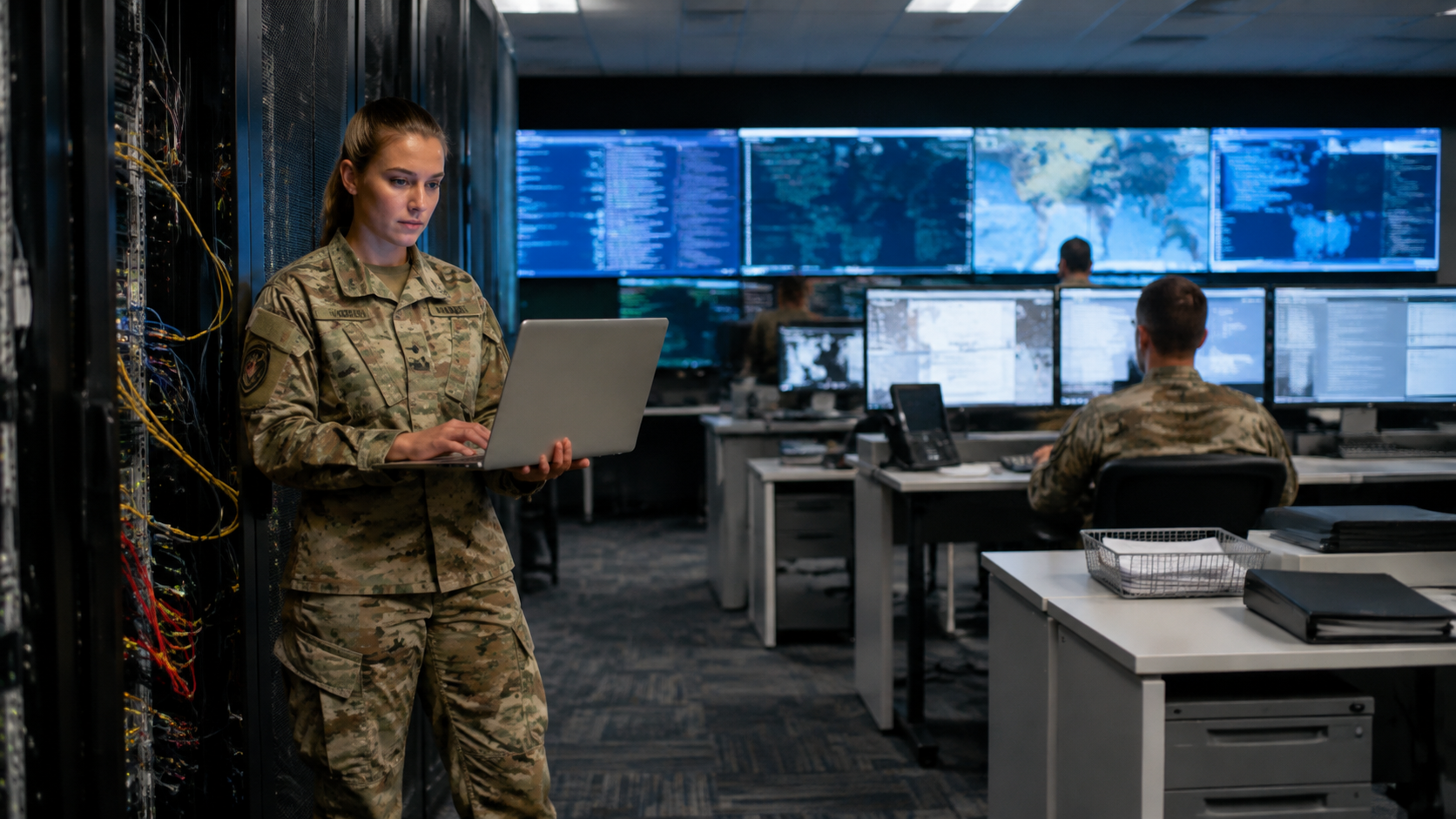
Consent and classification boundaries
A central tension in the initiative concerns consent. Ukrainian armed forces operate under their own command structure and legal authority, yet the data they generate enters a multinational technological pipeline. While Ukraine has formally agreed to the partnership, whether individual service members or affected civilians were consulted about the use of combat-derived data for AI training remains unclear. The UK has not published documentation showing how it assessed whether the data's sensitivity requires higher classification or whether battlefield collection was conducted with the knowledge that the information would be shared internationally with private firms. NIST AI Risk Management Framework guidance recommends that data provenance documentation accompany datasets used for high-stakes systems, a standard whose application to this programme has not been confirmed. The operational tradeoff is also reflected in NATO AI strategy.
Classification decisions will determine which companies can access the data and under what conditions. If the information is classified as secret, access remains restricted to cleared contractors with appropriate facility infrastructure. If classified lower, the data could circulate more broadly across supply chains, creating multiplication of handling points and retention locations. The UK government has not publicly specified the classification level, citing operational security, though that very opacity creates a gap between the stated governance model and what can be independently verified. Officials have indicated that the programme follows existing defence procurement rules, but those rules predate the specific governance challenges posed by AI systems trained on multinational combat data.
The question of civilian spillover effects extends beyond the training phase. AI systems trained on battlefield patterns, even when intended solely for infrastructure protection, can encode tactical assumptions that may reflect conditions of active conflict rather than peacetime operations. If such a system were deployed to protect a railway network, could it generate alerts based on patterns that resembled military movements but actually represented civilian activity? The UK Ministry of Defence has not released technical specifications addressing how the systems would be tuned to prevent false positives that could disrupt civilian transportation or utility operations. For broader context, NIST AI Risk Management Framework outlines the relevant standard or institution.

Procurement and independent review
The procurement process for this initiative will route through standard defence contracting channels, meaning companies must bid competitively and meet security requirements. However, the criteria for evaluating which companies receive data access and which do not remain internal to the Ministry of Defence. There is no published procurement transparency requirement, no external advisory panel and no mechanism for the general public to understand which firms hold or have held access to the dataset. This stands in contrast to the OECD AI principles framework, which emphasises transparency and stakeholder engagement in AI governance, particularly for systems with significant societal implications.
Independent oversight remains the most substantive gap in the announced framework. The UK government has not established an external review board, academic oversight group or parliamentary committee with specific responsibility for monitoring this programme's operation and outcomes. Compare this to emerging practices elsewhere: some governments have created algorithmic impact assessment processes and third-party auditing requirements for AI systems affecting public safety. The UK initiative, by contrast, appears to rely solely on internal Ministry of Defence compliance reviews and contractor contractual obligations. Officials argue that existing classification rules and security protocols provide sufficient oversight, yet those mechanisms operate confidentially and do not generate public accountability reports.
The long-term sustainability of the data partnership itself remains undefined. How long will Ukrainian battlefield data be retained and used? Will it be refreshed with new operational information as the conflict continues or evolves? What happens to the trained AI systems if the partnership is terminated or if UK-Ukraine relations change? These questions matter because they determine whether the programme represents a time-bound response to current circumstances or the establishment of a permanent infrastructure for converting operational conflict data into ongoing peacetime technology development.
The UK government has framed the initiative as a responsible approach to leveraging allied partnership for mutual security benefit. Ukrainian officials have characterised it as recognition of their operational expertise and a means of strengthening their technological position. Yet the arrangement's structure places significant decisions about data use, AI model training and system deployment within defence ministries and private contractors with minimal external visibility. As AI systems become embedded in critical infrastructure decisions, the gap between announced governance models and verifiable independent oversight suggests that questions about accountability, transparency and public trust remain incompletely addressed. Whether the partnership will ultimately serve as a model for future allied AI collaboration or as a cautionary example depends partly on what oversight mechanisms emerge in practice and whether they prove robust enough to secure public confidence. The final point can be checked against UNESCO AI ethics recommendation.
Topics: AI policy, UK-Ukraine partnership, defence infrastructure, data governance, military technology