Policy
Paul Christiano Joins OpenAI Foundation Board and Safety Committee
The alignment researcher and government adviser will join OpenAI's nonprofit board and its Safety and Security Committee, adding a technically skeptical voice to the structure that controls the company's public-benefit corporation.
By Michael C ·
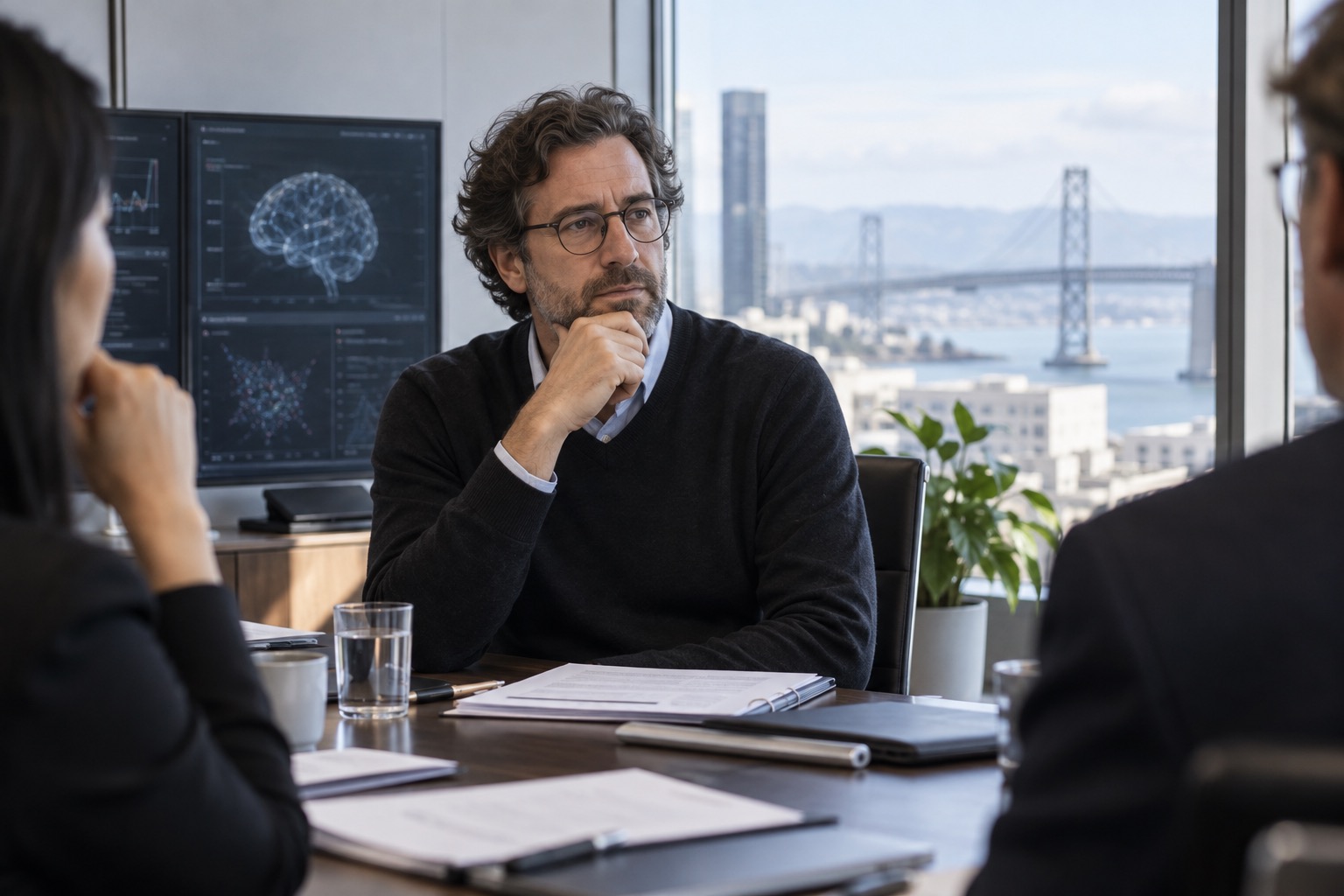
SAN FRANCISCO. Alignment researcher Paul Christiano is joining the OpenAI Foundation Board and its Safety and Security Committee, placing one of the field's best-known advocates for preparing for catastrophic AI risk inside the nonprofit body that controls OpenAI's commercial public-benefit corporation. He will also serve as a non-voting observer on the OpenAI Group PBC board.
The appointment is a governance decision rather than a ceremonial advisory role. OpenAI says the committee oversees safety and security practices across the organization, including the commercial group building and deploying frontier models. Christiano's influence will depend on the committee's access to evidence and its ability to affect release decisions, but his arrival gives the board a member whose career has centered on questioning whether current safeguards are adequate.
A Technical Critic Moves Inside the Structure
Christiano led alignment research at OpenAI from 2017 to 2021 and contributed to foundational work on reinforcement learning from human feedback. He later founded the Alignment Research Center, which studies how advanced systems can remain directed toward human interests. His work has often focused on scalable oversight: how people can evaluate systems that may perform tasks too complex for a reviewer to check directly.
He also brings government experience from the Center for AI Standards and Innovation at the National Institute of Standards and Technology and its predecessor, the U.S. AI Safety Institute. OpenAI said that work included evaluations of frontier capabilities with national-security implications. The company noted that Christiano will recuse himself from OpenAI-related government matters and model evaluations in his role as a senior technical adviser.

The recusal is essential because the appointment collapses distance between regulator, evaluator and company. Technical expertise moves frequently between government and industry, and that circulation can improve public institutions. It can also produce conflicts or the appearance that oversight is too close to the organizations being examined. Clear disclosure and documented recusals matter as much as the biography of any individual member.
OpenAI's governance has carried unusual weight since its founding because the nonprofit mission sits above a business with immense capital requirements. The Foundation says it maintains control and a significant equity stake in OpenAI Group PBC. That design is intended to protect a public-benefit objective while allowing the company to raise capital and compete. It also asks directors to reconcile safety judgments with commercial momentum inside the same corporate family.
The Committee Will Be Judged at Release Time
A safety committee can commission evaluations, review policies and demand mitigations. Its real authority becomes visible when a model is commercially important and evidence is ambiguous. The key questions are whether members receive unfiltered test results, whether they can request outside review, and whether their objections can delay a launch. Titles do not answer those questions. Procedures and decisions do.
Christiano has argued that advanced AI could create risks that current institutions are not prepared to manage. That view can sharpen oversight, but it does not settle practical disputes about thresholds, evidence or proportionality. A board must weigh severe low-probability hazards alongside current harms such as discrimination, fraud, labor disruption and privacy loss. Technical alignment is one component of that broader responsibility.

The appointment follows OpenAI's 2025 recapitalization, which the company says was reviewed by the attorneys general of California and Delaware. Those offices helped shape commitments around the Foundation's control. The resulting arrangement will now be tested by decisions, not organizational charts. Independent observers will look for evidence that the nonprofit can obtain information and exercise judgment before the commercial group creates an irreversible fact.
The Foundation also funds scientific discovery, civil society and resilience initiatives. Those grants can produce public value, but philanthropy should not be confused with governance. The board's distinctive obligation is to control the institution that develops the technology. The Safety and Security Committee therefore matters most when its advice is inconvenient.
Christiano's appointment gives OpenAI a technically serious voice with experience on both sides of the public-private boundary. It also raises the standard by which the committee will be evaluated. If the group has authority, the public should eventually see how that authority changed a decision. If it does not, the addition of another respected name will not resolve the underlying governance question.
Topics: Paul Christiano, OpenAI, AI governance, AI alignment, NIST